Introduction
The gravity definition describes it as a fundamental force that attracts objects toward each other, causing them to come together or move closer. It governs the motion of planets, stars, and galaxies, keeping the universe in balance. On Earth, gravity pulls objects toward the ground, ensuring we don’t float away into space. Without this force, life as we know it would not exist, as it shapes everything from the tides to the orbits of celestial bodies. This article explores gravity’s origins, effects, and ongoing mysteries.
Isaac Newton first formalized the gravity definition in the late 17th century, identifying it as the force responsible for an apple falling from a tree to the ground. Later, Albert Einstein expanded this concept with his theory of general relativity, revealing gravity as a curvature of spacetime caused by mass. Gravity acts universally, affecting all objects with mass, from the smallest particles to the largest galaxies. Moreover, it remains a key focus of scientific study, driving our understanding of the cosmos.
Despite its importance, gravity poses challenges to scientists. It is the weakest of the four fundamental forces, yet it operates over vast distances, unlike the strong nuclear force, which acts only at tiny scales. Researchers struggle to unify gravity with quantum mechanics, a puzzle that persists today. This exploration into gravity unveils its role as a cosmic architect and a scientific enigma.
Newton’s Law of Gravity
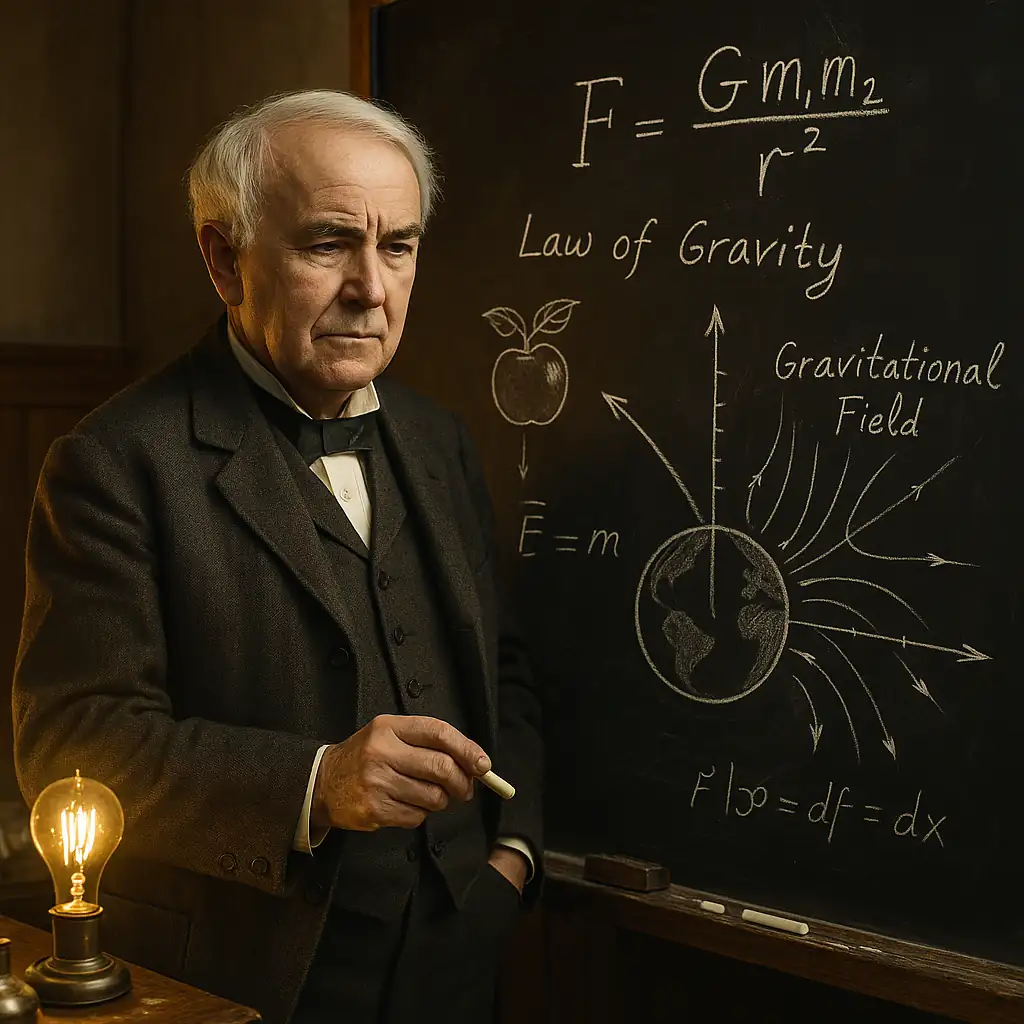
Isaac Newton introduced the gravity definition through his law of universal gravitation in 1687, published in Mathematical Principles of Natural Philosophy. He stated that every object with mass attracts every other object with a force proportional to their masses and inversely proportional to the square of the distance between them. This force, expressed as F = G * (m₁m₂/r²), where G is the gravitational constant (6.674 × 10^-11 m³ kg^-1 s^-2), explains why planets orbit the Sun. Newton’s law provided a groundbreaking framework for understanding celestial mechanics.
The gravity definition under Newton’s law applies universally, from falling apples to orbiting moons. For example, the Moon orbits Earth because Earth’s mass creates a gravitational pull, while the Moon’s mass exerts a smaller pull on Earth, causing tides. Newton’s formula accurately predicts the motion of objects in space, such as comets passing through the solar system. His work laid the foundation for centuries of astronomical discoveries, making gravity a cornerstone of classical physics.
Interestingly, Newton’s law has limitations. It fails to explain phenomena at very high speeds or in strong gravitational fields, such as near a black hole. The law assumes instantaneous action, which conflicts with the finite speed of light. Despite this, it remains highly accurate for most practical applications on Earth and in space. Newton’s gravity definition continues to guide our understanding of the universe’s basic mechanics.
Einstein’s General Relativity
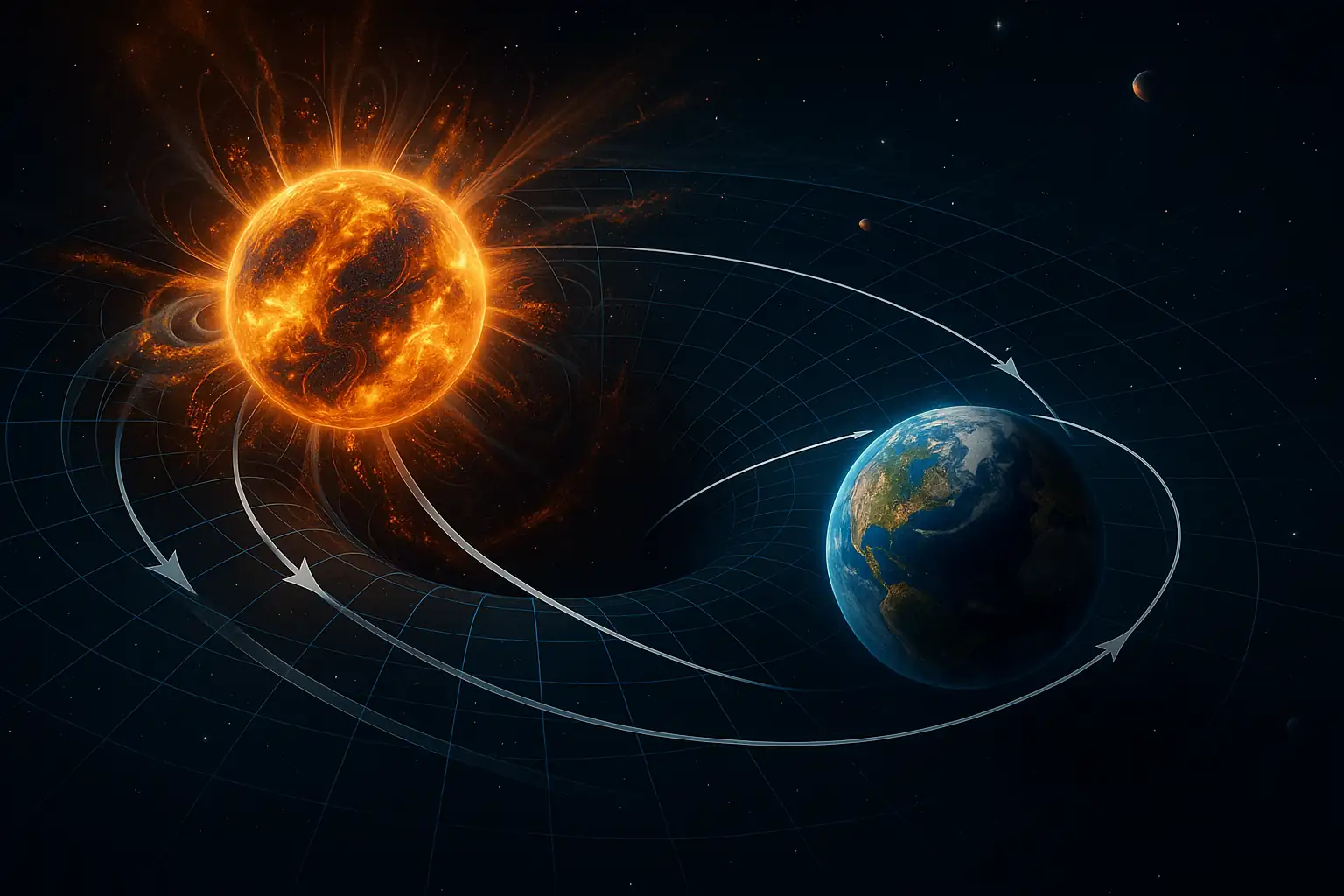
Albert Einstein redefined the gravity definition with his theory of general relativity in 1915, offering a deeper perspective. He proposed that gravity is not a force but a curvature of spacetime caused by mass and energy. Massive objects, like the Sun, warp spacetime, and this curvature dictates the paths of objects, such as planets orbiting in elliptical paths. This theory revolutionized our understanding, replacing Newton’s concept of an invisible force with a geometric framework.
Einstein’s gravity definition gained validation through observation. During a 1919 solar eclipse, Sir Arthur Eddington measured the bending of starlight near the Sun, confirming that spacetime curves as predicted. General relativity also explains the precession of Mercury’s orbit, a phenomenon Newton’s law couldn’t fully account for. Additionally, it predicts extreme effects like time dilation, where clocks run slower in stronger gravitational fields, a fact verified by GPS satellites.
Nevertheless, general relativity poses challenges. It conflicts with quantum mechanics, the theory governing the subatomic world, as the two frameworks describe reality differently. Scientists struggle to reconcile gravity with the other fundamental forces in a unified theory, often called quantum gravity. Einstein’s gravity definition, while groundbreaking, marks a stepping stone toward a deeper cosmic understanding.
Effects on Earth and Space
The gravity definition shapes life on Earth in profound ways. It keeps the atmosphere in place, preventing air from escaping into space, and drives ocean tides through the Moon’s gravitational pull. Gravity ensures objects fall to the ground, allowing us to walk without floating away, with Earth’s gravitational acceleration at 9.8 m/s². It also influences weather patterns by affecting air pressure and wind systems, making gravity a key player in Earth’s environment.
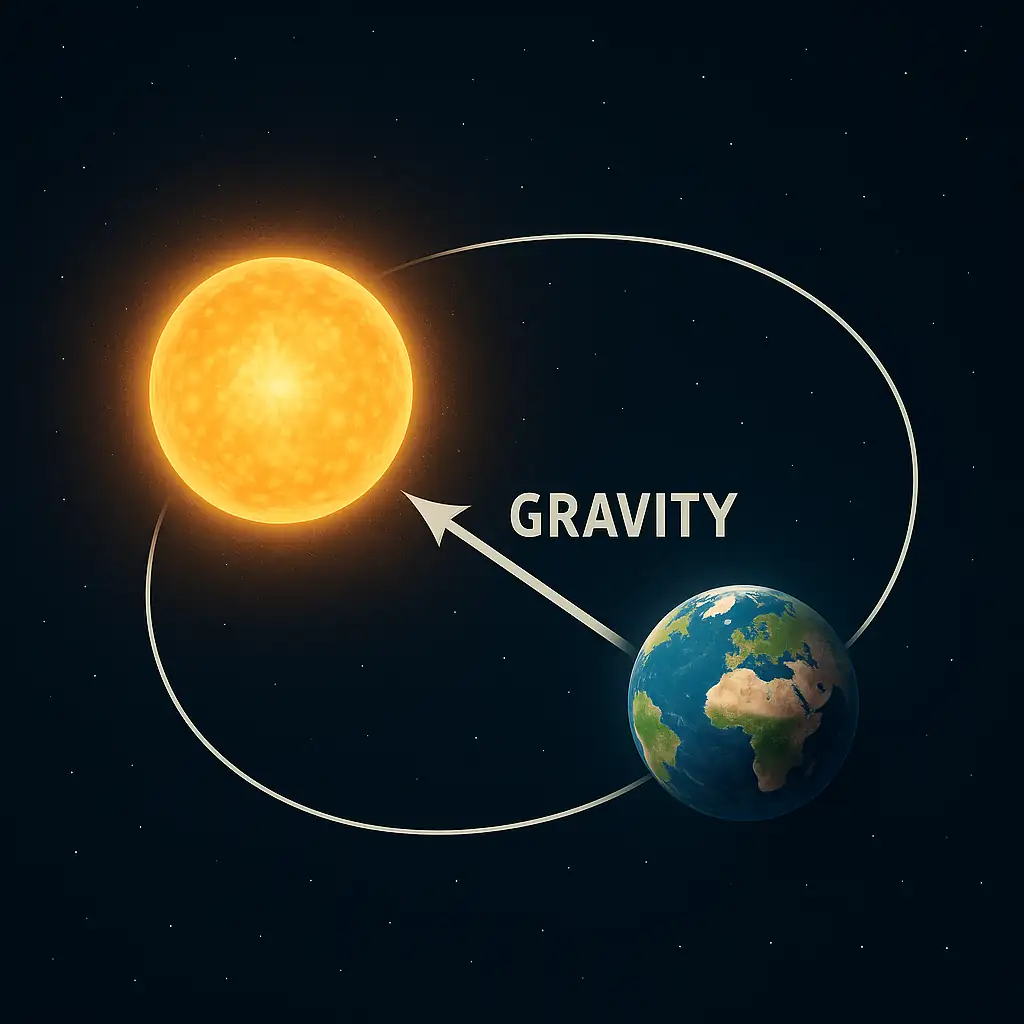
In space, gravity effects are equally significant. Gravity holds the solar system together, keeping planets in orbit around the Sun and moons around planets, like Jupiter’s 95 moons. It also governs the formation of galaxies, pulling gas and dust into stars and clusters over billions of years. For instance, the Milky Way’s spiral arms form due to gravitational attraction among its 100 billion stars, illustrating gravity’s role in cosmic structure.
In contrast, gravity in space creates challenges for astronauts. In microgravity environments, like the International Space Station, humans experience bone density loss and muscle atrophy, requiring rigorous exercise to counteract these effects. On the other hand, gravity’s pull enables space missions, such as slingshot maneuvers around planets to gain speed. The gravity definition underscores its dual role as both a creator and a challenge in the cosmos.

Modern Research and Mysteries
Modern research into the gravity definition seeks to unravel its deepest mysteries. Scientists explore quantum gravity, aiming to merge general relativity with quantum mechanics, a goal pursued through theories like string theory and loop quantum gravity. Experiments at the Large Hadron Collider search for gravitons, hypothetical particles that might carry gravitational force, though none have been detected as of 2025. These efforts aim to bridge the gap between the macroscopic and subatomic worlds.
Astronomers also study gravity’s role in dark matter and dark energy, which make up 95% of the universe. Dark matter’s gravitational pull shapes galaxy formation, yet it remains invisible, detected only through its effects, like the rotation curves of galaxies. Dark energy, driving the universe’s accelerated expansion, counters gravity on cosmic scales, a phenomenon discovered in 1998. These mysteries highlight gravity’s complex interplay with unknown forces.
Despite progress, gravity remains elusive. The inability to detect gravitons or fully explain dark energy frustrates researchers. Some propose alternative theories, like Modified Newtonian Dynamics (MOND), to address discrepancies in galactic rotation. On the other hand, missions like the Laser Interferometer Gravitational-Wave Observatory (LIGO) detect ripples in spacetime, confirming Einstein’s predictions. The gravity definition continues to evolve through cutting-edge science.
Leave a Reply