Introduction
Picture yourself wandering through Istanbul’s Grand Bazaar, where the sweet scent of Turkish baklava lures you to a colorful stall. This dessert, with its crisp filo layers, crushed nuts, and syrupy glaze, has been a favorite for centuries. Estimates suggest Turkey produces over 1000 tons of baklava each year, a testament to its popularity. From Ramadan feasts to cozy family gatherings, it’s a staple at celebrations. Its golden layers hide a rich history that spans empires programı ve kültürler. This article dives into its origins, evolution, and lasting impact. Let’s uncover how this treat became a global icon.
“Baklava isn’t just dessert; it’s our soul,” says a Gaziantep baker. Turkish baklava embodies Turkey’s culinary artistry and warm hospitality. From the lavish kitchens of Ottoman sultans to modern patisseries, it tells a story of craft and tradition. Its journey reflects cultural exchanges along ancient trade routes. Whether enjoyed with Turkish coffee or shared at a festival, it brings joy. Join us as we peel back the layers of this beloved sweet.
Roots of Baklava
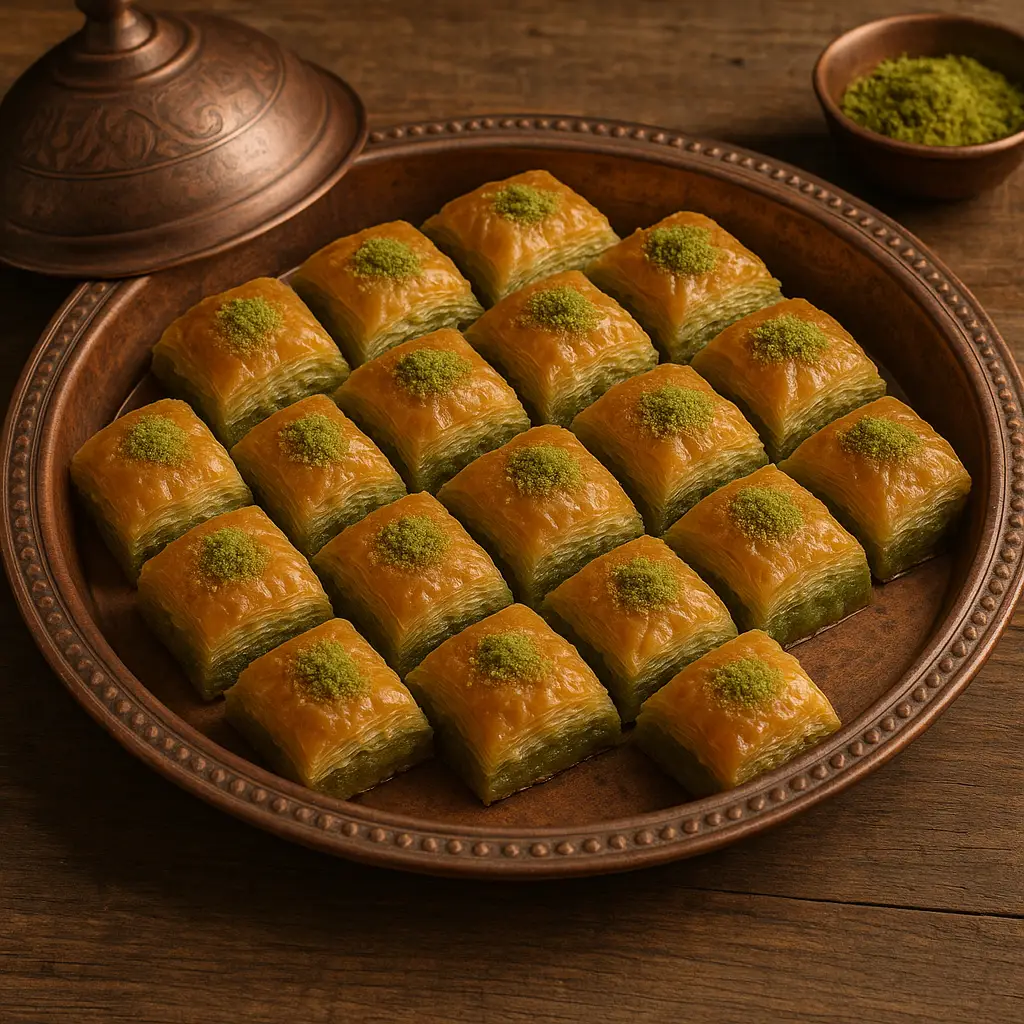
In the 11th century, nomadic Turks baked thin flatbreads called “yufka” over open fires. These layered breads, central to baklava history, later incorporated nuts and honey, hinting at early baklava. Turkish baklava likely grew from these Central Asian roots. Nomads lacked ovens, so their yufka was a practical staple, not a dessert. Over time, settled communities refined the recipe. Traders and travelers spread these techniques across regions.
Around the 8th century BCE, Assyrians in Mesopotamia layered breads with nuts and honey. This practice, a key part of baklava history, reached Mediterranean shores. By the 2nd century BCE, Greeks made “plakous,” a honeyed walnut cake, showing similar ideas. These early sweets suggest Turkish baklava blended influences from multiple cultures. Exact origins remain debated among historians. Still, ancient trade routes helped share these culinary seeds.
In the Byzantine Empire, desserts like “koptoplakous” featured nuts and honey between dough layers. They resembled baklava but used thicker dough, not fine filo. Markets in Constantinople buzzed with traders from Egypt and Syria, swapping recipes. As a result, baklava’s early forms likely took shape through these exchanges. Written records from the era are scarce. Yet, the groundwork for a layered dessert was set.
Evolution in the Ottoman Era
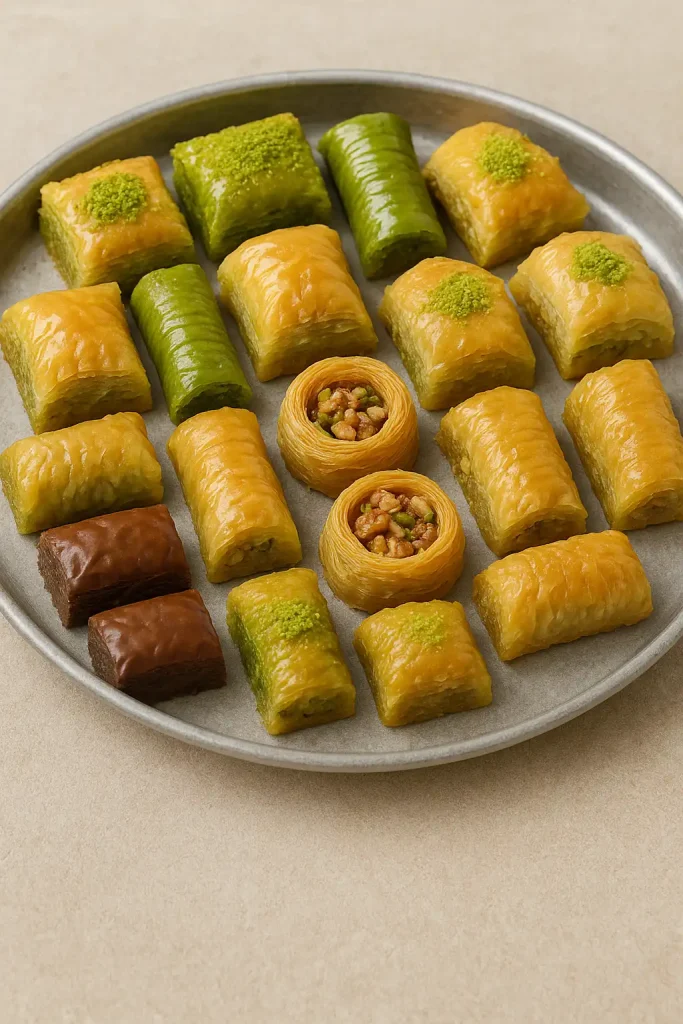
By the 15th century, Istanbul’s Topkapı Palace kitchens perfected Turkish baklava. Ottoman culture, with its love for art and food, drove this leap. Bakers, called “baklavacı,” rolled filo so thin it seemed translucent, a skill honed over years. A 1474 palace document notes baklava with 41 layers served at Ramadan feasts. This precision made baklava a mark of wealth. Guests marveled at its delicate texture and rich taste.
Ottoman culture wove baklava into ceremonies. In the 17th century, sultans gifted baklava trays to Janissary soldiers every 15th of Ramadan, a ritual dubbed the “Baklava Procession.” Court records describe hundreds of trays carried through Istanbul. This tradition showcased imperial power and generosity. As a result, baklava moved beyond palaces, reaching city bakeries. It became a treat for festivals and special occasions.
In the 19th century, Gaziantep’s bakeries made baklava more accessible. Improved ovens and filo techniques fueled this shift. Gaziantep’s pistachios, prized for their vibrant green hue, became a hallmark. By 1850, small shops served the middle class, per local trade logs. However, high-quality ingredients kept baklava special. Thus, Turkish baklava cemented its place in Turkey’s culinary identity.
Modern Types of Baklava
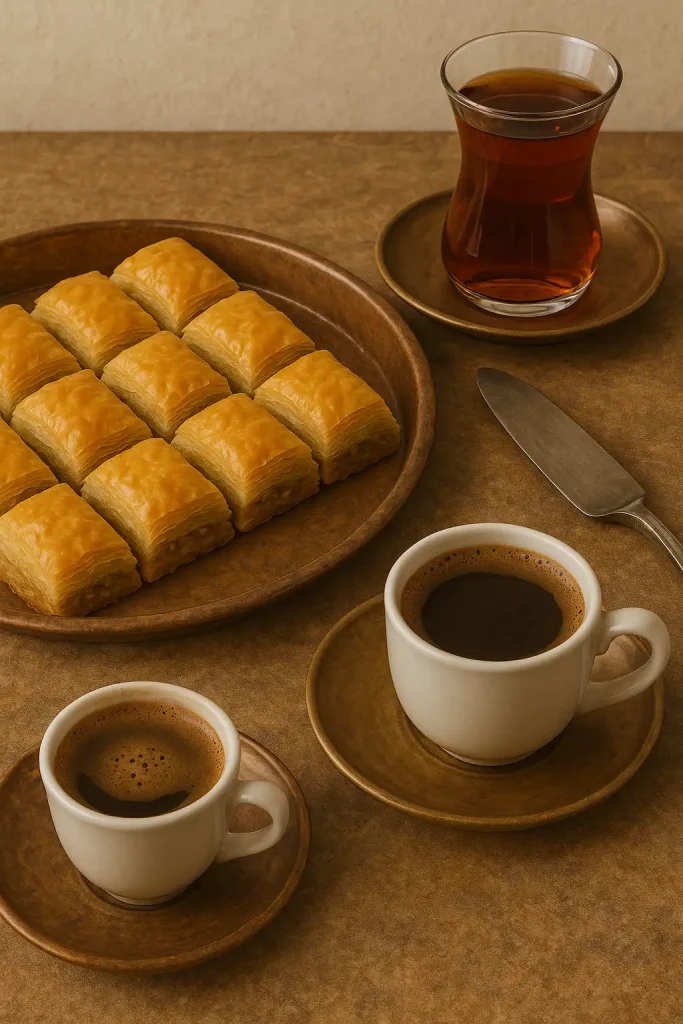
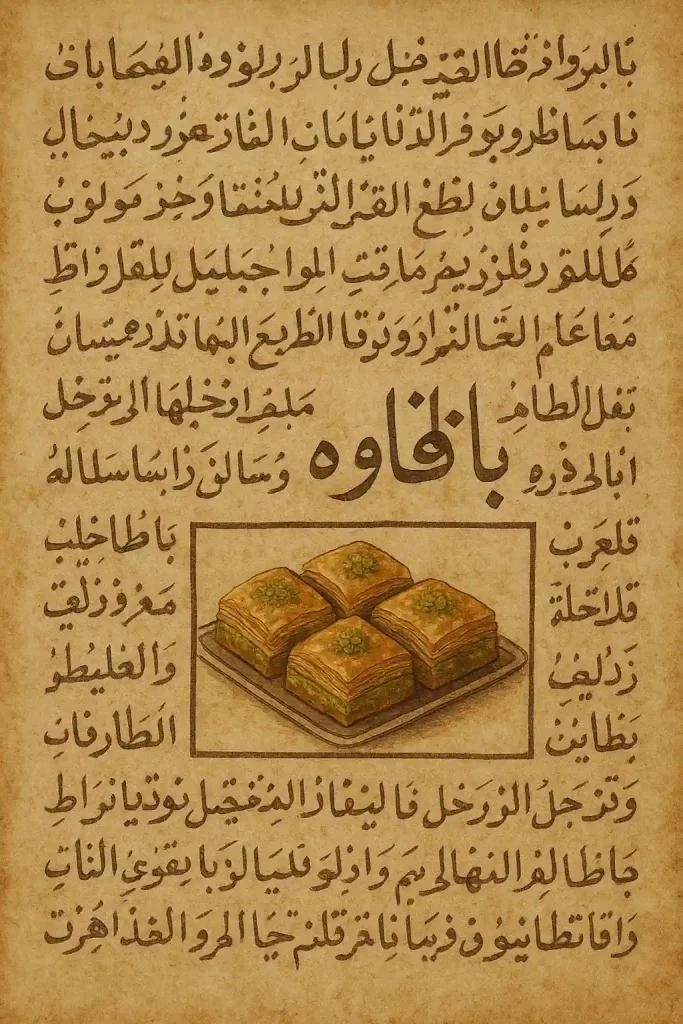
Today, Turkish baklava comes in diverse types of baklava, each with distinct flavors. Gaziantep, the baklava capital, leads with pistachio-packed “fistikli baklava.” Reports estimate the city supplies 70% of Turkey’s baklava, about 700 tons yearly. Its crisp filo, generous butter, and light syrup win hearts globally. In 2013, the EU granted Gaziantep a “Protected Geographical Indication” for its craft. Locals take pride in this recognition.
Istanbul’s “şöbiyet” layers thick cream with nuts, a 20th-century hit. Its creamy texture balances the syrup’s sweetness, delighting urban crowds. Keeping filo fresh challenges large-scale production, as humidity can soften it. Types of baklava like “sütlü nuriye,” soaked in milk and syrup, appeal to those seeking lighter options. These variations show baklava’s adaptability. Patisseries experiment while honoring tradition.
Izmir’s walnut baklava, with denser syrup, thrives on Turkey’s coast. Modern twists, like chocolate or sugar-free baklava, pop up in cities like Ankara. A 2022 survey of 500 bakers found 20% now offer vegan versions. Traditionalists insist on quality nuts and butter for authentic taste. As a result, Turkish baklava evolves while staying true to its roots.
Cultural Impacts
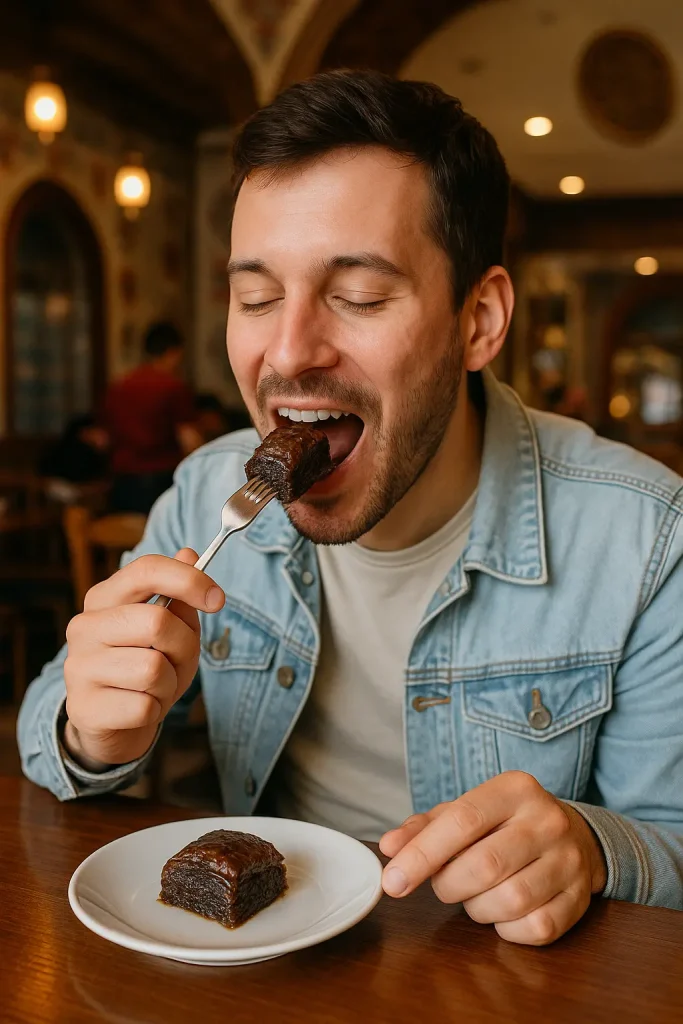
“Baklava welcomes everyone,” says an Ankara baker. Turkish baklava is a star among Turkish sweets, central to the nation’s culture. A 2023 survey of 1000 households found 85% serve baklava during Ramadan and Eid. It symbolizes generosity, uniting families at festive tables. Weddings and engagements often feature baklava trays, a nod to shared joy. Its role in celebrations makes it a cultural treasure.
Turkish sweets like baklava spread via Ottoman trade to the Balkans, Middle East, and North Africa. Gaziantep’s Güllüoğlu bakery, founded in 1871, made baklava a global name, exporting to 20 countries by 2024. Yet, debates over baklava’s origins—Greece and Lebanon also claim it—stir lively talks. As a result, baklava fosters culinary connections across borders. It’s a shared heritage with local twists.
Baklava shines at global food fairs, like London’s annual expos. In 2018, a 200-square-meter baklava in Ankara earned a Guinness World Record, per event archives. However, some fear mass production dilutes quality, with 15% of 2023 surveyed bakers noting cheaper ingredients. Thus, Turkish baklava balances tradition with its growing fame, remaining a sweet cultural bridge.
Leave a Reply