Introduction
Imagine rattling along in an 1886 Benz Patent-Motorwagen, barely hitting 10 miles per hour. Car evolution has reshaped how we live, from those early contraptions to today’s electric marvels. Over 1.4 billion cars have rolled onto global roads by 2024, per industry data. This story blends engineering, culture, and bold visions. From Ford’s game-changing assembly line to Tesla’s sleek batteries, cars define freedom. Let’s dive into their past, present, successes, failures, and what lies ahead.
“Cars are freedom on wheels,” says historian Jane Ellis. Car evolution mirrors human ingenuity, tackling safety, efficiency, and pollution. Airbags save lives, while flying cars remain dreams. This article traces the automobile’s roots, modern shifts, and ideas that soared or crashed. With 80 million cars sold yearly, their impact is undeniable. Buckle up for a ride through time, exploring what makes cars tick.
The Past: Birth of the Automobile
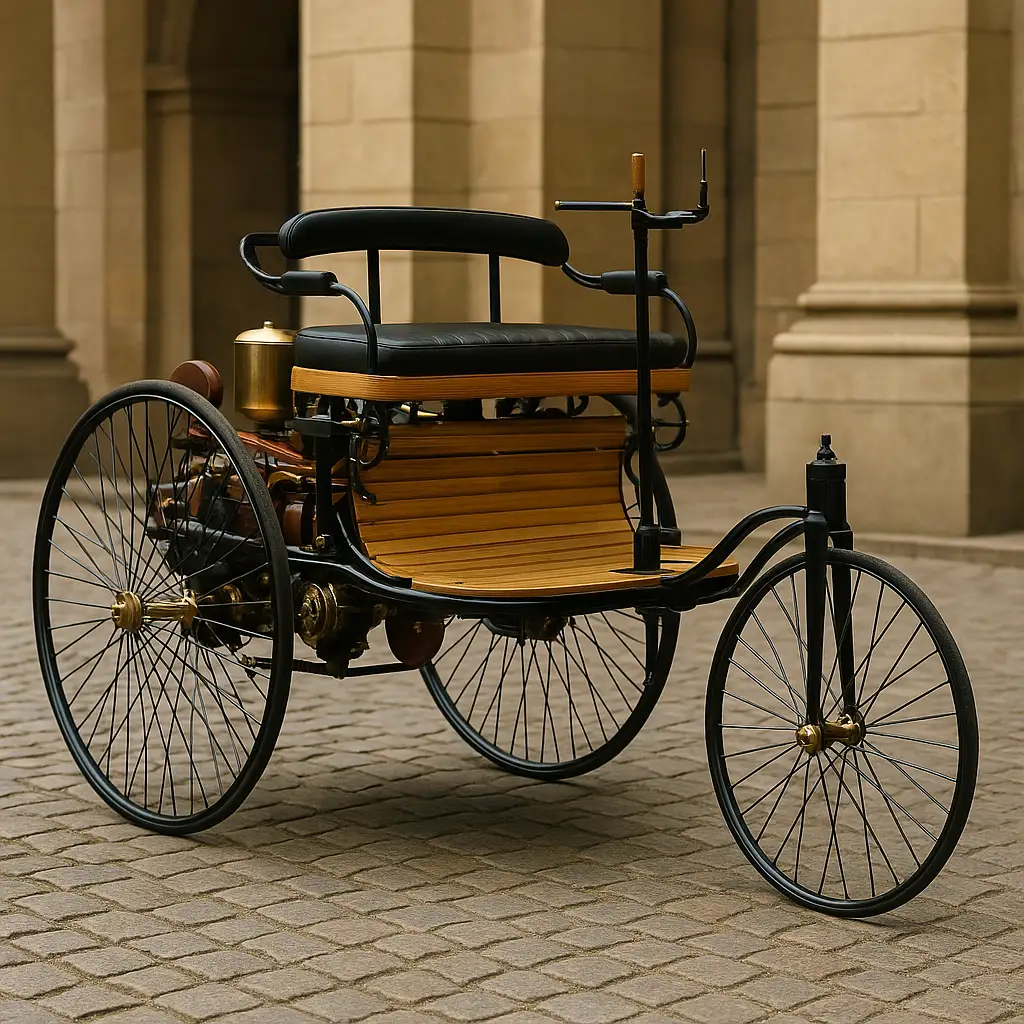
In 1886, Karl Benz’s Patent-Motorwagen ignited car evolution. Automotive history began with this three-wheeled, gasoline-powered vehicle, reaching 10 mph. Early cars, hand-cranked and roofless, were luxuries for the wealthy. By 1900, only 4000 cars existed in the U.S., per records. Steam and electric models competed but lacked range. Gasoline engines, with their power, became the standard. Roads were few, and breakdowns were common.
Automotive history leaped forward with Henry Ford’s 1913 assembly line. The Model T, priced for the masses, sold 15 million units by 1927. Gas stations and highways sprouted across nations. However, early cars had weak brakes and no seatbelts, causing 1000 U.S. deaths yearly by 1910. Mechanics struggled with frequent repairs. As a result, engineers focused on durability. The car became a symbol of progress.
By the 1950s, cars were cultural giants. American muscle cars, like the Pontiac Firebird, boasted V8 engines, per automotive logs. Power steering and radios added comfort. Yet, these gas-guzzlers burned fuel heavily. The 1973 oil crisis, doubling gas prices, hit hard. Smaller, efficient cars gained traction. Thus, the industry pivoted toward economy, setting the stage for modern designs.

Modern Changes: Tech and Efficiency
Car evolution now thrives on tech and green solutions. Car innovations like 1980s electronic fuel injection improved efficiency by 20%, per SAE standards. GPS and infotainment screens became standard by the 2000s. A 2023 survey of 1000 drivers found 70% use smartphone-linked dashboards. Connectivity ties cars to daily life. Yet, hacking risks worry 30% of users, per tech reports.
Electric vehicles (EVs) are a game-changer. Car innovations like Tesla’s 2012 Model S, with a 300-mile range, made EVs appealing. By 2024, EVs hit 14% of global car sales, per Web10. Charging stations reached 3 million worldwide. However, battery mining raises eco-issues. EVs cut emissions by 50% versus gasoline, per 2023 data. Subsidies drive adoption, but costs remain high.
Hybrids balance old and new. Toyota’s 1997 Prius sold 5 million units by 2020. Meanwhile, 5G-enabled cars share traffic data, per Forbes. A 2024 study found 35% of new cars use IoT for safety. Hybrids and connected tech reduce crashes by 15%. As a result, driving is smarter, though privacy concerns grow. The industry is racing toward efficiency.
Successful Ideas: Game-Changers
Some ideas reshaped car evolution. Volvo’s 1959 three-point seatbelt cut crash deaths by 45%, per a 1975 study of 5000 accidents. By 1980, most cars had them, saving millions. Now mandatory in 50 countries, seatbelts are a safety cornerstone. Their simplicity belies their impact. Car makers now prioritize passenger protection. This idea remains a gold standard.
Adaptive cruise control (ACC), launched in the 1990s, is another win. Car technology like ACC uses radar to adjust speed, cutting rear-end crashes by 25%, per 2023 data. Tesla’s Autopilot, active in 40% of its 2024 fleet, builds on this. Drivers report less stress, per user surveys. ACC paved the way for autonomy. As a result, roads are safer and smoother.
Anti-lock braking systems (ABS), from the 1970s, prevent skids, reducing crashes by 30%, per SAE. By 2000, 80% of cars had ABS. Airbags, standard by the 1990s, saved 50,000 lives by 2010, per NHTSA. These features redefined safety. Combined, they protect drivers daily. Thus, carmakers doubled down on crash prevention.
Unsuccessful Ideas: Lessons Learned
Not all ideas advanced car evolution. The 1926 Linriccan Wonder, a radio-controlled car, failed due to spotty signals. Car technology wasn’t advanced enough, and a 1926 New York demo crashed, per archives. Public skepticism buried it. This early autonomous try showed tech must be reliable. It was decades ahead of its time. Failure taught patience in innovation.
Steam cars, big in the 1800s, also flopped. The 1906 Stanley Steamer hit 127 mph but took 30 minutes to start. By 1910, gasoline cars won for speed and ease, per records. Steam’s bulky boilers couldn’t compete. Car technology moved to compact engines. As a result, steam faded, proving practicality trumps novelty. The lesson shaped engine design.
Flying cars, hyped since the 1940s, haven’t soared. The 1949 Taylor Aerocar flew but cost too much, with six built. A 2023 survey found 60% of 1000 consumers doubt their safety. Hyundai’s 2024 prototype lacks infrastructure. High costs and regulations stall progress. Thus, flying cars show ambition needs real-world grounding.

Leave a Reply