Introduction
Homo erectus evolution shaped early human progress as a pivotal ancestral species. Fossils dated from 1.9 million to 110,000 years ago were found across Africa, Asia, and Europe. For instance, Homo erectus crafted stone tools and used fire, marking early human adaptations. This article examines their discovery, traits, evolutionary role, obstacles, and extinction to highlight their impact. Their global dispersal, hence, redefined paleoanthropological understanding. Paleontological evidence underscores their lasting influence. Homo erectus evolution connects early survival to modern human origins.
In contrast, Homo erectus faced environmental and competitive hurdles during their existence. Their innovations, however, set the stage for later species. Extinction debates engage researchers studying human ancestry. Fossil-based findings, for example, reveal their adaptability to diverse environments. Exploring Homo erectus, therefore, clarifies how humans navigated ancient landscapes. This analysis highlights their achievements alongside survival difficulties.
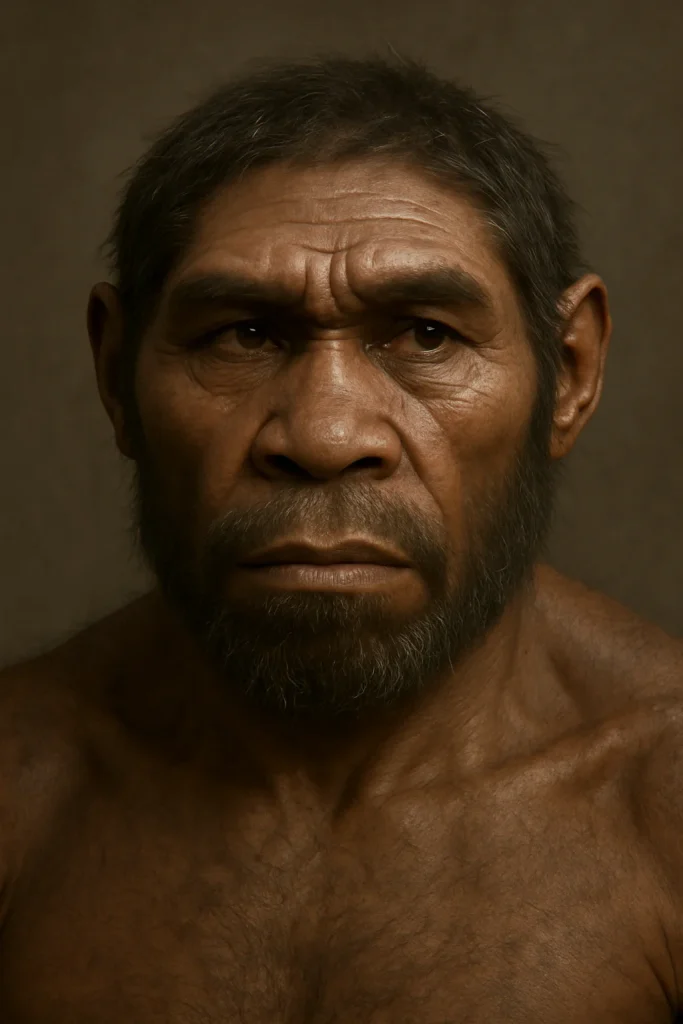
Discovery and Historical Context
In 1891, Eugene Dubois discovered Homo erectus fossils in Java, Indonesia. Named “Pithecanthropus erectus,” the find suggested an upright-walking ancestor. Fossils from Kenya’s Turkana Basin were later classified as Homo erectus. Excavations in the 20th century, for instance, broadened fossil-based findings. Scientists refined the Homo erectus evolution timeline using radiometric dating. This led to new perspectives on human migration. Dubois’ discovery ignited debates about human ancestry.
In the 1920s, researchers uncovered “Peking Man” fossils at Zhoukoudian, China, showing fire use. Dmanisi, Georgia, revealed migrations 1.8 million years ago. These sites were studied to map Homo erectus’ spread. Scientific competition, in addition, spurred rapid discoveries. Early human adaptations became clearer through these efforts. The historical context reflects global paleoanthropological collaboration. Current studies build on this foundation.
Homo erectus findings continue to guide science. Their fossils, for example, link African origins to worldwide expansion. New research uncovers migration routes. Hence, this historical foundation strengthens evolutionary studies. Early human movements were illuminated by these discoveries.
Physical and Cultural Characteristics
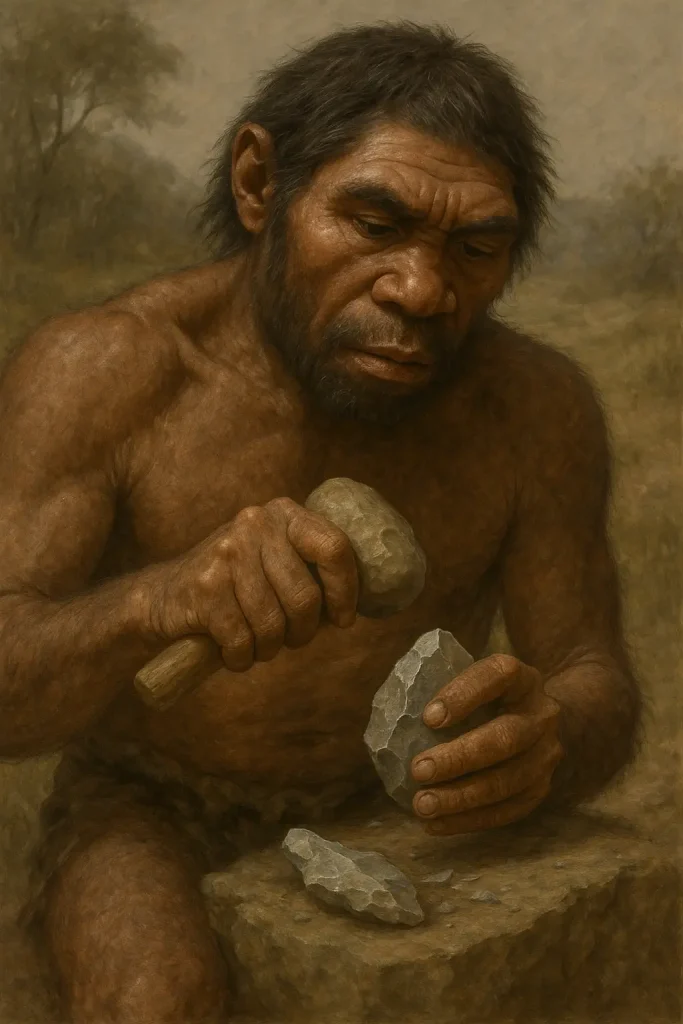
Homo erectus had sturdy skeletons and long legs for endurance walking. A brain size of roughly 900 cm³ surpassed earlier hominins. This capacity, for instance, enabled behaviors like toolmaking. They perfected bipedalism, supporting extensive travel. Homo erectus crafted Acheulean handaxes, advancing Homo erectus evolution through early human adaptations. Their versatility, therefore, ensured survival across continents. Diverse climates tested their resilience.
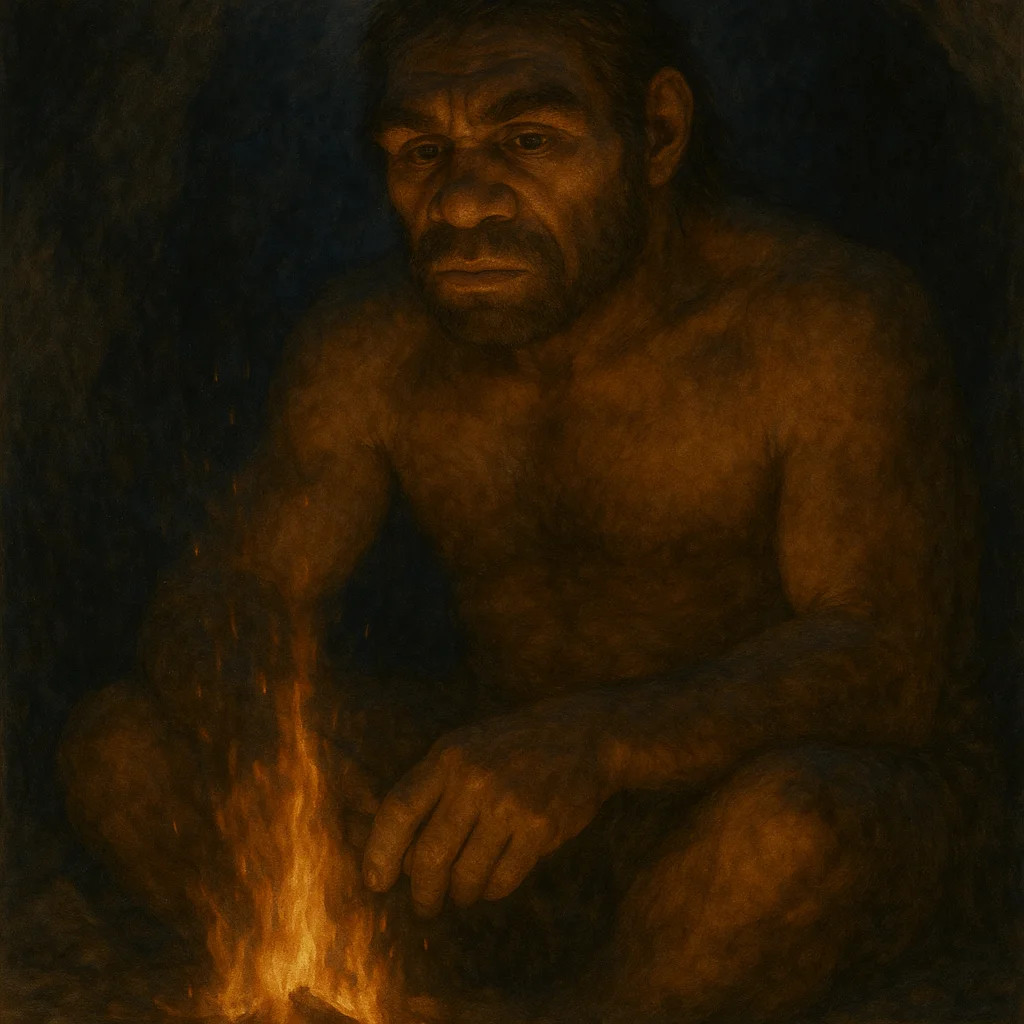
This species pioneered fire for cooking and warmth, as evidenced at Zhoukoudian. Fire use was dated to 1 million years ago. They formed social groups, with cooperative hunting suggested by tool site layouts. Diets combined hunting and gathering, with isotopic evidence showing meat’s role in brain growth. Paleontological evidence, in contrast, highlights these cultural leaps. Their tools and group dynamics set evolutionary benchmarks.
Homo erectus’ traits influenced human development. Later species, for example, adopted their innovations. Tools and fire shaped survival strategies. Studying these characteristics reveals adaptation to varied environments. Modern behaviors trace back to their advancements.
Benefits and Contributions to Human Evolution
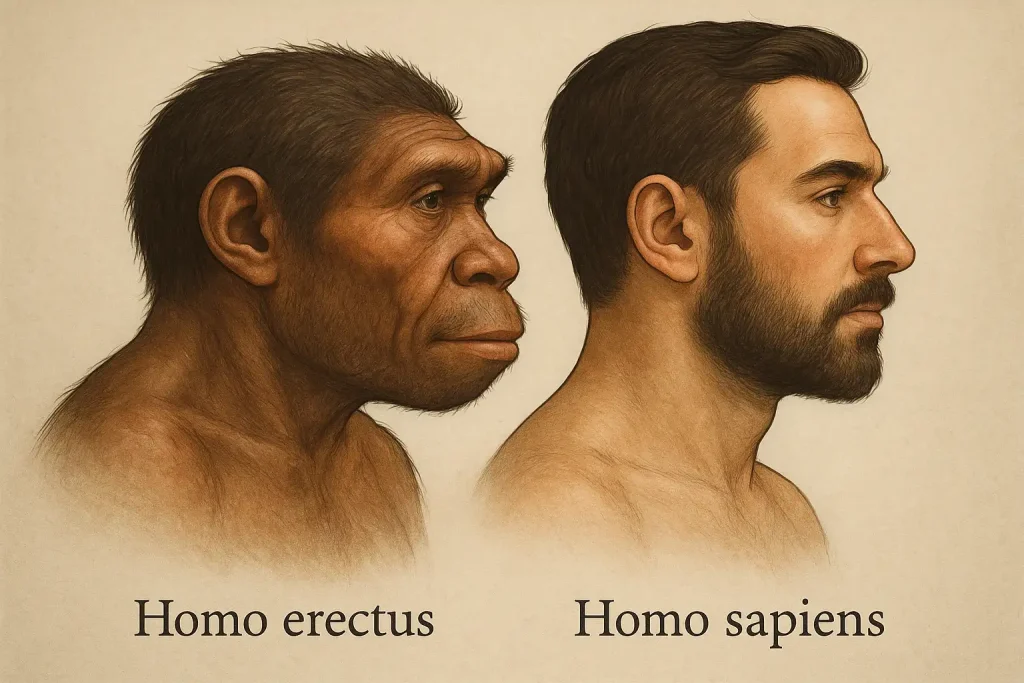
Homo erectus evolution advanced through physical and cultural strides. Their larger brains supported problem-solving, seen in refined tool designs. Bipedalism enabled migration across continents, for instance. They used fire to enhance diets and strengthen social bonds. These early human adaptations, hence, laid groundwork for Homo sapiens. Their global reach expanded human ecological boundaries. Homo erectus drove critical evolutionary progress.
They honed Acheulean tools for hunting and plant processing over millennia. Group cooperation, inferred from shared tool sites, fostered social ties, with estimates suggesting groups of 20–50 individuals. Their resilience thrived in savannas and forests. These adaptations established key milestones. Fossil-based findings, moreover, confirm their influence. However, their tools lacked the complexity of later humans. Their role remained foundational despite limitations.
Cognitive constraints limited advanced behaviors. Brain size, for example, restricted innovation. Still, Homo erectus bridged early hominins to modern humans. Their legacy endures in our physical and social traits. Later species built on their pioneering achievements.
Challenges and Extinction Theories
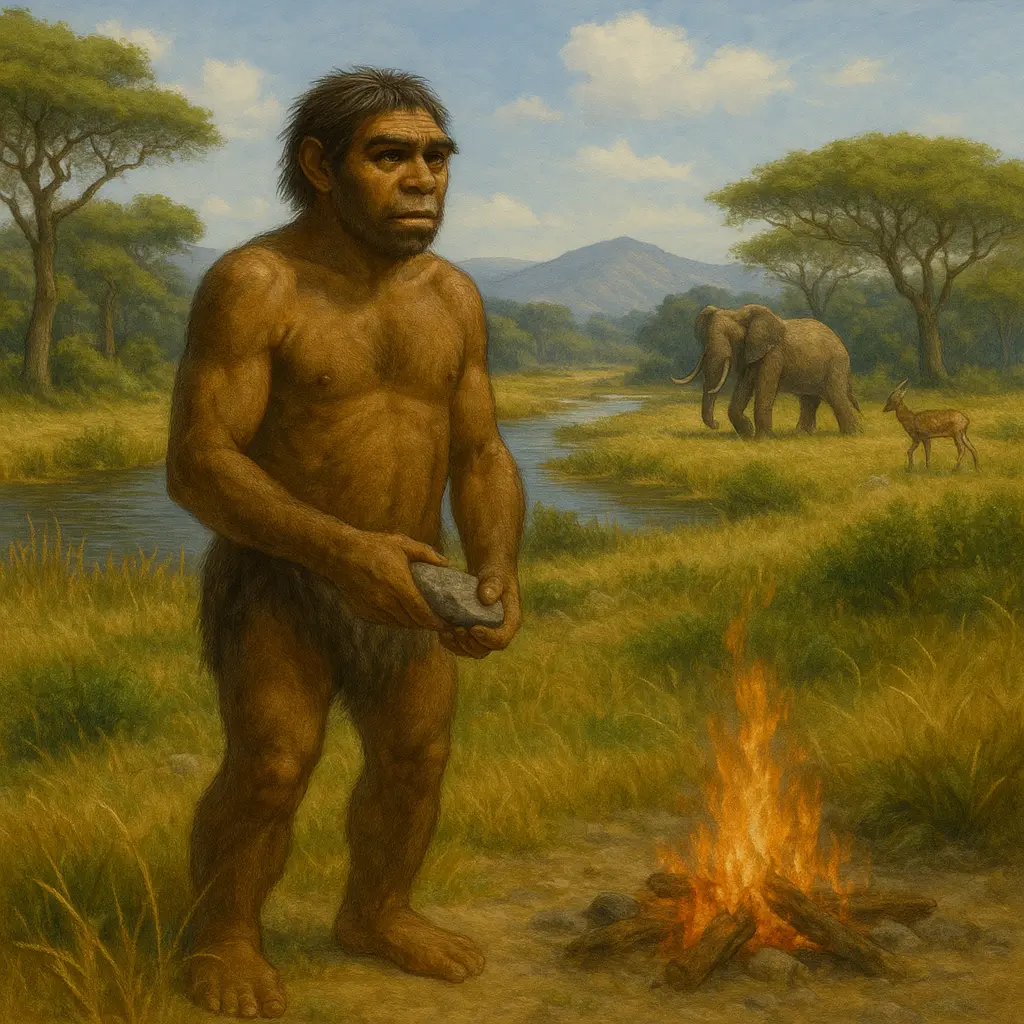
Homo erectus faced numerous survival challenges, leading to extinction. African droughts reduced food availability, for instance. Early Homo sapiens competed for scarce resources. Fossils show population declines by 110,000 years ago. Theories suggest climate-driven scarcity, interbreeding with other hominins, or technological gaps as causes. Limited tool innovation, in addition, hindered adaptation to rapid changes. These obstacles challenged their survival.
Acheulean tools remained static, limiting responses to environmental shifts. Small group sizes, estimated at 20–50, reduced resilience to disasters. Fossil injuries indicate predation and disease risks. Some propose Homo sapiens outcompeted them with advanced tools. These Homo erectus survival challenges, therefore, expose early human vulnerabilities. Extinction resulted from ecological and competitive pressures.
Extinction debates are fueled by these factors. Climate and social limits, for example, interplayed in their decline. Analyzing these obstacles provides insights into human fragility. This clarifies why Homo erectus vanished. Their story underscores adaptation’s role in survival.
Leave a Reply