Introduction
The history of football spans centuries, reflecting humanity’s passion for competitive play. From ancient rituals to modern stadiums, football unites billions worldwide. For example, the FIFA World Cup captivates millions every four years. This article traces football’s origins, evolution, technological advancements, and global influence. Challenges like commercialization, however, shape its narrative. The history of football blends unity and rivalry. Its journey reveals sport’s power to connect cultures.
Ancient games laid the foundation for football’s rise. Standardized rules and innovations transformed it into a global phenomenon. Football’s cultural and technological roles fueled its spread. Historical evidence, therefore, underscores its significance. This analysis explores football’s milestones and obstacles. Understanding its history illuminates its universal appeal.

Ancient Origins of Football
The origins of football trace back to ancient civilizations. In China’s Han Dynasty (206 BCE–220 CE), cuju involved kicking a leather ball for military training. Mesoamerican cultures, like the Maya, played ritualistic ball games with rubber balls. These games, often tied to ceremonies, mirrored football’s physical demands. For instance, players targeted stone hoops, showcasing precision. The history of football draws from these traditions. Such games reveal sport’s cultural roots.
In ancient Greece and Rome, episkyros and harpastum featured competitive ball play. Soldiers used them to build physical strength. By medieval Europe, mob football emerged, with villages clashing chaotically. Rules were absent, leading to frequent injuries. These origins of football highlight diverse practices. Early games laid groundwork for modern sport. Their competitive spirit endures in football’s legacy.
Communities used ball games for entertainment and social cohesion. Regional variations prevented unified rules, but popularity grew. For example, medieval festivals often centered on mob football. Historical records document their widespread appeal. These activities shaped football’s early forms. The history of football began with these diverse practices.
Evolution of Modern Football
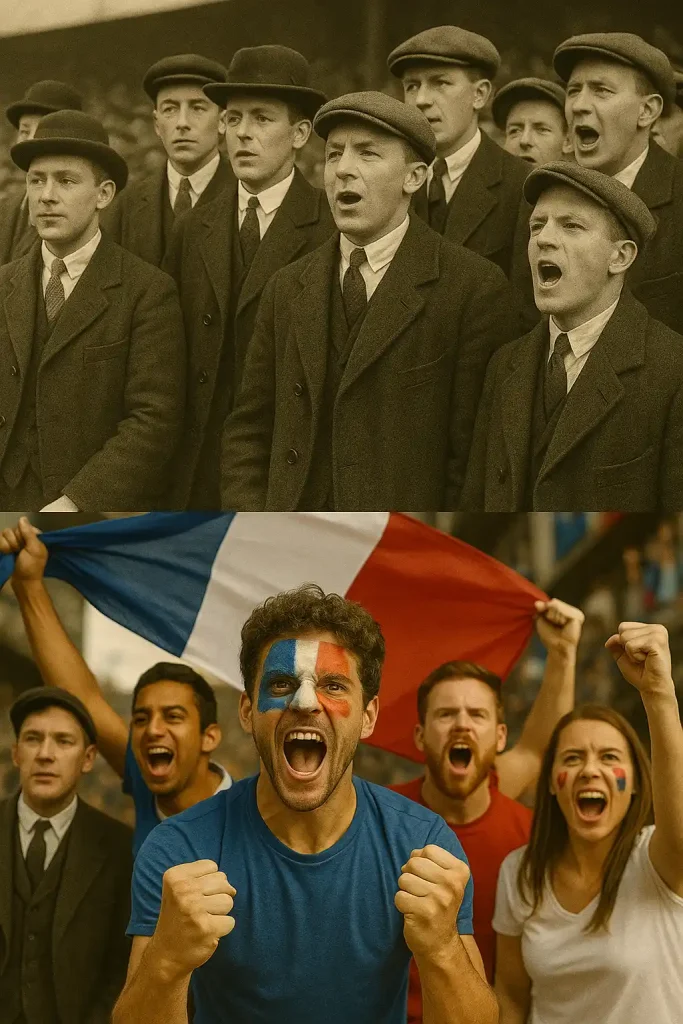
Modern football was born in 19th-century England with standardized rules. In 1863, the Football Association (FA) codified soccer, banning ball-carrying to separate it from rugby. Schools like Eton formalized matches, replacing mob chaos. The FA’s laws, for instance, shaped modern football. British trade spread the game globally, planting seeds for international play. The history of football hinges on this shift. These rules remain soccer’s core.
Professional leagues, like England’s Football League in 1888, drew massive crowds. FIFA, founded in 1904, unified global rules, launching the 1930 World Cup in 1930. Innovations like referees and penalty kicks enhanced fairness. Modern football evolved through these milestones. Structured play, however, faced issues like player wages. Football’s framework became a model for sports.
Industrialization fueled football’s rise by providing leisure time. Factory workers formed teams, fostering community bonds. Social changes, like women’s suffrage, supported early women’s teams, though restrictions persisted. Historical shifts, for example, shaped modern football. Its evolution reflects both progress and challenges.
Technological and Tactical Advancements in Football
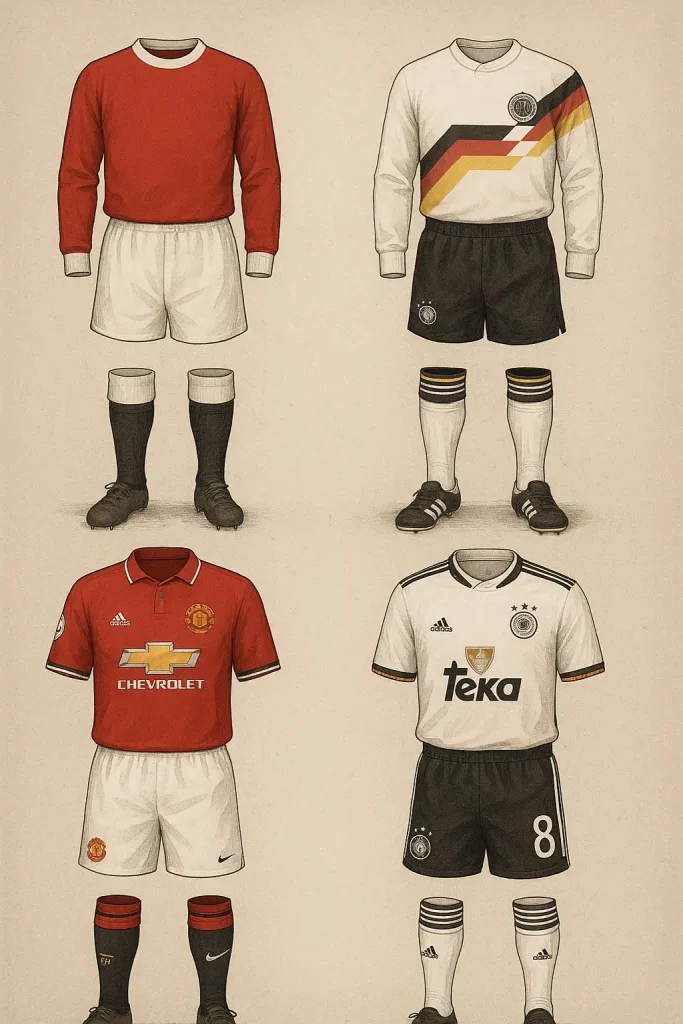
Tactical advancements shaped football’s early development. In the 1920s, the WM formation, introduced by Herbert Chapman, revolutionized strategy with structured defense and attack. Teams shifted from chaotic play to organized systems, improving efficiency. For example, Austria’s “Wunderteam” dominated using fluid tactics. These innovations enhanced competitive balance. The history of football owes much to such strategic leaps. Tactical evolution continues to define the sport.
Technological innovations transformed modern football. Goal-line technology, adopted in 2012, ensured accurate goal decisions, reducing controversies. Video Assistant Referee (VAR), introduced in 2018, allowed referees to review critical moments. These tools, for instance, improved fairness in matches like the World Cup. Technological advancements in football elevated precision. However, high costs limit access for smaller leagues. Technology’s role remains pivotal yet challenging.
VAR and goal-line technology sparked debates among fans. Supporters argued VAR disrupts game flow, citing delays in decisions. Yet, studies show it corrects 90% of major errors, enhancing justice. Coaches adapted tactics to account for VAR scrutiny, refining discipline. Football’s technological advancements balance accuracy with tradition. Resistance to change persists among some fans. The sport navigates these tensions to maintain integrity.
Economic factors fueled technological adoption. Wealthy leagues, like the Premier League, funded advanced systems, while grassroots clubs lagged. Broadcasting revenue supported innovations, amplifying viewership. Challenges, like fan protests against VAR, highlighted divides. For example, traditionalists value human error as part of football’s charm. The history of football reflects technology’s transformative impact. Ongoing advancements shape its future.
Globalization and Cultural Impacts
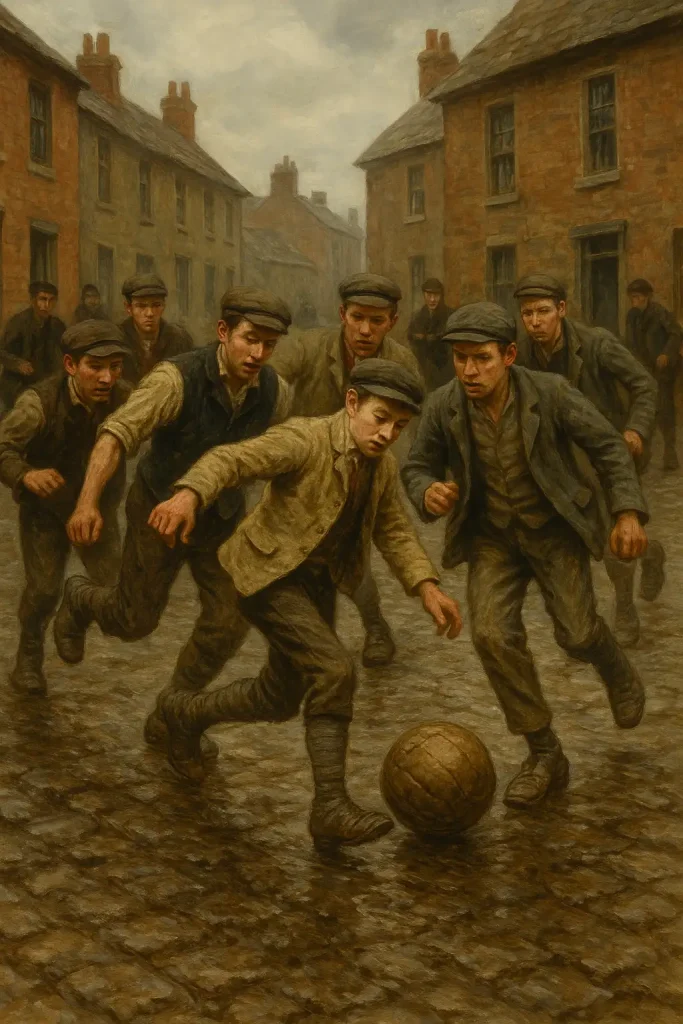
The globalization of football turned it into a cultural force. British sailors and traders spread the game to South America, Africa, and Asia. By the 20th century, South American teams, like Uruguay, dominated early World Cups. FIFA’s expansion, for instance, grew membership to over 200 nations. Media broadcasts amplified football’s reach, creating global fandom. Football’s global spread fosters cross-cultural connections.
Football shaped cultural identities and national pride. In Brazil, samba-style play became iconic, while Germany emphasized discipline. African nations, like Nigeria, brought flair to World Cups. Cultural expressions, for example, enriched football’s diversity. Local styles were celebrated through international tournaments. Football’s cultural impacts unite diverse societies. Its influence transcends borders and languages.
Commercialization drove football’s global growth but raised concerns. By the 21st century, sponsorships and TV deals generated billions, with the Premier League leading. Economic disparities, however, widened between clubs. For instance, smaller teams struggled to compete financially. Football’s economic power fuels both opportunity and inequality. Ethical challenges, like player exploitation, persist in its global market.
Issues like hooliganism marred football’s image. The 1985 Heysel disaster, for example, led to bans and stadium reforms. Gender disparities also lingered, with women’s football underfunded until recent decades. Campaigns like “Kick It Out” tackle discrimination. Football’s globalization, though unifying, faces social hurdles. Addressing these ensures its inclusive legacy.

Leave a Reply