Introduction
The search for extraterrestrial life has captivated scientists and dreamers alike. Could planets with potential for life exist beyond our solar system? Advances in astronomy have revealed thousands of exoplanets, some of which may harbor conditions suitable for life. Among these, Proxima Centauri b stands out as the closest known exoplanet to Earth with such potential. As of April 2025, telescopes like the James Webb Space Telescope (JWST) are helping us study these distant worlds. This article explores the criteria for habitability, notable planets with potential for life, and why Proxima Centauri b is a prime candidate, while addressing the challenges in detecting life.

What Makes a Planet Habitable?
Understanding planets with potential for life starts with defining habitability. Scientists look for several key factors. First, a planet must be in the habitable zone, or “Goldilocks zone,” of its star. This is the region where temperatures allow liquid water to exist. Water is essential for life as we know it. Second, the planet should have a suitable atmosphere. For example, it needs gases like oxygen or carbon dioxide to support life processes. Third, a magnetic field can protect the planet from harmful stellar radiation.
Size and composition also matter. Rocky planets, similar to Earth, are better candidates than gas giants like Jupiter. A stable climate and the presence of organic molecules further increase the odds. Thus, planets with potential for life must balance these conditions. Research from NASA indicates that 20-50% of Sun-like stars may host rocky planets in their habitable zones. This statistic fuels the search for habitable exoplanets across the galaxy.

Notable Exoplanets with Potential for Life
Several exoplanets have emerged as strong candidates for habitability. Planets with potential for life include Kepler-442b, located 1,200 light-years away. This exoplanet is 1.3 times Earth’s size and receives about two-thirds of Earth’s sunlight. Its star, Kepler-442, is a cool red dwarf, providing stable conditions. Another candidate, TRAPPIST-1e, orbits a red dwarf 40 light-years away. It’s one of seven planets in the TRAPPIST-1 system, three of which are in the habitable zone. TRAPPIST-1e has a radius similar to Earth’s and may have liquid water.
Kepler-186f, discovered in 2014, is another promising exoplanet. It’s 500 light-years away and orbits a red dwarf. This planet is only 10% larger than Earth and lies in the habitable zone. Its star provides enough energy for potential liquid water. These planets with potential for life show the diversity of habitable candidates. However, their distance makes detailed study challenging. This brings us to a closer candidate: Proxima Centauri b.

Proxima Centauri b: The Closest Candidate
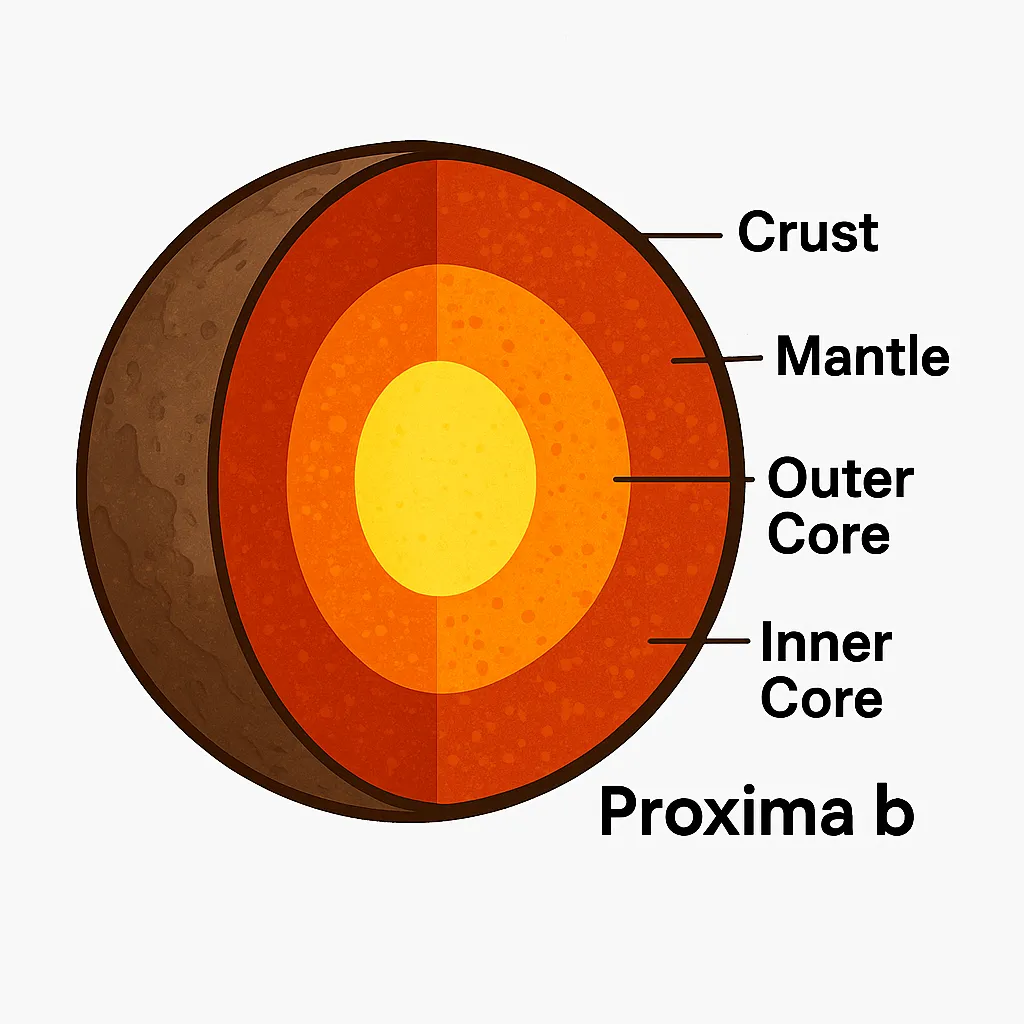
Proxima Centauri b is the nearest known exoplanet to Earth, just 4.24 light-years away. Discovered in 2016 by the European Southern Observatory (ESO), it orbits Proxima Centauri, the closest star to our Sun. Proxima Centauri is a red dwarf, smaller and cooler than the Sun. Proxima Centauri b lies in its habitable zone, raising questions about planets with potential for life. It’s about 1.17 times Earth’s mass and completes an orbit every 11.2 days. Its proximity to Earth makes it a prime target for study.
Could Proxima Centauri b support life? Its location in the habitable zone suggests liquid water might exist. However, challenges remain. Red dwarfs like Proxima Centauri emit strong stellar flares, which could strip away a planet’s atmosphere. A 2023 study using JWST data found possible signs of an atmosphere, but results are inconclusive. If it has a magnetic field, it might retain water and gases. Thus, Proxima Centauri b represents the closest of planets with potential for life, offering a unique opportunity for future exploration.
Challenges in Detecting Life
Searching for life on exoplanets like Proxima Centauri b is complex. One major challenge is distance. Even at 4.24 light-years, Proxima Centauri b is too far for direct visits with current technology. Instead, scientists rely on indirect methods. For example, the transit method detects planets by measuring dips in starlight as they pass in front of their star. Spectroscopy analyzes a planet’s atmosphere by studying the light it reflects. Planets with potential for life might show biosignatures, like oxygen or methane, in their spectra.
However, red dwarfs complicate this process. Their flares can mimic biosignatures, leading to false positives. Additionally, small planets are harder to study due to faint signals. A 2024 Nature study highlighted that JWST struggles to detect atmospheres on rocky exoplanets smaller than 1.5 Earth masses. These challenges affect our understanding of planets with potential for life. Future missions, like the Habitable Worlds Observatory planned for the 2030s, aim to overcome these hurdles with better technology.

Leave a Reply