Introduction
Europa, one of Jupiter’s largest moons, has captured the attention of scientists for decades. This icy moon, discovered by Galileo Galilei in 1610, holds a prime spot in the search for life. Scientists consider Europa a prime candidate for hosting microscopic life in our solar system. Beneath its frozen surface lies a vast subsurface ocean, potentially containing twice the water of Earth’s oceans. The possibility of life on Europa has sparked numerous scientific missions to explore its secrets.
As of May 2025, the anticipation for NASA’s Europa Clipper mission continues to grow, aiming to uncover whether this moon can support life. This article delves into Europa’s unique features, focusing on the possibility of life on Europa. We’ll explore its environment, the chemistry of its ocean, and upcoming missions that could change our understanding of life beyond Earth.
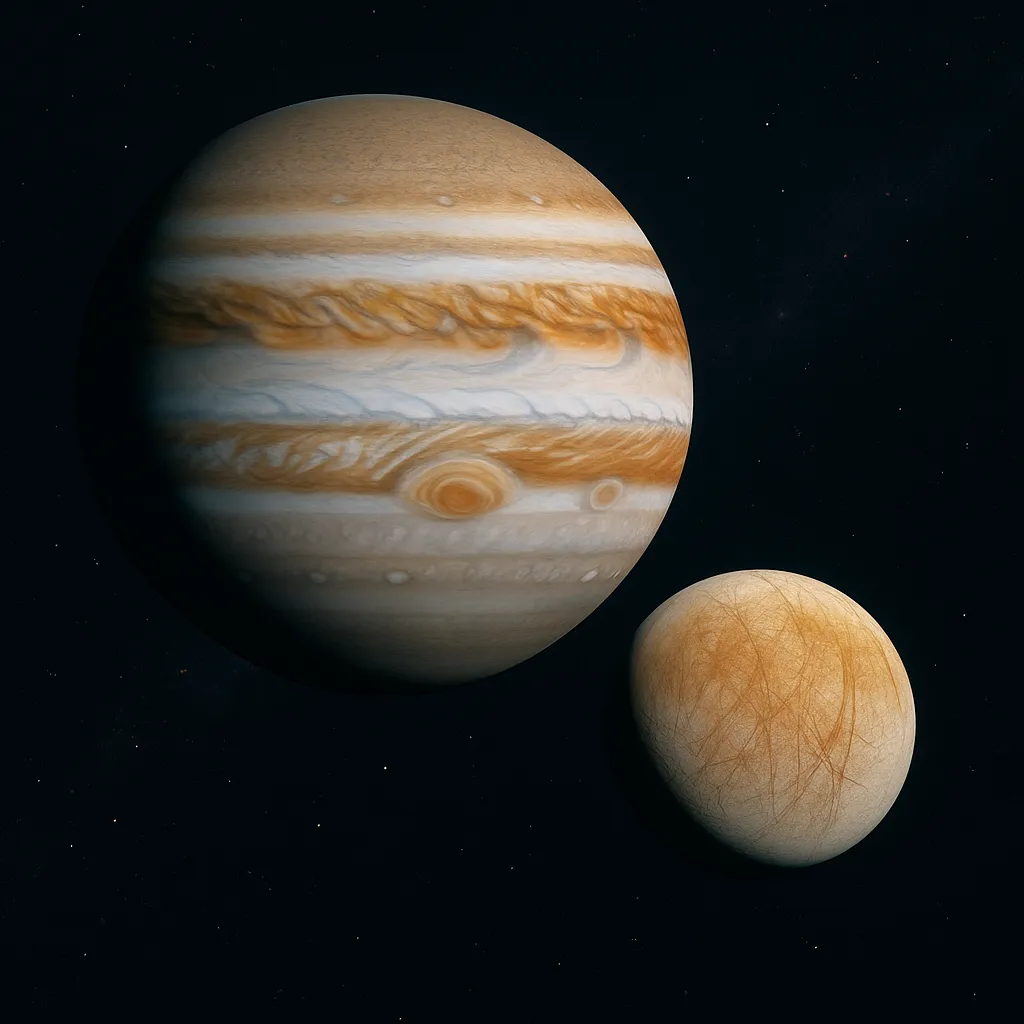
Europa’s Icy Surface and Subsurface Ocean
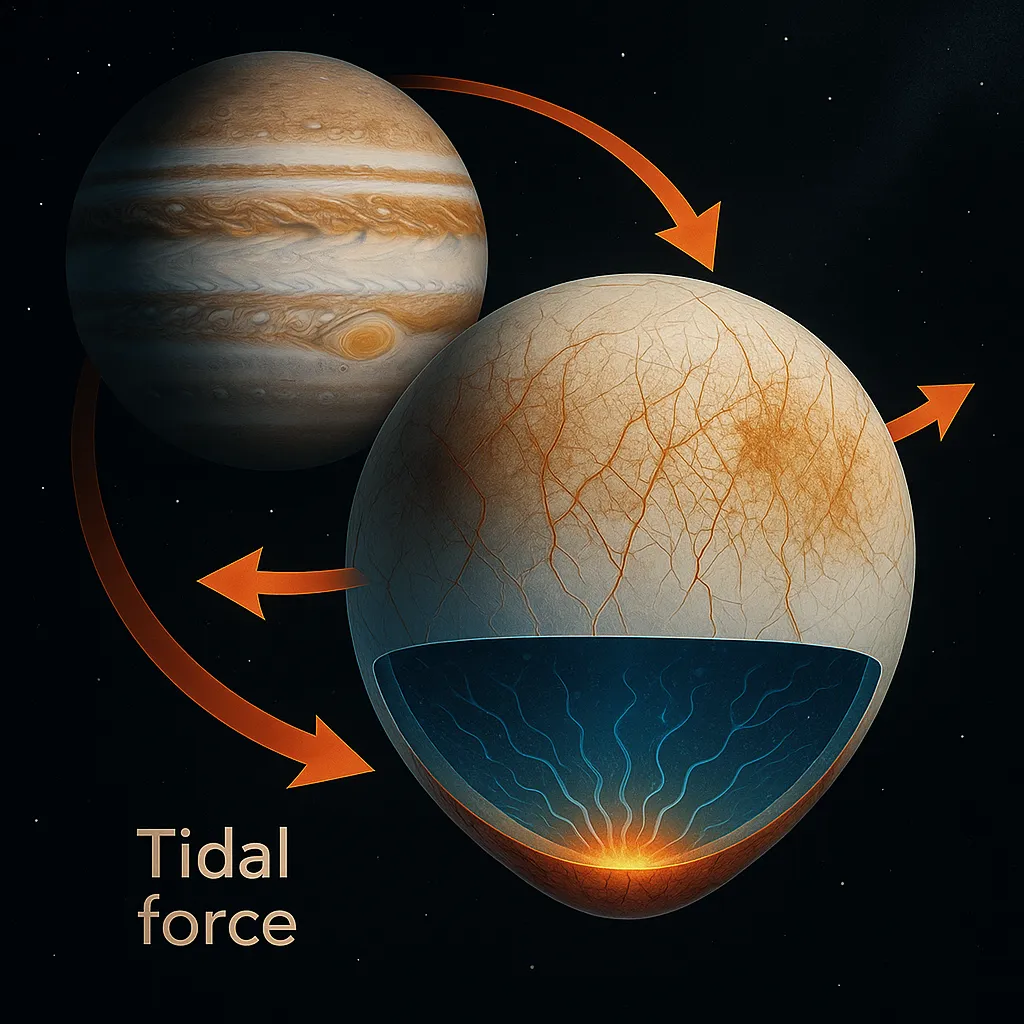
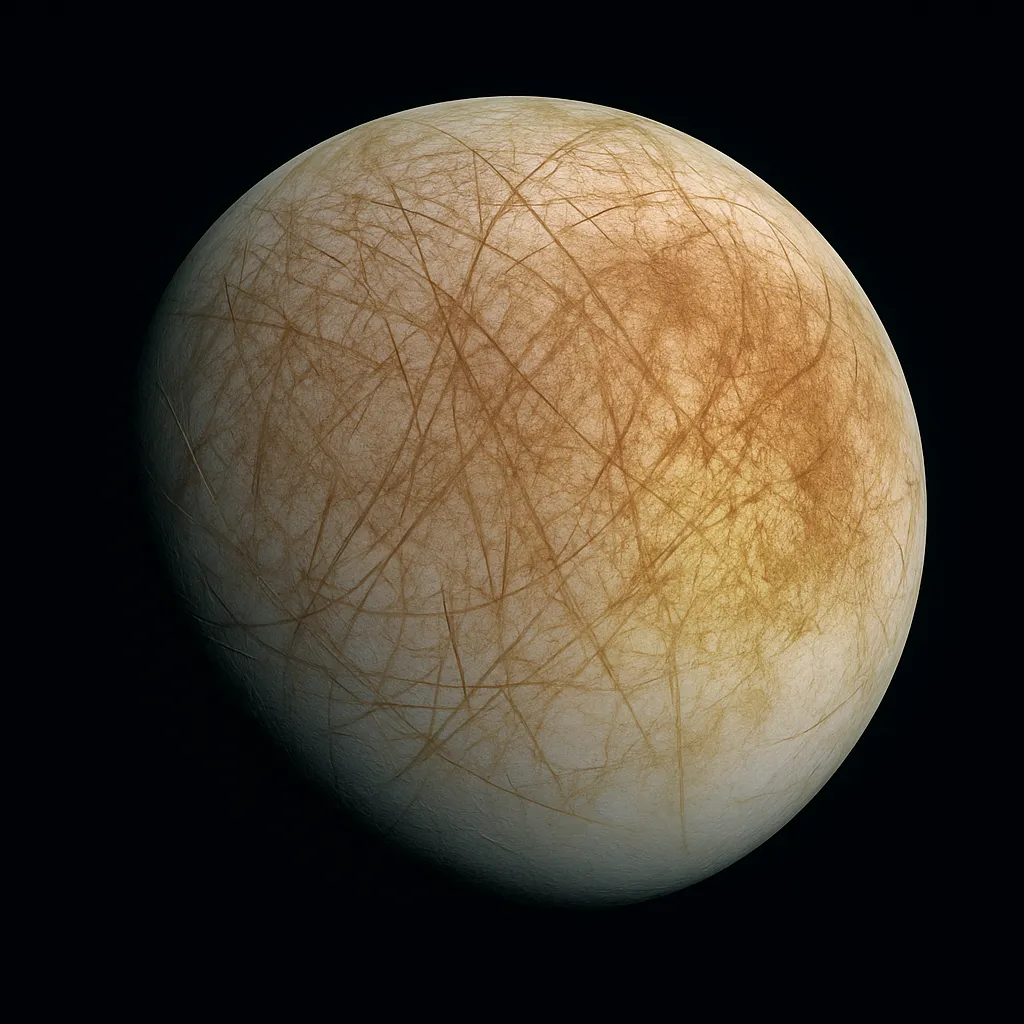
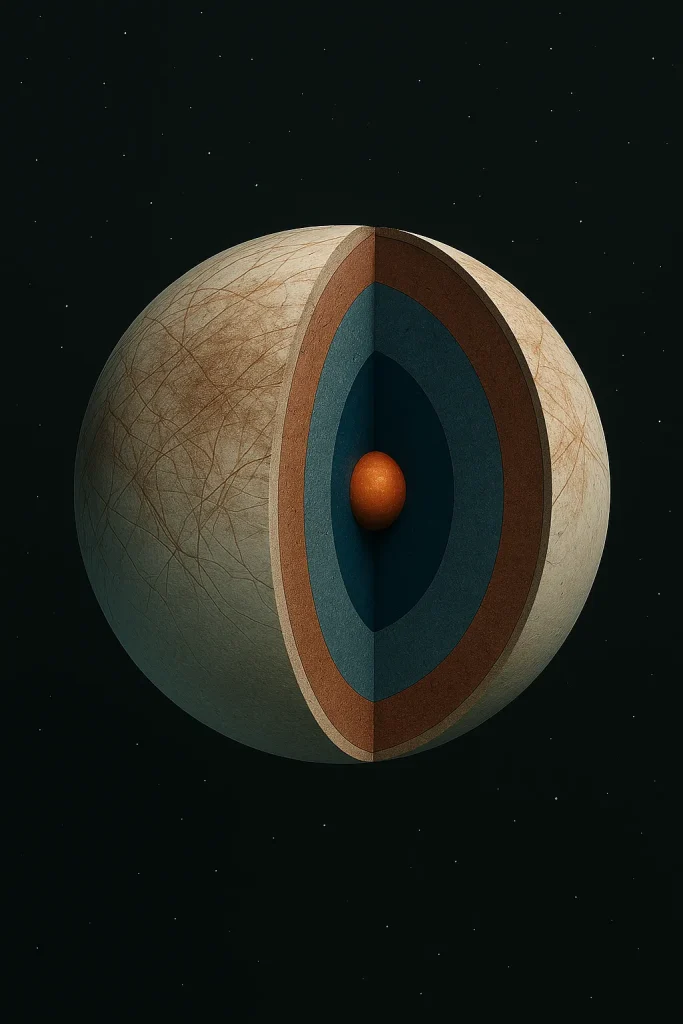
A thick layer of ice covers Europa’s surface, estimated to be 10 to 30 kilometers deep. This icy crust features ridges, cracks, and chaotic terrains, indicating geological activity. Beneath this ice lies a subsurface ocean, which tidal heating keeps liquid through Jupiter’s gravitational pull. This ocean could hold more water than all of Earth’s oceans combined, making it a key focus for astrobiologists.
The possibility of life on Europa hinges on this subsurface ocean. Water acts as a crucial solvent for biochemical reactions, essential for life as we know it. Observations from the Galileo spacecraft in the late 1990s detected an induced magnetic field, suggesting a salty ocean beneath the ice. This finding has fueled speculation about the potential habitability of Europa’s subsurface ocean.
Chemistry of Europa’s Ocean
The chemistry of Europa’s ocean plays a vital role in assessing the possibility of life on Europa. In September 2023, the James Webb Space Telescope revealed carbon dioxide on Europa’s surface, likely originating from its ocean. Carbon forms the basis of organic molecules, a fundamental building block for life. Additionally, Jupiter’s radiation bombards Europa’s surface, producing oxidants like oxygen and hydrogen peroxide, which could fuel microbial life if they reach the ocean.
However, a 2024 study using NASA’s Juno spacecraft suggested that Europa’s ocean might have less oxygen than scientists previously thought, potentially limiting its habitability. Despite this, salts like sodium chloride and magnesium sulfate, detected on the surface, hint at a chemically rich ocean. The chemistry of Europa’s ocean remains a critical area of study for understanding its potential to support life.

Energy Sources for Life on Europa
Life requires energy, and Europa’s environment provides several potential sources. Tidal heating, caused by gravitational interactions with Jupiter and other moons like Io and Ganymede, generates heat to keep the ocean liquid. This heat could also drive hydrothermal vents on the ocean floor, similar to those on Earth where microbes thrive. These vents might release chemical energy, supporting Europa and microbes in a sunless environment.
Additionally, Jupiter’s magnetic field bombards Europa’s surface with charged particles, creating organic compounds like formaldehyde. Some Earth bacteria, such as Hyphomicrobium, can survive on formaldehyde, suggesting that similar microbes might exist in Europa’s ocean. The possibility of life on Europa depends on whether these energy sources and chemicals can sustain microbial ecosystems.
Europa Clipper and the Search for Life
NASA’s Europa Clipper, launched in October 2024, will arrive at Jupiter in 2030. This mission is pivotal for Europa Clipper and life detection efforts. Equipped with instruments like the SUrface Dust Analyzer (SUDA), Europa Clipper and life detection capabilities will allow it to analyze ice grains ejected from Europa’s surface, potentially identifying microbial fragments.
The European Space Agency’s JUICE mission, also en route to Jupiter, will complement Europa Clipper by studying Europa and other moons. These missions will measure the chemistry of Europa’s ocean, assess its habitability, and search for biosignatures. The possibility of life on Europa could be confirmed if these spacecraft detect organic compounds or microbial traces in the moon’s plumes.
Leave a Reply