Introduction
Ever wondered about quantum computer applications? They’re mind-blowing! Quantum computers use quantum mechanics to solve complex problems. They’re set to revolutionize tech, from cryptography to drug discovery. As of May 2025, they’re making big waves in science and industry. So, this article dives into quantum computer applications. We’ll cover the basics, technology, history, and their uses. Ready to explore the future? Let’s dive in!
These machines are unlike anything we’ve seen. They promise speed and power beyond regular computers. Why are they so special? Stick around to find out!
What Are the Basics of Quantum Computers?
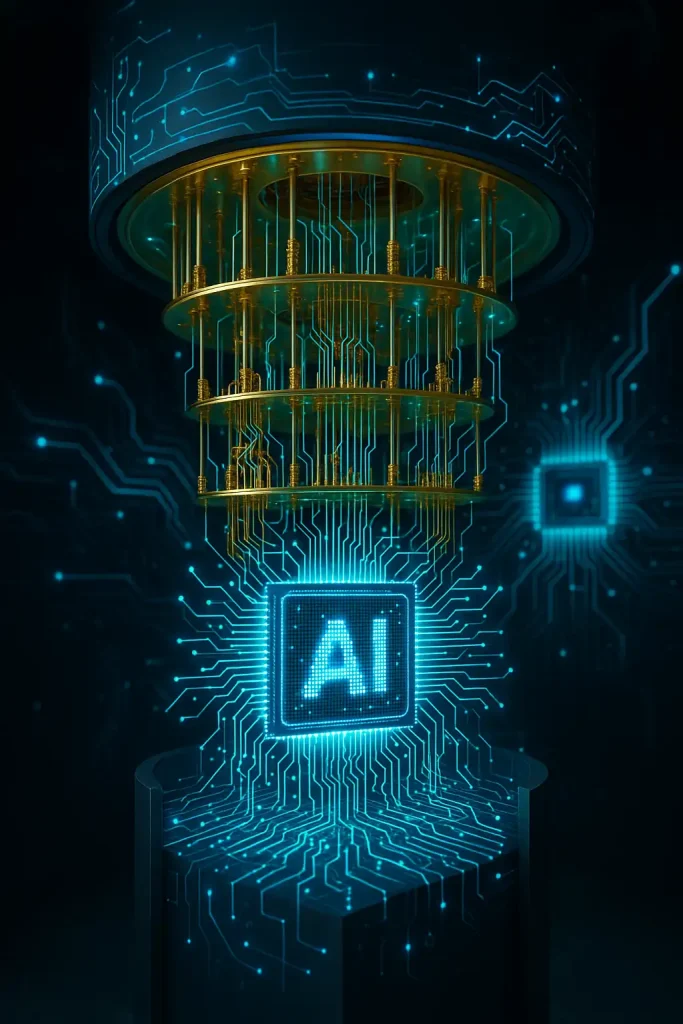
Quantum computer basics start with quantum mechanics. Unlike regular computers using bits, they use qubits. A bit is 0 or 1, but a qubit can be both at once—thanks to superposition. This lets them process tons of data simultaneously. Also, qubits can be entangled, linking them in spooky ways.
Another key idea is quantum interference. It helps qubits work together to find solutions faster. Quantum computer basics make them perfect for problems regular computers struggle with. For example, they can tackle massive calculations in seconds. That’s why they’re so exciting! Let’s look at the tech behind them next.

How Does Quantum Computer Technology Work?
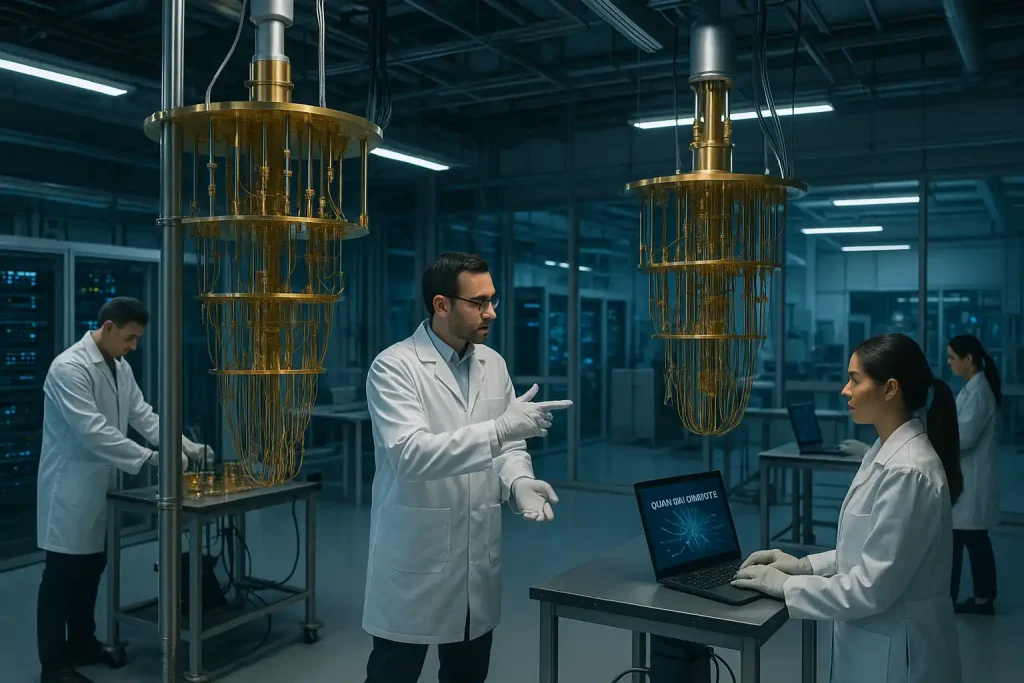
Quantum computer technology is cutting-edge and complex. Qubits are made using particles like electrons or photons. These particles are controlled with lasers or magnetic fields. Keeping them stable is tough—they need super cold temps, often near absolute zero. That’s where cryogenics come in, cooling systems to -273°C.
Error correction is a big challenge too. Qubits are sensitive to noise, like heat or vibrations. So, companies use special algorithms to fix errors. Quantum computer technology also involves quantum gates, which are like logic gates in regular computers. Thus, it’s a mix of physics and engineering. Let’s see how this tech evolved over time.
What’s the History of Quantum Computers?
Quantum computer history kicked off in the 1980s. Physicist Richard Feynman first suggested using quantum systems to compute. He thought they could simulate physics better than classical machines. In 1985, David Deutsch proposed a universal quantum computer model. That was a game-changer, sparking global interest.
Fast forward to 1994—Peter Shor created an algorithm to break encryption. It showed quantum computers could outshine classical ones. Then, in 2019, Google claimed “quantum supremacy” with its Sycamore processor. Quantum computer history is still unfolding, with big leaps in 2025. How cool is that? Now, let’s check their real-world uses.
What Are Quantum Computer Applications and Challenges?
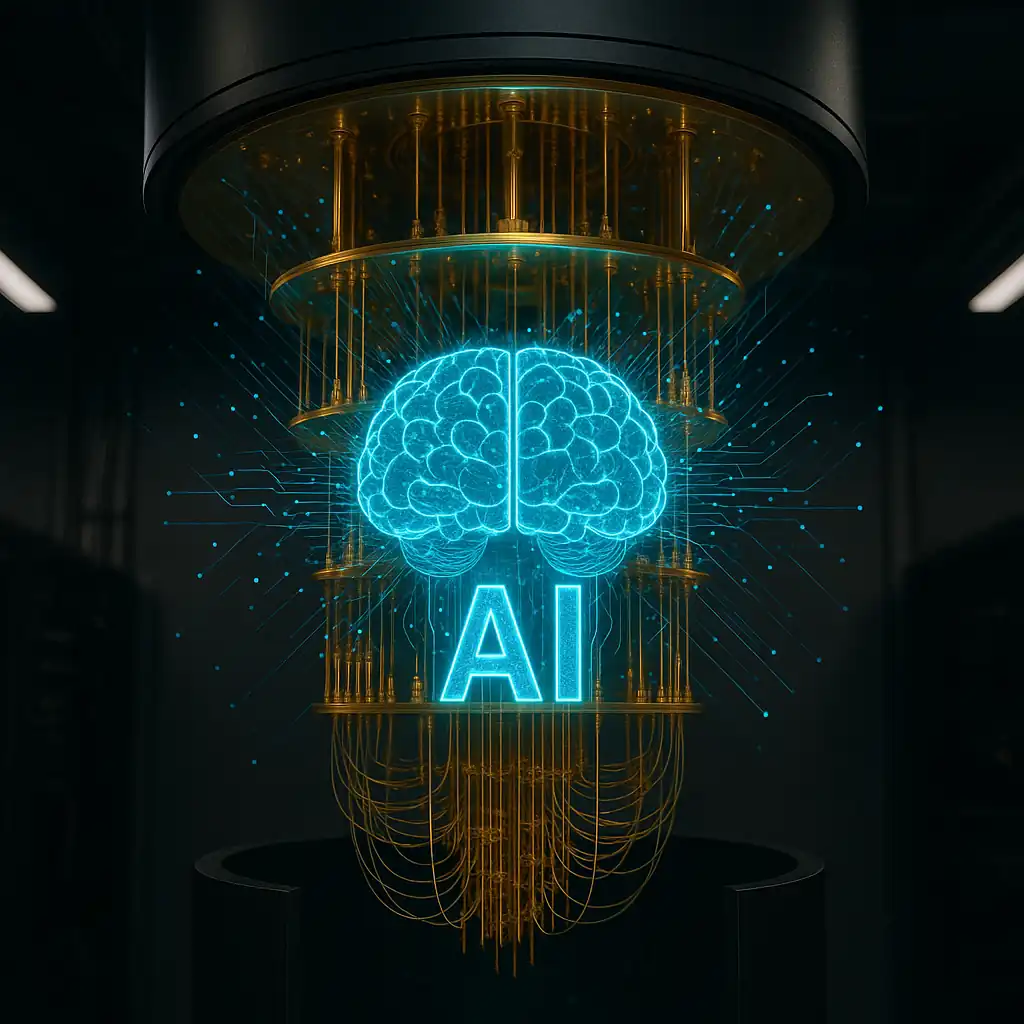
Quantum computer applications are transforming industries. First, they’re amazing for cryptography. They can crack codes that regular computers can’t, like RSA encryption. This makes them a game-changer for cybersecurity. Also, they’re used in drug discovery—simulating molecules to find new medicines faster. Companies like IBM are already testing this.
Beyond that, quantum computer applications include optimizing supply chains. They can solve complex logistics problems in minutes. In finance, they help with risk analysis and trading strategies. However, challenges remain—they’re expensive to build and maintain. Errors are still a problem, and they need extreme conditions to work. Safety-wise, they don’t pose direct risks, but their power could disrupt security if misused. Thus, quantum computer applications are incredible, but we need to solve these hurdles.

Leave a Reply