Introduction
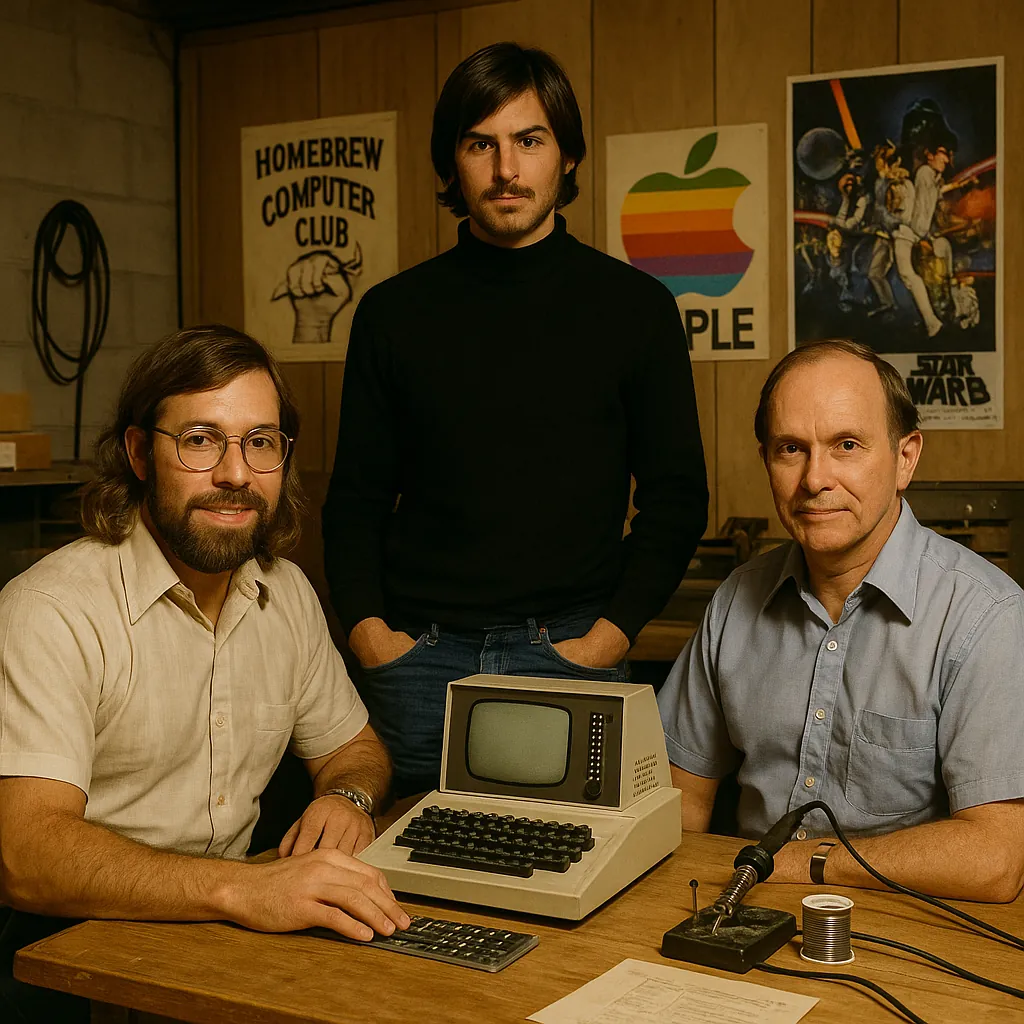
Apple growth began with a bold idea in a small garage. On April 1, 1976, Steve Jobs, Steve Wozniak, and Ronald Wayne founded the company in Los Altos, California. They aimed to bring computing to everyone, not just experts. For instance, the Apple I, their first product, sold for $666.66 as a kit. Users added their own keyboard and monitor, and thus, it sold 200 units. This modest start built a foundation for a trillion-dollar firm. Furthermore, Apple growth reflects the founders’ determination to innovate. Today, Apple leads in technology and design worldwide.
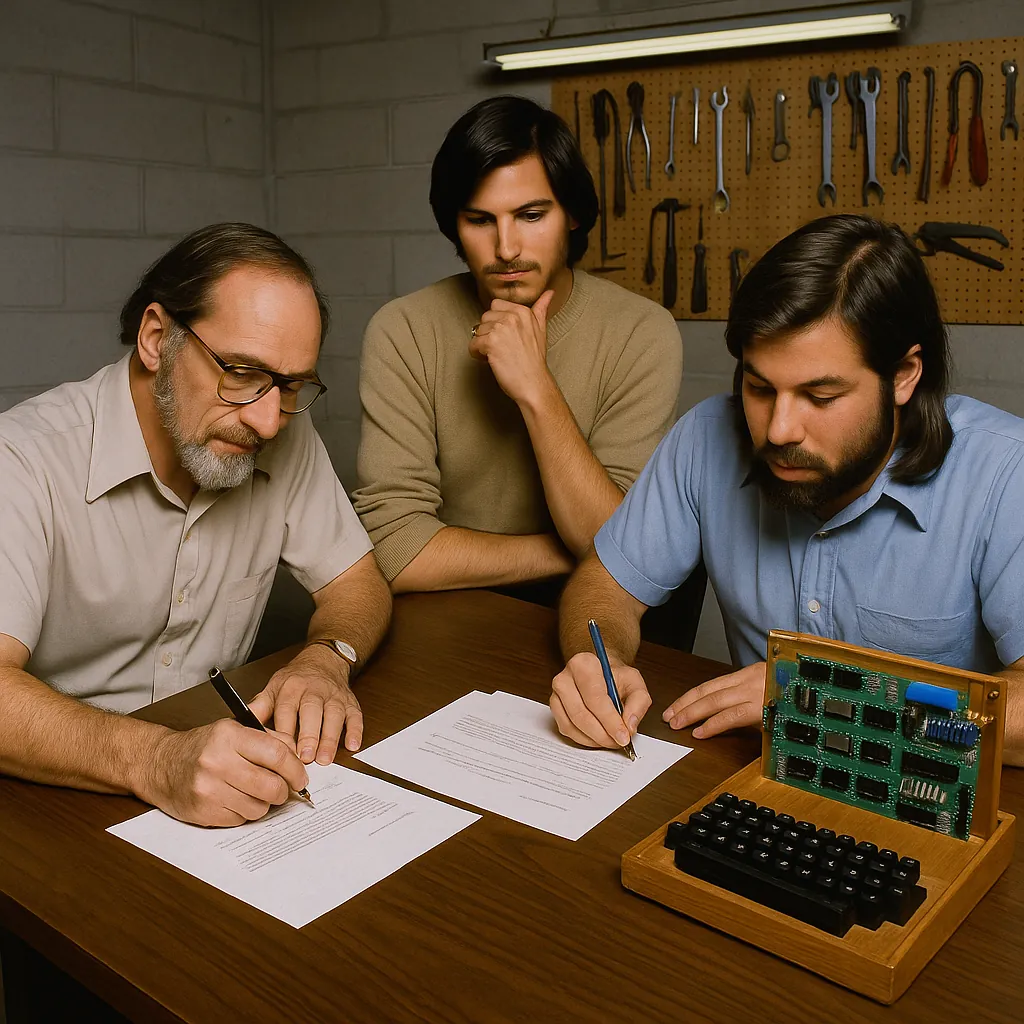
Jobs brought his marketing vision to the team, while Wozniak contributed engineering skills. Meanwhile, Wayne handled early legal tasks but left after 12 days. He sold his 10% share for $800, a decision worth billions now. Consequently, their teamwork turned a dream into a business. It created a culture of creativity and risk-taking. Therefore, this origin story inspires entrepreneurs globally. It shows how small beginnings can lead to greatness.
Moreover, Apple aimed to challenge big tech firms from the start. IBM and Xerox dominated the computer market then. However, the trio saw a chance to make a difference. They wanted personal tech for homes and schools. As a result, their vision started a legacy that still grows. It influences modern tech trends today. Apple growth began with this bold move, and this article traces their journey.
Early Beginnings
Apple growth took root in Jobs’ family garage in Los Altos. Initially, the team had just three members working together. The Apple I launched in 1976 as a simple motherboard, so users assembled it with their own parts. It sold 200 units to tech hobbyists. Subsequently, the Apple II followed in 1977 with color graphics. It also had a built-in keyboard and became a huge success. For example, this model sold over 5 million units in its lifetime. This marked a key milestone for the company.
Meanwhile, Mike Markkula joined in 1977 with a big investment. He put in $250,000 to support the team, and additionally, he brought business expertise. His help turned Apple into a formal corporation, thus strengthening its foundation. The Apple II’s open design attracted many developers, and as a result, sales grew from $775,000 in 1977 to $118 million by 1980. This rapid rise showed the company’s potential. Therefore, Apple growth gained strong momentum during this period.
Furthermore, the 1980 public offering was a turning point for Apple. It made Jobs and Wozniak millionaires overnight, and moreover, the company raised capital for future expansion. Apple now had over 1,000 employees, so it moved from a garage to a real business. However, IBM emerged as a new competitor in the market. This shift shaped Apple’s future direction, and consequently, it prepared the company for bigger challenges ahead.
Expansion and Challenges
Apple growth continued with the Macintosh launch in 1984. It introduced a new graphical interface, and additionally, the system featured a mouse and colorful display. The “1984” Super Bowl ad boosted its image, thus showing Apple as a rebel against IBM. However, sales started slow due to a high price of $2,495. This tested the company’s ability to adapt, and meanwhile, internal conflicts arose within the leadership team.
John Sculley joined as CEO in 1983 from Pepsi, but he clashed with Jobs over the company’s direction. Consequently, their disagreement led to Jobs’ exit in 1985. The Apple III and Lisa had design flaws, so these products failed to impress customers. Furthermore, Microsoft’s Windows gained popularity, which slowed Apple growth significantly. As a result, the company faced tough competition in the industry.
Moreover, the 1990s brought more struggles for Apple. Stock dropped 20% in 1989 under Sculley’s leadership, and his high pricing pushed customers away. Spindler and Amelio took over as CEOs, yet they couldn’t stop the decline. By 1997, Apple was near bankruptcy, and thus, its market share fell below 3%. This was a critical low point for the company.
Revival and Innovation
Apple growth returned with Jobs’ comeback in 1997. Apple bought NeXT for $429 million, and therefore, this move brought Jobs back as interim CEO. He quickly cut unprofitable projects, thus streamlining operations. The iMac launched in 1998 with a bold, colorful design, and it sold 800,000 units in its first year. This success marked a big turnaround, and consequently, it restored faith in the company’s future.
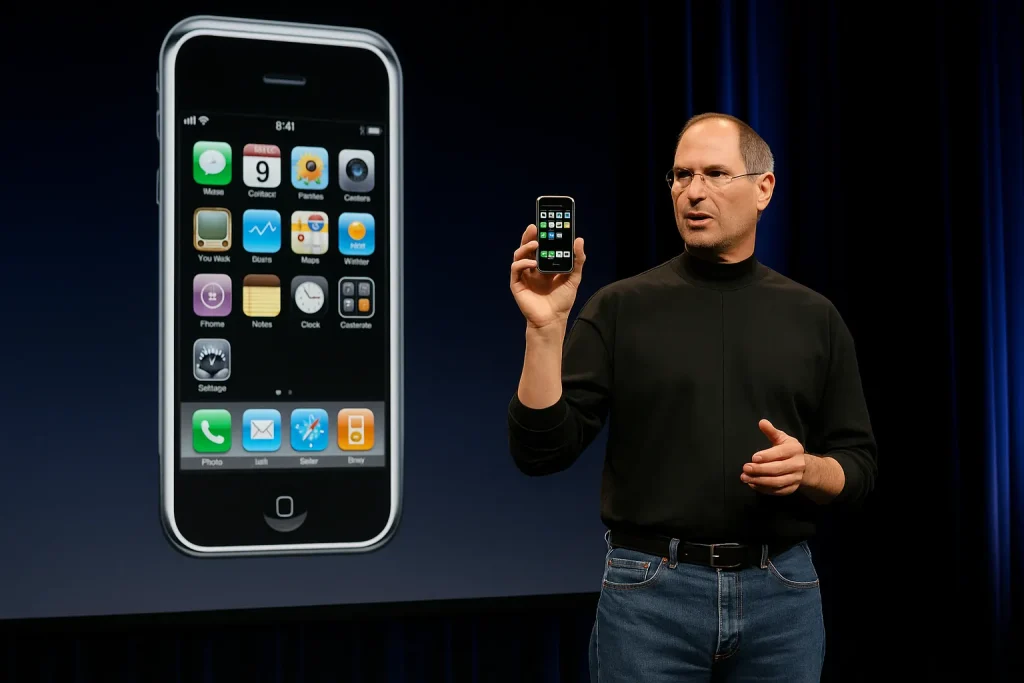
Additionally, the iPod debuted in 2001 and changed the music industry. It offered portable storage for thousands of songs, and iTunes followed in 2003 to support music sales. Meanwhile, the iPhone arrived in 2007 with a touchscreen, selling 1.4 million units in its first year. These products drove Apple growth, and furthermore, Jobs’ focus on integration set Apple apart from rivals.
By 2011, Apple hit a trillion-dollar valuation, but Jobs passed away that year after a long illness. His “Think Different” campaign started in 1997, thus building strong customer loyalty over time. This era of innovation was crucial, and as a result, it pushed Apple growth to new heights. Let us explore its modern phase.
Modern Era
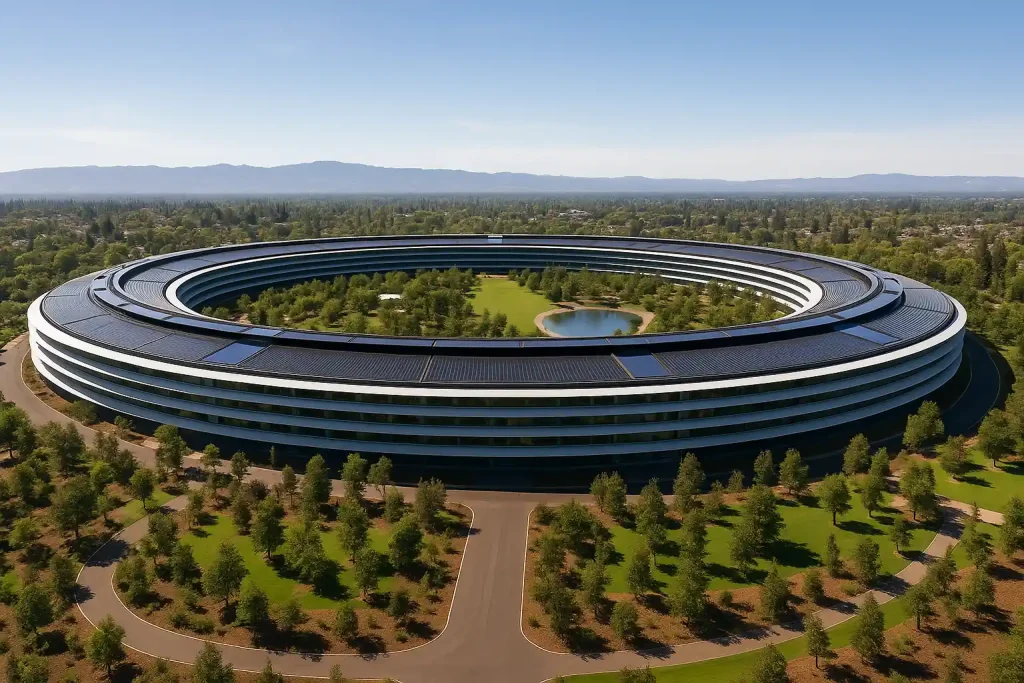
Apple growth soared with the iPad launch in 2010, creating a new tablet market overnight. Tim Cook took over as CEO in 2011, and subsequently, the Apple Watch launched in 2015 for wearables. Apple Music started in 2015 to grow its services, thus expanding revenue streams. Apple Park opened in 2017 as a global headquarters, and it reflects the company’s worldwide status. This growth shows Apple’s strength.
In 2018, Apple reached a $1 trillion valuation, becoming the first U.S. firm to hit this mark. The value doubled to $2 trillion by 2020, and moreover, by 2024, it reached $3.68 trillion. Apple now has 499 stores in 22 countries, so it employs thousands of people globally. This success highlights Apple growth, and it demonstrates the company’s financial achievements.
Furthermore, Apple focuses on AI and sustainability goals. Its ecosystem includes iPhones, Macs, and iCloud, thus keeping customers loyal and engaged. The brand sets high industry standards, and as a result, Apple’s future looks promising with new tech. Its global influence grows every day, so let us conclude with its legacy.
Leave a Reply