Introduction
The banana ranks among the world’s most beloved fruits, with a rich and intricate past. Banana fruit history begins in the rainforests of Southeast Asia, where humans first domesticated this fruit around 7,000 years ago. This large herbaceous plant, part of the genus Musa and the family Musaceae, initially provided both food and materials. Early humans used the leaves, flowers, and stems of wild bananas for crafting textiles and packaging. Over centuries, bananas evolved into a global agricultural staple. Today, people celebrate bananas for their sweet taste, high nutritional value, and year-round availability. However, diseases and genetic vulnerabilities pose serious threats to their future. This article explores the history, benefits, drawbacks, and intriguing facts about bananas.
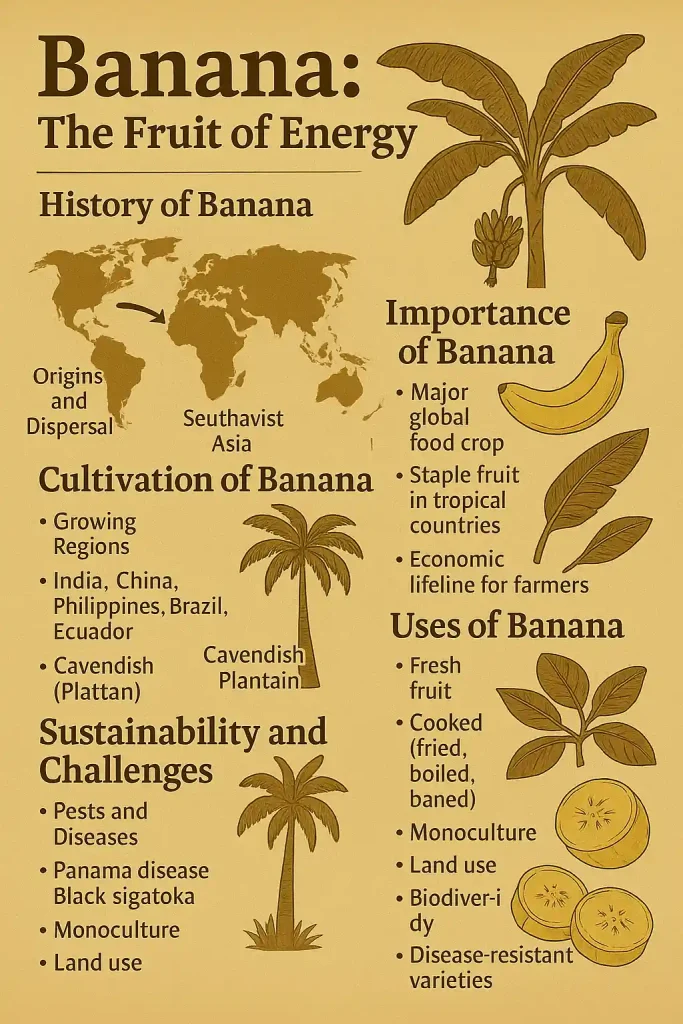
Banana origins trace back to the tropical regions of Southeast Asia, particularly New Guinea. Archaeologists have found evidence that humans domesticated bananas in New Guinea around 6,800 years ago. Trade and migration then spread bananas to regions like the Philippines, India, and Africa. By the third century AD, farmers cultivated bananas in China, and by the 13th century, they grew them in North Africa and Spain. In the 16th century, explorers brought bananas to the Americas, where they quickly became a key crop in tropical areas. This expansion forms a core part of the banana fruit history, deeply influencing global cultures and economies. Next, we delve deeper into this historical journey.
In 2025, bananas remain one of the most consumed fruits worldwide. Yet, fungal diseases and climate change significantly threaten global banana production. This article examines the scientific and historical aspects of bananas. It covers their nutritional benefits, the diseases that endanger them, and more. Bananas offer more than a tasty treat—they reveal a story of human ingenuity and connection with nature. Let’s start with their origins and history.
Origins and History of Bananas
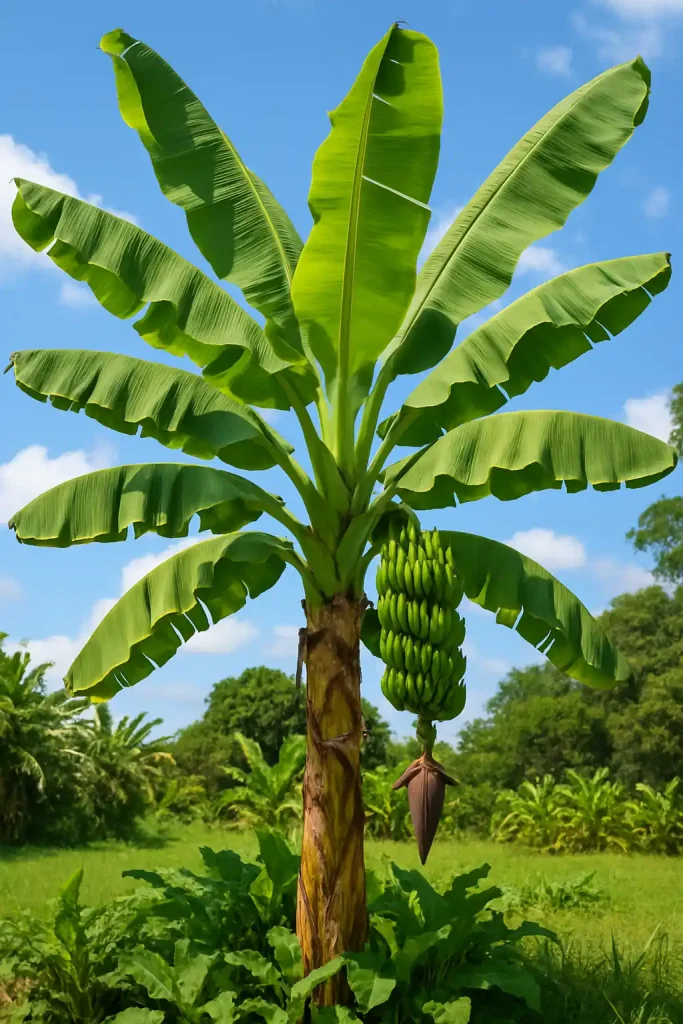
The banana fruit history starts in Southeast Asia, specifically the humid forests of New Guinea. Early wild bananas, such as the species Musa acuminata, contained hard, inedible seeds and little flesh. Around 7,000 years ago, humans began domesticating these plants, selectively breeding seedless varieties to create the bananas we enjoy today. This process started in New Guinea and expanded to the Philippines and other tropical regions. By 5,250 years ago, farmers grew domesticated bananas in Uganda, and 4,250 years ago, they cultivated them in Pakistan. In the sixth century BC, Buddhist texts mentioned bananas, and Alexander the Great encountered them in India in 327 BC.
Islamic trade routes carried bananas to the Middle East and Africa by the 11th century. By the 13th century, farmers cultivated bananas in Spain. In the 16th century, explorers introduced bananas from the Canary Islands to the Americas, establishing them as a staple in the Caribbean and Central America. By the 19th century, traders brought bananas to U.S. markets, where they gained rapid popularity. The banana fruit history illustrates how this fruit evolved from a wild plant to a global commodity. This history helps us understand bananas’ role in modern agriculture. Now, let’s explore their benefits and drawbacks.
Throughout history, people have used bananas not only as food but also as a source of fiber and materials. In Japan, certain species supported textile production. This versatility enhances the historical allure of bananas. However, their history includes challenges. Diseases and pests have always threatened banana production. Next, we’ll examine the nutritional aspects and challenges facing this fruit.
Nutritional Benefits and Drawbacks of Bananas
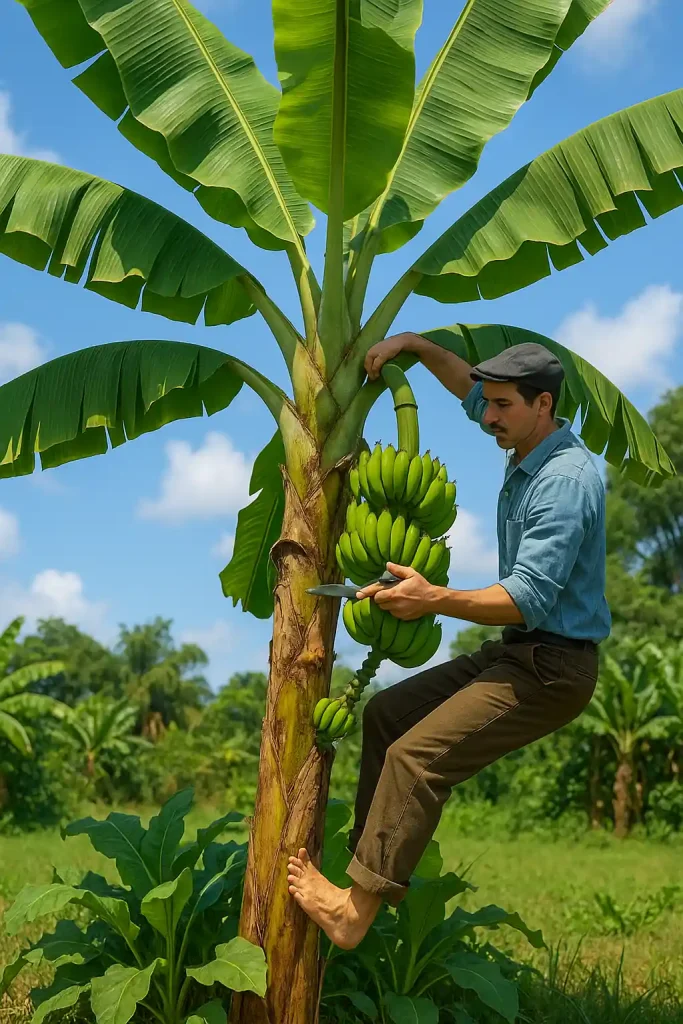
Bananas offer impressive nutritional value. A medium banana (about 120 grams) provides roughly 110 calories, 22% carbohydrates, 3 grams of fiber, and significant amounts of potassium (450 mg), vitamin B6, and vitamin C. It contains no fat, cholesterol, or sodium, making it a healthy snack for both children and adults. The potassium in bananas regulates blood pressure and supports heart health. Their fiber improves digestion and helps prevent gastrointestinal issues like constipation. Bananas also provide a quick energy boost, which makes them popular among athletes.
However, bananas come with some drawbacks. Their high natural sugar content (about 15 grams per banana) can pose problems for people with diabetes if consumed excessively. Additionally, unripe bananas contain resistant starch, which may cause bloating or digestive discomfort in some individuals. For those with a latex allergy, bananas can trigger a reaction due to similar proteins. Overall, moderate banana consumption delivers numerous benefits, but individuals should consider their health needs. The banana fruit history reminds us that this fruit has long been a dietary staple. Next, we’ll look at the diseases threatening bananas.
Various cultures have relied on bananas as a staple and medicinal food. In Africa and Asia, people use cooking varieties (plantains) as a potato substitute. This diverse usage positions bananas as a key player in food security. Yet, their genetic vulnerability makes them susceptible to diseases. Let’s explore these challenges in detail.

Diseases and Challenges Facing Bananas
Bananas face high vulnerability to diseases due to clonal propagation and limited genetic diversity. One major threat, Panama disease (Fusarium wilt), comes from the fungus Fusarium oxysporum. This disease destroyed the dominant Gros Michel variety in the 1950s, paving the way for the more resistant Cavendish. However, the Cavendish variety now faces a new strain of Panama disease, Tropical Race 4 (TR4). TR4 emerged in Asia in the 1990s and reached the Americas by 2019. It devastates banana roots, and no effective fungicide exists to combat it.
Other diseases, such as Black Sigatoka (a fungal leaf disease) and the Banana Bunchy Top virus, also endanger banana production. Black Sigatoka reduces yields by up to 40%, while the Banana Bunchy Top virus completely stops fruit production. To address these threats, researchers are developing genetic solutions. For instance, scientists in Australia created a TR4-resistant Cavendish by incorporating genes from wild bananas. These solutions, however, remain limited in global implementation. The banana fruit history shows that diseases have always challenged this fruit. Next, we’ll explore banana varieties and fascinating facts.
Researchers like Julie Sardos actively search for wild species to increase banana genetic diversity and provide disease-resistant genes. These efforts are vital for the future of banana production. Climate change adds further pressure, as bananas depend on warm, humid conditions. Now, let’s look at the diversity and intriguing aspects of bananas.

Banana Varieties and Fascinating Facts
Over 1,000 banana varieties exist worldwide, divided into 50 groups. The Cavendish, a sweet, yellow variety, dominates markets, accounting for about 47% of global banana production. Cooking varieties, or plantains, which are starchy, serve as a staple in tropical regions and make up around 85% of banana cultivation. Other varieties, like the red banana (Musa coccinea) and the pink banana (Musa velutina), often grow for ornamental purposes. People in Africa still use wild bananas, such as the Ensete species, for both food and non-food purposes.
Here are some fascinating facts about bananas: Botanically, bananas qualify as berries because they contain tiny seeds, though these are inactive in domesticated varieties. Bananas exhibit slight radioactivity due to their potassium-40 content, a natural isotope, but this level poses no harm. Banana peels can polish leather shoes or whiten teeth naturally. Many cultures use banana leaves for food wrapping or as plates. Bananas float in water because their density is lower than water’s. The banana fruit history reveals such intriguing details that elevate bananas beyond a simple fruit. Finally, let’s wrap up with the significance of this fruit.
Bananas hold a major role in cultures and economies. In 2022, global banana and plantain production reached 179 million tons, with India and China leading as top producers (26% of global output). Ecuador and the Philippines emerged as the leading exporters. These statistics highlight bananas’ economic importance. However, their future remains uncertain due to diseases and climate change. Let’s conclude this exploration.
Leave a Reply