Introduction
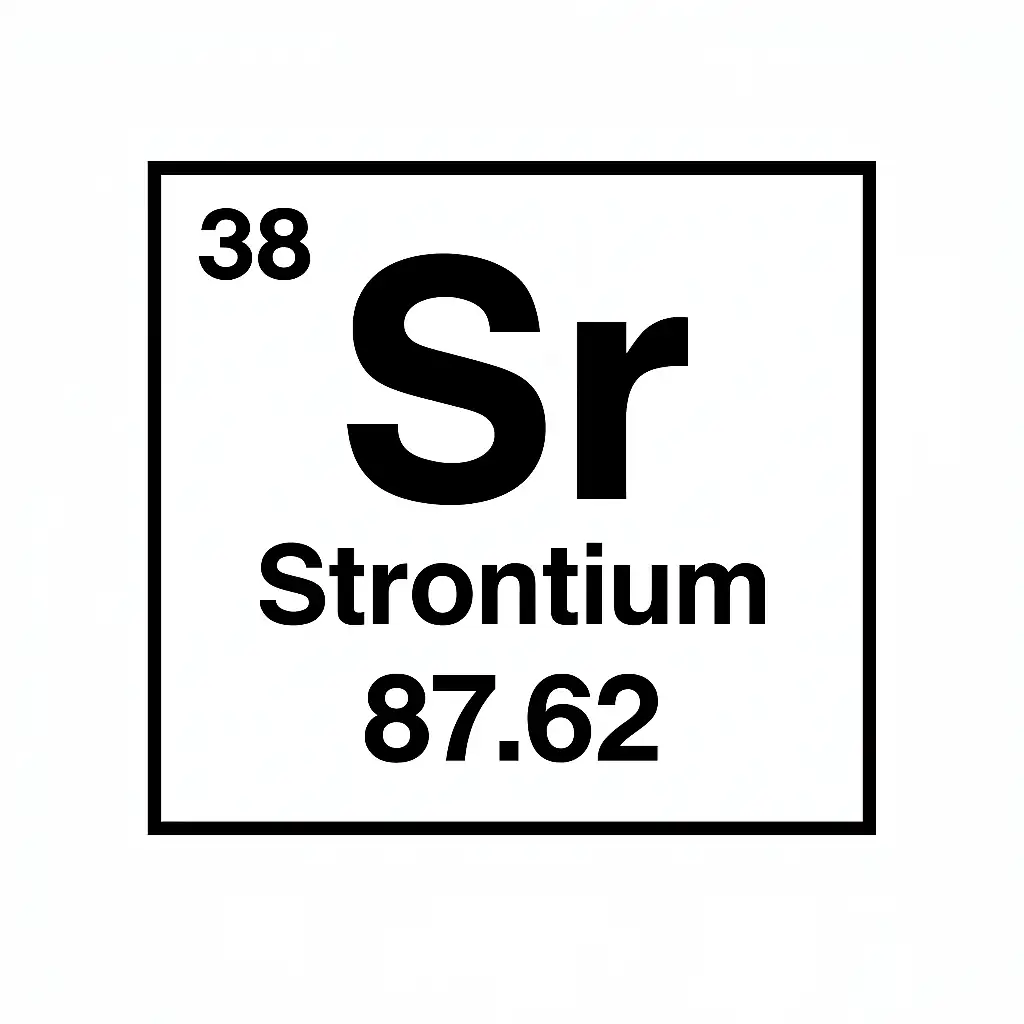
Meet Strontium, element 38 on the periodic table, a metal with a talent for standing out. This soft, silvery substance sits between calcium and barium, boasting a unique set of traits that make it both fascinating and useful. Strontium properties shine in everything from dazzling fireworks to cutting-edge medical treatments, proving it’s more than just a lab curiosity.
Why should you care about this element? Its versatility is the key. Strontium properties enable it to light up the night sky, assist in bone health studies, and even help scientists unlock Earth’s ancient secrets. Let’s explore its history, characteristics, applications, and impacts to see why Strontium deserves a closer look.
Discovery and History
The story of Strontium begins in a small Scottish village called Strontian. In the 1790s, chemist Adair Crawford examined a local mineral and realized it was different from anything known at the time. His work hinted at a new element, and Strontium properties started to spark scientific interest.
Fast forward to 1808, when Sir Humphry Davy used electrolysis to isolate Strontium, officially earning it a spot on the periodic table. Named after its Scottish birthplace, the element intrigued researchers with its calcium-like behavior, suggesting potential beyond the lab.
Initially, Strontium was more of a scientific novelty than a practical tool. Chemists soon discovered, however, that its ability to produce vivid red hues could light up fireworks, marking the beginning of its journey into broader applications.

Physical and Chemical Characteristics
What makes Strontium tick? As an alkaline earth metal in group 2 of the periodic table, it has an atomic number of 38, with 38 protons and typically 50 neutrons. Strontium properties include a shiny, silver-white surface when freshly cut, though it quickly tarnishes to a yellowish hue in air. Its density is 2.63 g cm⁻³ at room temperature, making it heavier than calcium but lighter than barium.
Chemically, Strontium’s got a lively side. It reacts vigorously with water, fizzing as it releases hydrogen gas, thanks to its two valence electrons and a low electronegativity of 0.95 on the Pauling scale. Strontium properties also make it a close cousin to calcium, which explains why it can slip into bones and teeth, sometimes with surprising effects. Its first ionization energy, 549.5 kJ mol⁻¹, reflects its reactivity compared to other group 2 elements.
Strontium boasts four stable isotopes, with Strontium-88 being the most common. Strontium isotopes are invaluable in geology, helping researchers date rocks and trace Earth’s history. While generally stable, the radioactive Strontium-90, a byproduct of nuclear reactions, is notorious for its environmental impact.
Physically, Strontium is soft enough to slice with a knife, with an atomic radius of 215 picometers. Its melting point is around 777°C, and its specific heat capacity is 0.301 J g⁻¹ K⁻¹ at 25°C, indicating how it handles thermal energy. These Strontium properties make it a fascinating subject for chemists and material scientists alike.
Applications in Modern Life
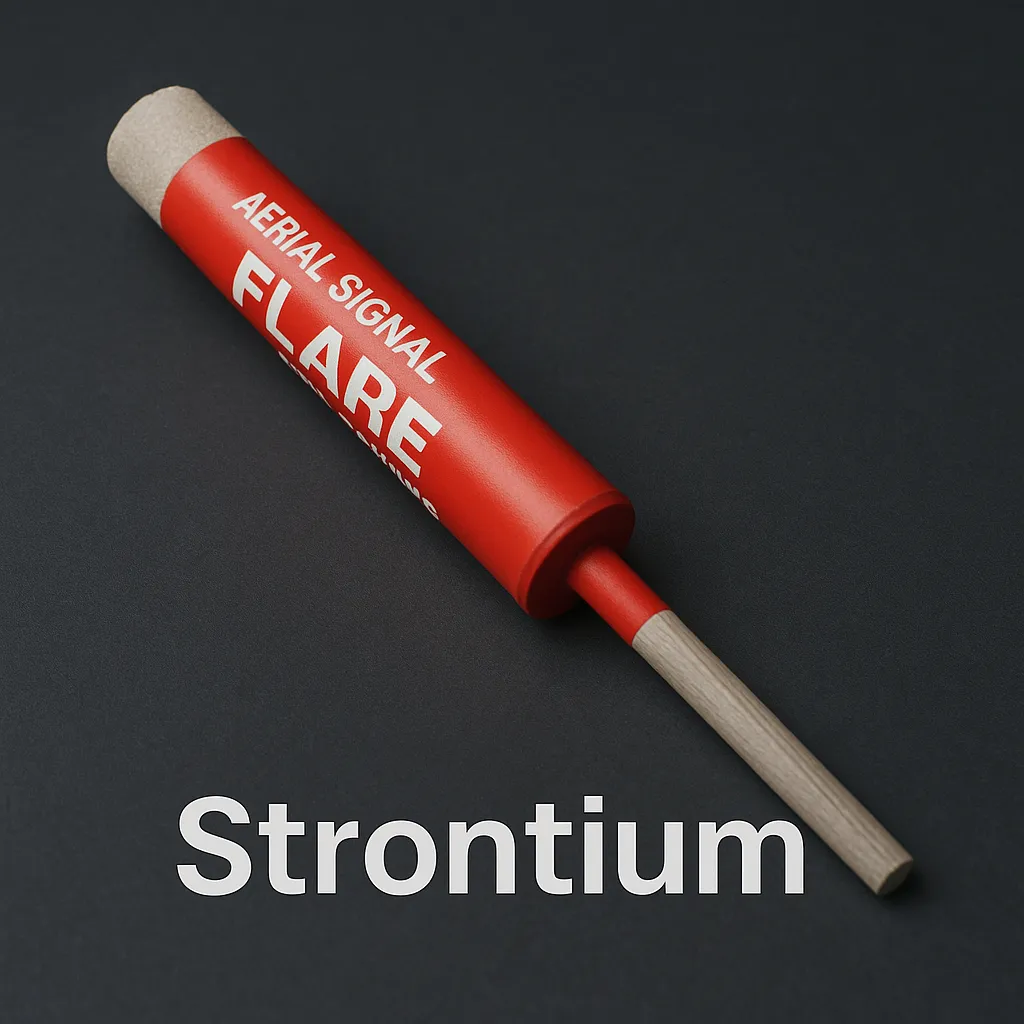
You might not think about Strontium daily, but it’s hard at work in some cool places. Fireworks owe their brilliant red bursts to Strontium compounds like Strontium carbonate, which burn vibrantly. Next time you’re at a celebration, those red sparks are a nod to Strontium uses.
Medicine is another area where Strontium shines. Doctors use Strontium-89, a radioactive isotope, to ease pain in cancer patients with bone metastases, while Strontium ranelate has been explored for osteoporosis treatment due to its calcium-like effects. These Strontium uses show how chemistry can improve lives.
Industry puts Strontium to work in ferrite magnets, powering devices like speakers and motors. It also helps refine zinc and adds glow to certain paints. Though not a superstar like silicon, Strontium’s niche roles make it indispensable.

Environmental and Health Impacts
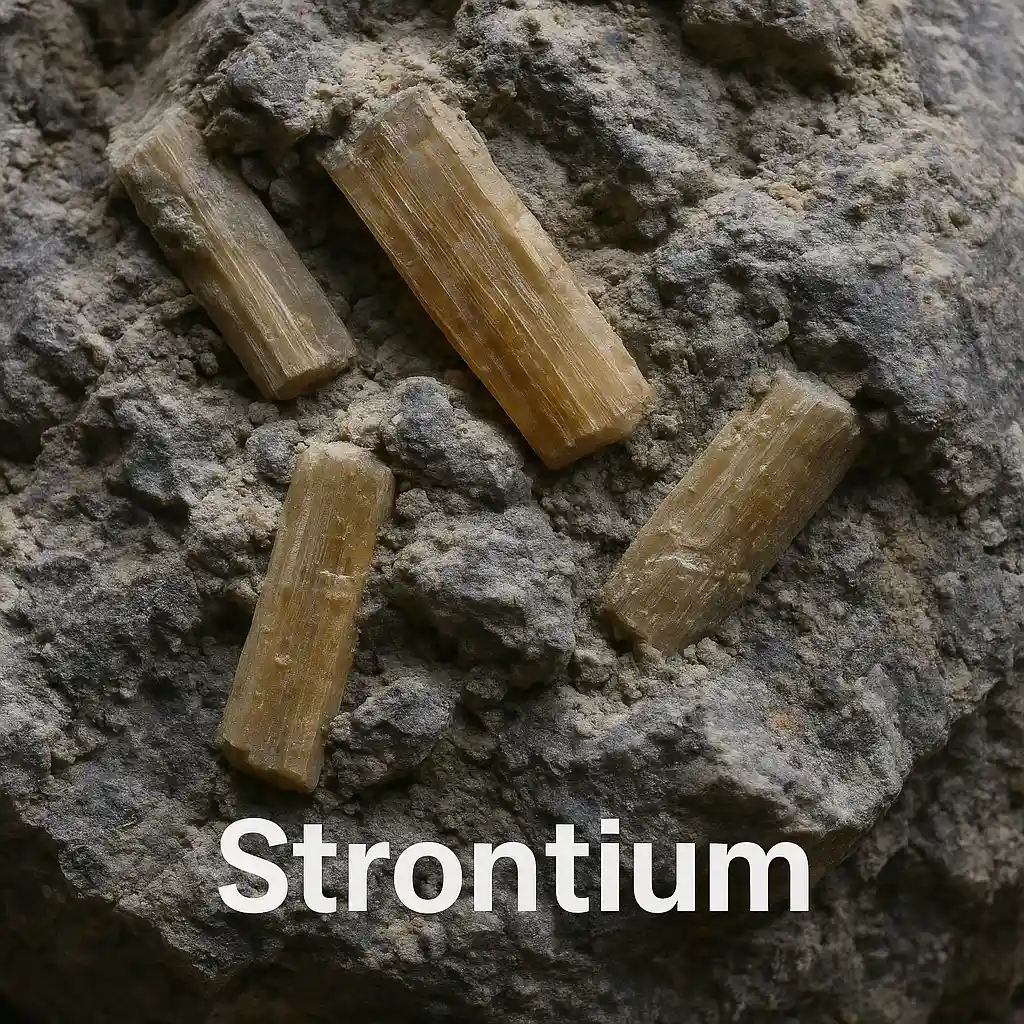
Strontium is a quiet presence in the world around us. Found in rocks, soil, and water, Strontium in nature appears in minerals like celestine and strontianite. Because it mimics calcium, plants and animals can absorb it, which can lead to both benefits and challenges.
In small doses, Strontium is harmless and might even support bone growth, according to some studies. However, Strontium isotopes like Strontium-90, a radioactive byproduct of nuclear activity, pose risks. This isotope can accumulate in bones, potentially increasing cancer risk with prolonged exposure.
Nuclear fallout, such as from Chernobyl, has made Strontium-90 a concern in contaminated areas. With a half-life of about 29 years, it lingers in the environment, prompting scientists to monitor Strontium isotopes in soil and water to protect ecosystems.
On the flip side, natural Strontium is rarely a problem, and its environmental presence is typically safe. Understanding Strontium properties allows us to weigh its benefits, like medical applications, against potential risks to use it responsibly.
Leave a Reply