Introduction
The coconut palm, scientifically known as Cocos nucifera, belongs to the Arecaceae family. Thriving in tropical coastal regions, the coconut palm stands as a single species in its genus. Often called the “tree of life,” it offers a wide range of uses. Its fruit provides food, water, and oil. Meanwhile, leaves and husks serve as building materials. Additionally, its cultural role spans centuries. Ancient communities depended on it for survival. Today, it remains a dietary staple globally. Industries value its versatility. Moreover, health benefits draw worldwide attention. On the other hand, some risks need consideration. Environmental impacts also warrant focus. As of 2025, research highlights its significance. Therefore, let’s explore its journey. This article covers its past and present.
Originating likely in the Indo-Malaya region, this plant spread across the tropics. For example, seafaring Austronesians carried its fruit on long voyages. Their migrations reached Southeast Asia and the Pacific. Arab traders brought it to East Africa. European explorers introduced it to the Americas. Interestingly, the Caribbean adopted it during colonial times. Today, over 90 countries cultivate it. The Philippines leads in production. Indonesia follows closely. Coastal communities rely on it for livelihoods. Furthermore, its role in rituals is profound. In India, its fruit symbolizes prosperity. Consequently, its global reach is impressive. We’ll dive deeper into its history.
Known for its nutritional value, this tree sparks health debates. Its fruit’s high saturated fat content raises concerns. Yet, many praise its benefits. Antioxidants and antimicrobial properties stand out. Traditional medicine uses it widely. Cosmetics and cooking depend on it. Moreover, understanding its dual nature is key. Environmental challenges tied to cultivation matter. Sustainability efforts are underway. On the other hand, its cultural significance endures. Therefore, this journey reveals its importance. Let’s begin with its origins.

History and Discovery
The coconut palm traces its history back thousands of years. Likely originating in the Indo-Malaya region, the coconut palm spread through human migration. Austronesians domesticated it during the Neolithic era. What’s more, their seaborne voyages took it across the Pacific. They reached as far as Madagascar. Meanwhile, Arab traders carried it to East Africa around 2000 years ago. Named “zhawzhat al-hind,” it entered their records. European explorers, like Vasco da Gama, encountered it in the 16th century. Portuguese traders named its fruit “coco-nut” for its skull-like look. By the 19th century, it reached the Americas. For example, colonialism aided its spread. Its journey reflects human exploration. As a result, its genetic diversity tells this story.
DNA studies reveal two cultivation origins for this plant. One lies in the Pacific basin. Another centers in the Indian Ocean basin. Notably, Pacific varieties show traits of human selection. Dwarf varieties and sweeter fruits emerged there. In contrast, Indian Ocean varieties retained wild traits. Ancient trade routes also left their mark. Austronesian routes connected Madagascar to Southeast Asia. Arab trade linked East Africa to India. Therefore, it became a global crop. Its history intertwines with human travel. Cultural practices evolved alongside it. In India, it became sacred. Consequently, this past shapes its role today.
Beyond food, this tree supported early navigation. Its buoyant husks allowed ocean dispersal. Austronesians used its fruit as portable resources. Boats made from its wood sailed vast distances. Moreover, historical records, from Sanskrit texts to medieval journals, mention it. Marco Polo called its fruit “Pharaoh’s nut” in the 13th century. By the 15th century, Europeans crafted its shells into goblets. Interestingly, belief in its magical properties grew. On the other hand, practical uses expanded. Therefore, this history highlights its versatility. Lessons from the past guide modern cultivation. We now turn to its properties.

Properties and Chemistry
The coconut palm bears a drupe with three distinct layers. Its outer exocarp is smooth and green. A fibrous mesocarp, or husk, lies beneath. Inside, the hard endocarp encases the seed. What’s more, this seed holds white meat and water. Nutritionally, the meat is rich in medium-chain fatty acids (MCFAs). Lauric acid dominates, making up nearly 50% of its fat. The water contains electrolytes like potassium. Additionally, sugars and minerals give it a sweet taste. Its pH matches human blood, aiding hydration. Antioxidants, such as phenolic compounds, are present. Meanwhile, these properties make it unique. Chemically, it’s a powerhouse. Handling it in labs requires care.
Mature fruits yield copra, the dried meat. Copra is pressed to extract oil. This oil is high in saturated fat—around 90%. Virgin oil retains more antioxidants. Milk, made by pressing the meat, is creamy. For example, the husk yields coir, a fiber for ropes. On the other hand, coir resists saltwater. The shell produces charcoal when heated. Heating the meat releases a distinct aroma. Interestingly, its antimicrobial properties fight bacteria. Fungi and viruses are also inhibited. However, its high fat content raises concerns. Therefore, research continues to explore its effects.
Studies show MCFAs digest easier than other fats. Athletes benefit from improved endurance. Its fiber aids digestion. Prebiotic polysaccharides support gut health. Yet, its saturated fat can increase LDL cholesterol. Moderation is key in diets. Antioxidants reduce oxidative stress. For instance, virgin oil protects against free radicals. Its chemistry offers both benefits and challenges. Traditional uses align with modern findings. Moreover, more research is needed. Consequently, its properties shape its applications. Let’s see how it’s used today.

Uses and Applications
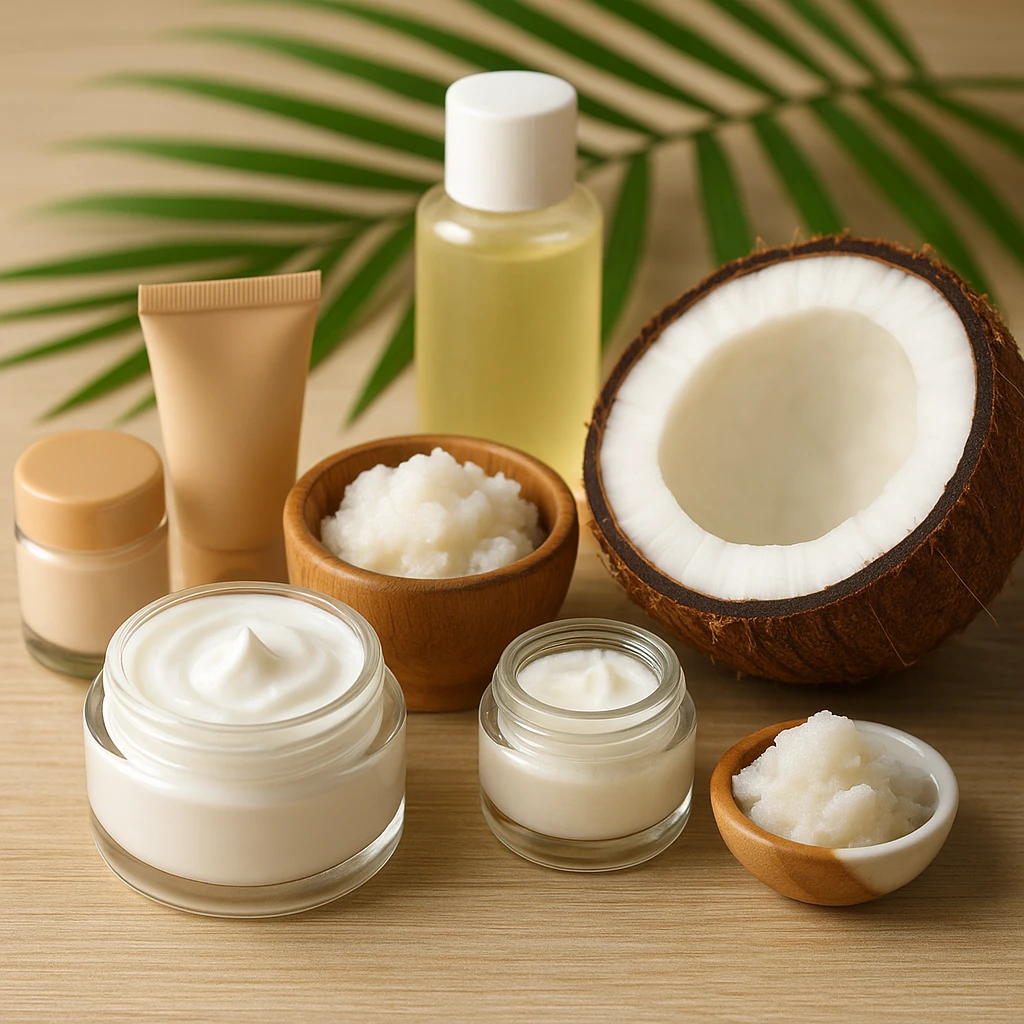
The coconut palm serves countless purposes across industries. Its fruit’s meat is eaten fresh or dried. Milk enhances dishes in tropical cuisines. Oil extracted from copra is a cooking staple. What’s more, in Southeast Asia, it’s used for frying. Virgin oil shines in health products. Cosmetics rely on it for hydration. Shampoos and lotions often include it. Meanwhile, the water hydrates naturally. Athletes prefer it for electrolytes. Sap from the tree ferments into vinegar. In the Philippines, it becomes palm wine. Furniture and handicrafts use its wood. Therefore, every part finds a purpose.
Agriculture benefits from its byproducts. Coir from the husk makes ropes and mats. Farmers use it as a growing medium. Shells turn into activated charcoal for filters. In construction, leaves become roofing material. Traditional boats used its wood. For example, Austronesian vessels relied on it. By 2025, its oil treats medical conditions. Small doses help with inflammation. Research explores its role in cancer care. On the other hand, its applications grow. Sustainability drives its use. Consequently, its versatility remains unmatched.
Its fruit plays a symbolic role in culture. In Hindu rituals, it represents prosperity. Breaking one starts ceremonies in India. The Coconut Religion in Vietnam honors it. Globally, 11 million farmers depend on it. Production focuses on the Philippines and Indonesia. Export of its water has risen since 2013. Moreover, its economic impact is significant. Meanwhile, industries innovate with its products. Gluten-free flour gains popularity. As a result, its applications expand. We now consider its health effects.

Health, Toxicity, and Hazards
The coconut palm offers notable health benefits. Its fruit provides fiber, aiding digestion. MCFAs boost endurance in athletes. Antimicrobial properties fight oral bacteria. What’s more, its water rehydrates effectively. In emergencies, its isotonic nature helps. Antioxidants reduce oxidative stress. Studies link virgin oil to better cholesterol profiles. HDL (“good” cholesterol) may increase. Prebiotic fibers support gut health. In 2024, research showed reduced inflammation. For example, its extracts inhibited bacterial growth. Its nutritional value is clear. Traditional medicine supports these findings. Yet, moderation matters.
Hazards exist with its consumption. High saturated fat raises LDL cholesterol. Excessive intake risks cardiovascular issues. The WHO advises limiting saturated fat to 10% of daily calories. Allergic reactions are rare but possible. Some report skin irritation from oil. Moreover, physical risks also emerge. Falling fruits cause around 150 deaths yearly. This outnumbers shark attack fatalities. In 2025, awareness campaigns address this. On the other hand, food safety concerns arise. Improper handling leads to contamination. Vendors sometimes use alum to preserve freshness. Therefore, responsible practices are essential.
Environmental challenges tie to cultivation. Deforestation for plantations harms ecosystems. Soil degradation occurs in monocultures. Water-intensive farming strains resources. Climate change affects yields. Droughts threaten tropical regions. Meanwhile, sustainable practices are critical. Certifications promote ethical farming. Additionally, global efforts aim to balance production. Its benefits outweigh risks with care. As a result, its health impact is dual-sided. We now explore its broader significance.
Significance and Environmental Impact
This plant holds immense cultural value. In India, its fruit is a symbol of fertility. Hindu weddings feature it prominently. Austronesian myths revere it as sacred. Songs and traditions celebrate it. What’s more, the Coconut Religion in Vietnam emerged in 1963. Economically, it supports millions. Over 90 countries cultivate it. The Philippines exports the most, followed by Indonesia. Global demand for its water surged since 2013. Its economic role is vital. Meanwhile, socially, it unites communities. Festivals often include it. Consequently, its significance spans cultures.
Environmentally, its farming has pros and cons. It adapts to sandy soils. These trees thrive in coastal areas. Carbon sequestration helps climate goals. Mixed farming with them boosts biodiversity. On the other hand, large-scale plantations harm ecosystems. Deforestation in tropical regions is a concern. Soil erosion follows intensive farming. Water use strains local supplies. In 2025, sustainable practices gain traction. Certifications ensure ethical sourcing. Farmers adopt agroforestry to reduce impact. Moreover, its role in climate resilience grows. Therefore, its environmental footprint needs balance.
Looking ahead, innovation shapes its future. Biodegradable products from husks reduce waste. Biofuel from its oil shows promise. Research explores its medicinal potential. Global cooperation addresses cultivation challenges. For instance, replanting efforts combat palm senility. Communities benefit from sustainable models. Its legacy continues to evolve. On the other hand, cultural traditions preserve its roots. As a result, its significance endures across time. We now conclude its story.
Leave a Reply