Introduction
Picture a Kentucky roadside in the 1930s, where a man in a white suit perfects a chicken recipe that would captivate the world. This marks the beginning of the Colonel Sanders legacy, a story woven with determination, flavor, and innovation. For example, Kentucky Fried Chicken, or KFC, transformed fast food with its distinctive taste, growing from a modest diner to a global phenomenon. Consequently, its journey reflects not just culinary success but a cultural shift in how we savor quick meals.
Furthermore, the Colonel Sanders legacy embodies one man’s vision to share his unique recipe. From humble origins to international acclaim, KFC’s history offers lessons in resilience and adaptability. Therefore, this article explores how KFC began, expanded, and navigated challenges, all while preserving the essence of its famous fried chicken.
Early Beginnings
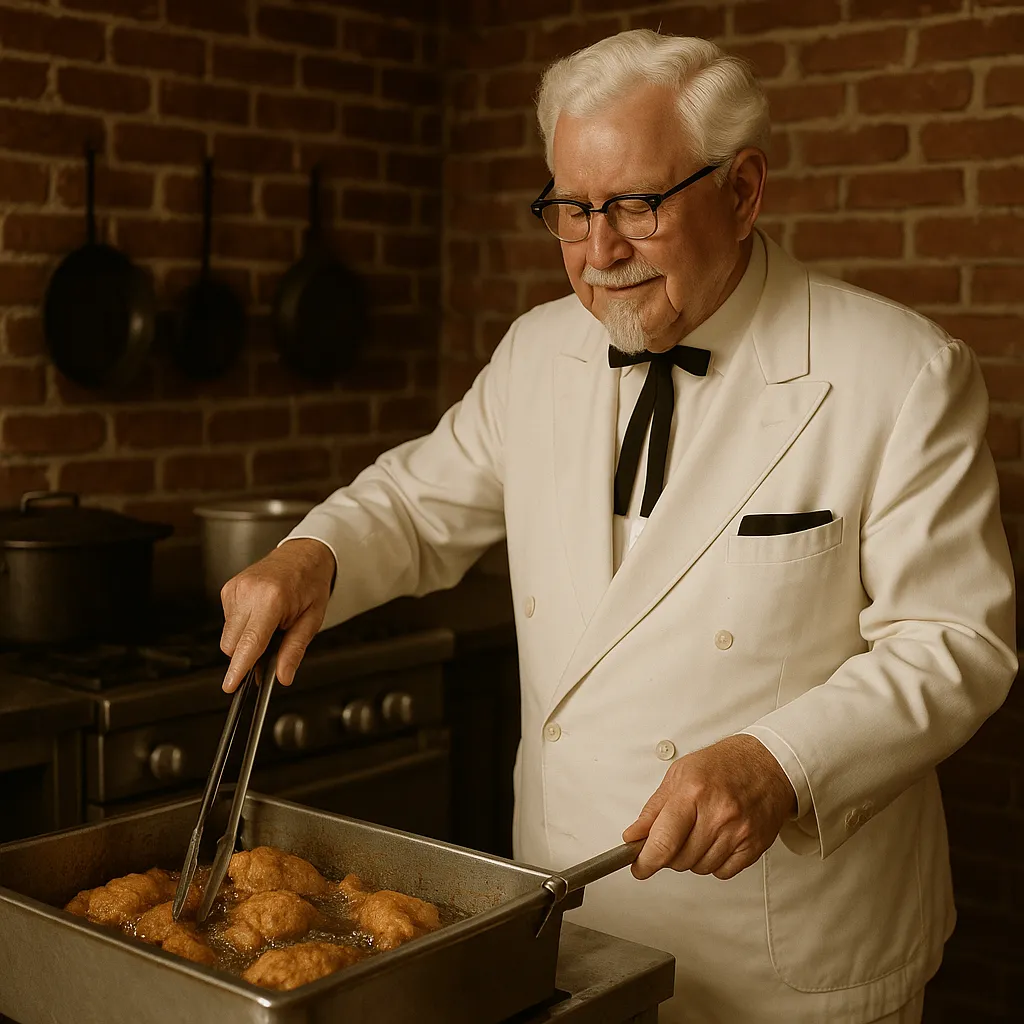
Harland Sanders, born in 1890 in Indiana, faced hardship early in life. After losing his father at a young age, he cooked for his family by seven, mastering recipes that would shape his future. By 1930, for instance, he operated a gas station in Corbin, Kentucky, serving Southern fried chicken to travelers. Using a pressure fryer and a secret blend of 11 herbs and spices, his chicken gained local fame, earning him the honorary title of Kentucky Colonel in 1936.
However, when a new interstate bypassed Corbin in the 1950s, his business struggled. At 65, relying on a modest Social Security check, Sanders nevertheless took his recipe on the road, pitching it to restaurants. This persistence, consequently, laid the foundation for the Colonel Sanders legacy.
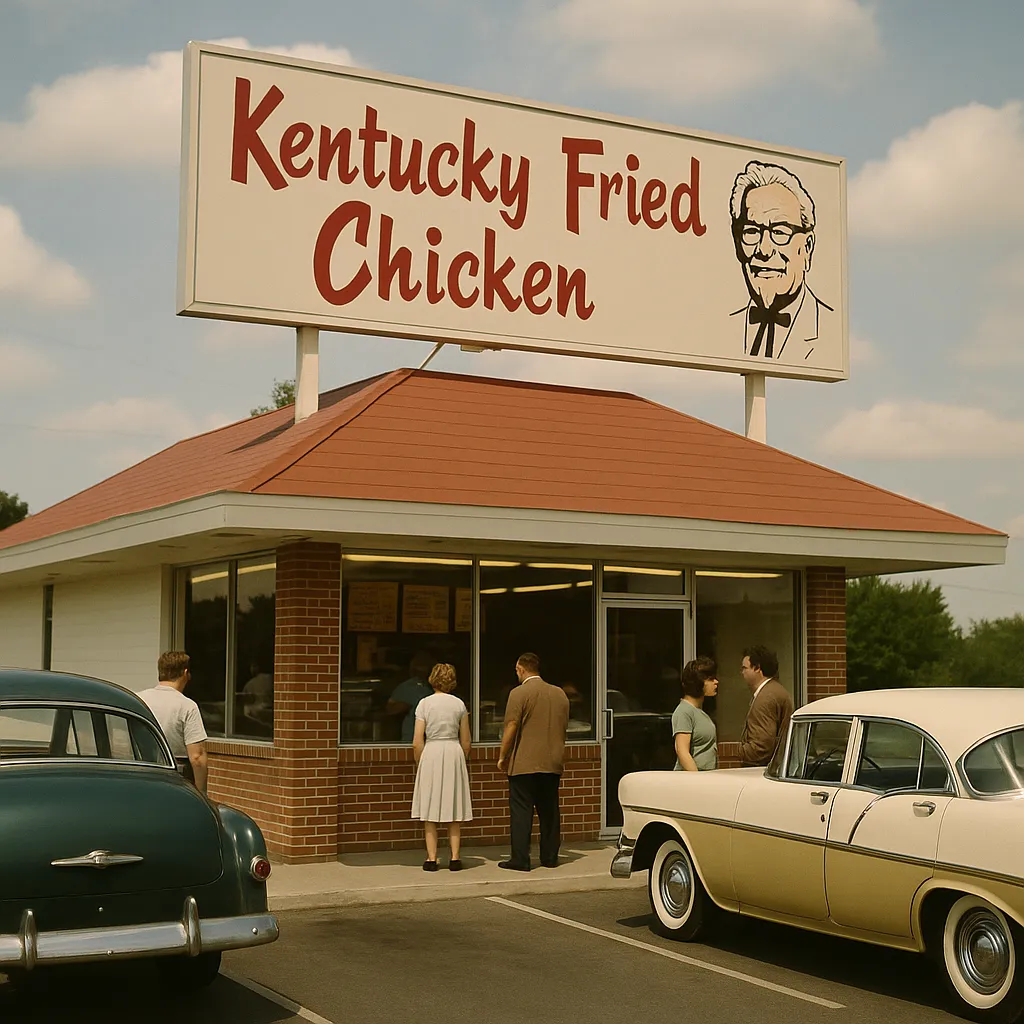
Moreover, a turning point came in 1952 when Pete Harman, a Utah restaurateur, partnered with Sanders. A sign painter, Don Anderson, named the venture “Kentucky Fried Chicken,” evoking Southern charm. As a result, Harman’s restaurant saw sales soar, signaling that KFC was poised to redefine the fast food evolution with chicken as a serious contender.
Rise of Franchising
The KFC franchise model emerged in the 1950s, driven by Sanders’ ingenuity. For example, he offered his recipe to restaurant owners for a small royalty per chicken sold, a strategy that spread KFC across the U.S. By 1963, over 600 KFC outlets operated nationwide, making it the largest fast food chain at the time. Additionally, the iconic bucket meal—14 pieces of chicken, rolls, and gravy—introduced by Harman in 1957, became a staple for families.
Sanders’ personal involvement fueled this growth. He traveled extensively, for instance, cooking samples to convince franchisees. His white suit and goatee became synonymous with the brand, cementing the Colonel Sanders legacy. Meanwhile, franchisees like Dave Thomas, later of Wendy’s fame, refined the menu and popularized the bucket, helping KFC stand out in the fast food evolution.
However, in 1964, the business grew too large for Sanders to manage alone. He sold KFC to investors John Y. Brown Jr. and Jack C. Massey for $2 million, staying on as its ambassador. Nevertheless, Sanders often criticized the new management’s quality, particularly their gravy, showing his unwavering commitment to the Colonel Sanders legacy.
Global Expansion
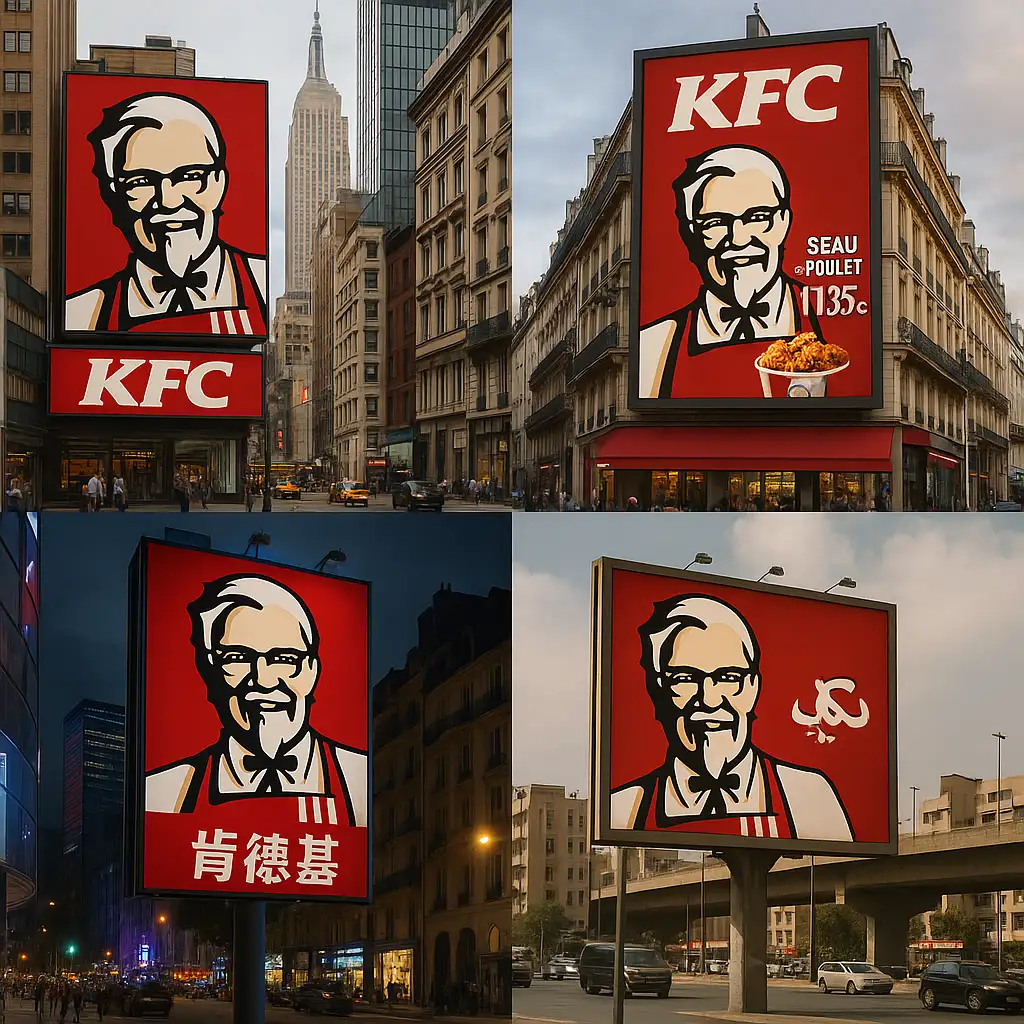
KFC’s ambition crossed borders in 1965 with its first outlet in Preston, Lancashire, UK. By the late 1960s, for example, KFC reached Mexico, Jamaica, and Canada, adapting to local tastes. In 1987, it became the first Western fast food chain in China, growing to over 4,500 locations there by the 2000s, making China KFC’s largest market. Consequently, the KFC franchise model proved versatile, tailoring menus to include items like the Zinger burger in Asia or vegetarian options in India.
However, global growth faced challenges. In Ireland, franchisee Pat Grace opened KFC stores but later rebranded to “Pat Grace’s Famous Fried Chicken” after disputes over cost-cutting. Nevertheless, KFC’s ability to adapt menus while preserving its core recipe kept the Colonel Sanders legacy strong worldwide.
Furthermore, KFC expanded beyond fried chicken, adding sides like mashed potatoes and coleslaw, plus new items like wraps and grilled options. This flexibility, as a result, helped KFC grow to over 30,000 locations in 150 countries by 2024, solidifying its place in the global fast food landscape.
Challenges and Changes
KFC faced stiff competition by 2015, trailing behind chains like Chick-fil-A in the U.S. To rebound, for instance, KFC revitalized the Colonel Sanders legacy with creative ad campaigns, featuring actors like Darrell Hammond and Reba McEntire as the Colonel. Additionally, they re-embraced the full “Kentucky Fried Chicken” name on packaging to highlight their heritage.
The 1991 shift to “KFC” sparked speculation. Some believed, for example, it was to avoid the “fried” label amid health concerns; others thought Kentucky’s trademark on its name prompted licensing issues. KFC clarified the change was to reflect a broader menu and customer familiarity with the nickname, likely blending branding strategy with legal pragmatism.
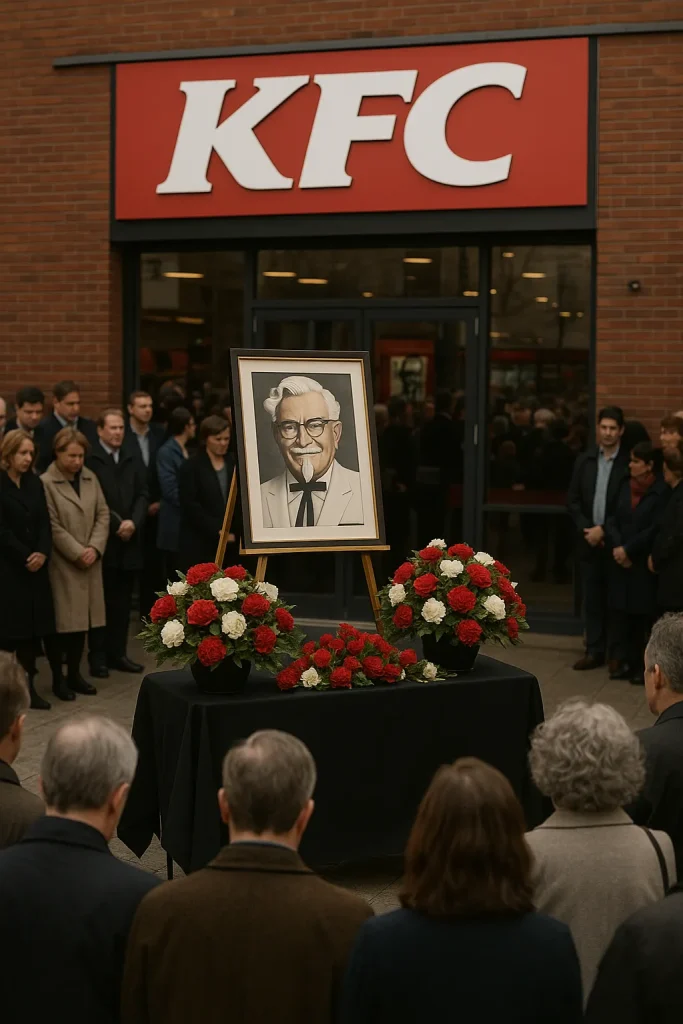
Moreover, corporate transitions shaped KFC’s path. After Sanders’ 1964 sale, the company moved through owners like Heublein, R.J. Reynolds, and PepsiCo before joining Yum! Brands in 1997. Each change brought new strategies, but KFC’s commitment to its original recipe remained steady, preserving the Colonel Sanders legacy.
Furthermore, KFC adapted to modern trends, introducing plant-based options with Beyond Meat and focusing on sustainability. These efforts, consequently, show KFC evolving while staying true to its roots, balancing innovation with its signature Southern fried chicken.
Leave a Reply