Introduction
Durian fruit benefits spark curiosity among scientists and food enthusiasts. Known as Durio zibethinus, this Southeast Asian fruit boasts rich nutrients and bioactive compounds, despite its pungent odor. Its creamy flesh draws attention, yet smell limits global appeal. This article dives into durian’s biology, nutritional strengths, and modern applications. For instance, its folate content rivals top fruits. Durian fruit benefits unveil nutritional promise. Ongoing research fuels innovation in health and industry.
As a climacteric fruit, durian ripens quickly, challenging storage. Yet, its therapeutic potential and advanced quality assessments drive interest. Across farms, non-destructive tools like X-ray CT enhance marketability. In contrast, odor and shelf-life pose hurdles. This analysis focuses on science, not history, to highlight durian’s value. Thus, its complexity inspires diverse solutions. The fruit’s unique traits shape its future.
Botanical Characteristics of Durian
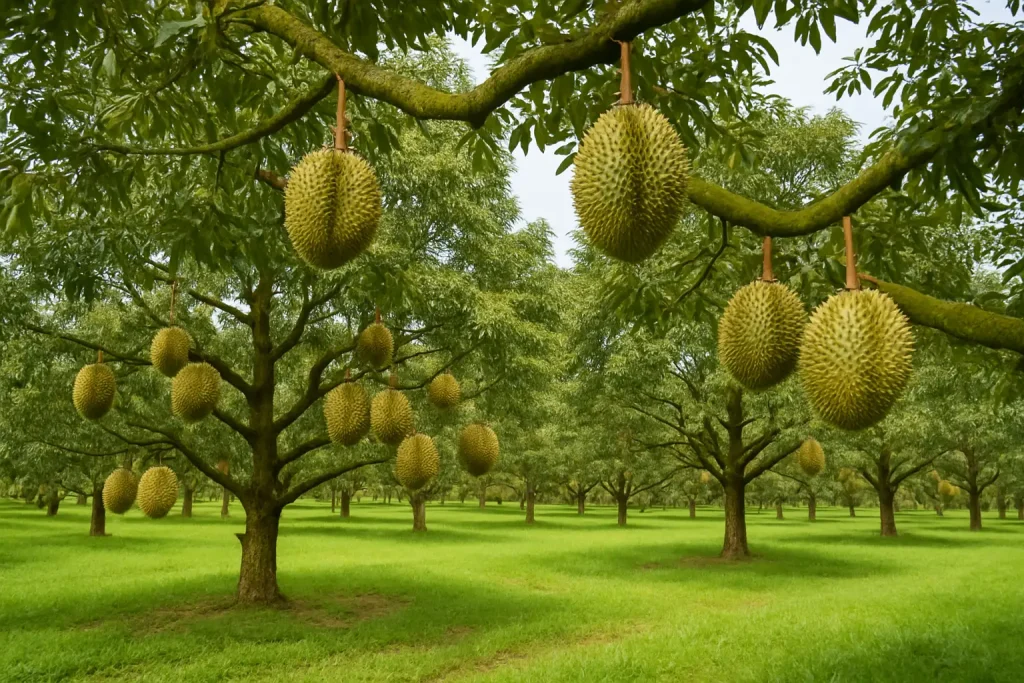
Durian’s structure sets it apart. A spiky husk protects creamy arils, weighing 3–4 kg, with chestnut-like seeds inside. As a climacteric fruit, it ripens post-harvest, triggered by ethylene surges. Monthong durians, for example, mature in 105–110 days. These arils fuel durian fruit benefits. Volatile compounds craft its bold aroma. Durian’s botanical traits guide cultivation and processing.
Its smell comes from sulfur volatiles, like ethanethiol, blended with sweet esters like ethyl-2-methyl butanoate. Gas chromatography reveals these peak at ripeness, impacting marketability. Chanthaburi 1, for instance, has milder aromas, easing transport. Yet, strong odors complicate exports. In contrast, aroma diversity attracts niche markets. Durian bioactive compounds shape sensory appeal. This chemistry defines its divisive reputation.
Cultivars vary widely. Monthong delivers thick, dry flesh, while Kanyao offers sweeter arils. Genomic studies, mapping 46,000 genes, double human genomes, support breeding for longer shelf-life. Musang King dominates markets, yet monocultures risk wild durian diversity. For example, 90% of Thai farms grow Monthong. Cultivar selection drives resilience. Notably, diversity fuels industry growth. Durian’s traits spark scientific exploration.
Nutritional Value of Durian
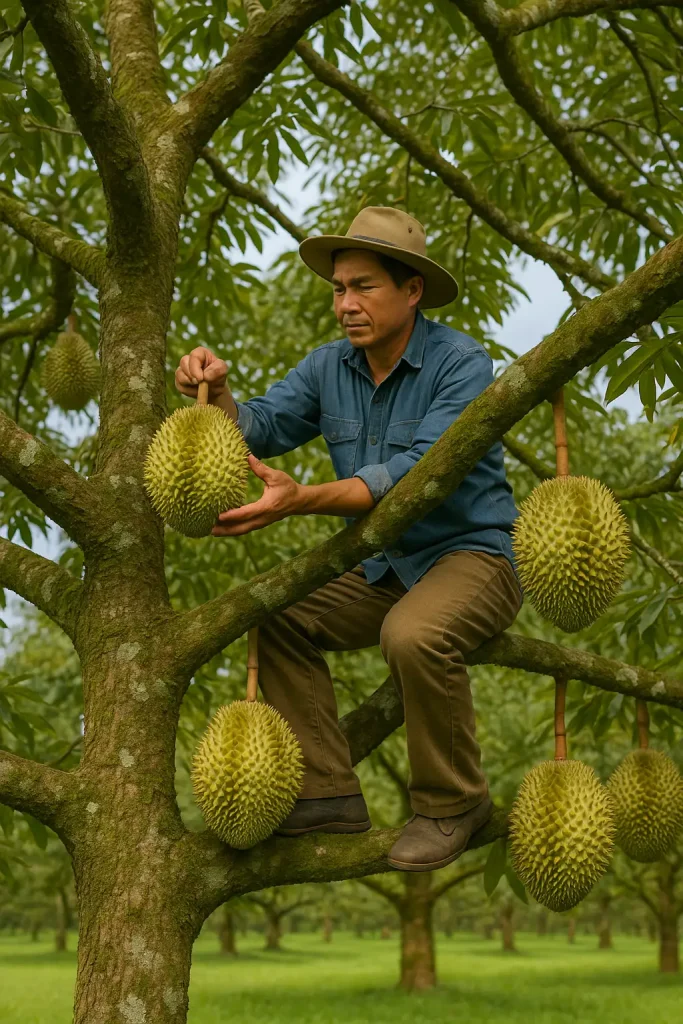
Durian’s nutrients shine brightly. Its arils deliver 27% carbohydrates, 5.3% fat, and 1.5% protein per 100 g, powering energy needs. Sucrose adds a sweet-bitter taste, ranging 3–20 g per 100 g. Compared to jackfruit (19% carbohydrates), durian’s richer profile comes at a cost—$5–10/kg production vs. $2–4/kg for jackfruit due to longer maturation. Durian fruit benefits include this caloric depth. These nutrients rival top tropical fruits. High costs, however, limit scalability.
Vitamins boost durian’s appeal. Folates, vital for metabolism, hit 175–440 μg/100 g, outpacing mangoes (43 μg/100 g). Ascorbic acid (19.7 mg/100 g) supports immunity, but processing dims levels. Unlike mangoes, grown globally with less deforestation, durian’s cultivation drives 20% forest loss in Malaysia, raising ecological concerns. The durian nutritional value draws scrutiny. For instance, its folate edge fuels health research. Yet, environmental trade-offs persist.
Minerals like potassium (436 mg/100 g) and magnesium enhance durian’s profile, matching bananas. Potassium aids heart health, but durian’s monoculture reliance (90% Monthong in Thailand) threatens biodiversity, unlike bananas’ diverse cultivars. High moisture (56–69%) spurs fermentation, as in Tempoyak, preserving nutrients. Durian fruit benefits extend to minerals. Across farms, sustainability challenges loom. Nutrient richness supports dietary roles.
Compared to global fruits, durian excels. Its folate content surpasses oranges (30 μg/100 g), and fat trumps apples (0.2%). Yet, its $1.5B Southeast Asian export market lags behind apples’ $7B global trade, constrained by water-intensive growth (2,000 L/kg). In contrast, its niche appeal drives premium pricing. The durian nutritional value powers health claims, but ecological costs demand balance. These contrasts shape its market future.

Non-Destructive Quality Evaluation
Non-destructive tools transform durian grading. X-ray CT scans measure sarcocarp volume with 0.923 R² accuracy, far surpassing traditional tapping (~60% accuracy due to subjectivity). For example, CT maps arils and cavities precisely. The durian quality evaluation benefits from such precision. These advances streamline market grading. Durian fruit benefits include enhanced commercialization. Technology drives efficiency.
Near-infrared (NIR) spectroscopy gauges dry matter and sugar with 95% accuracy, using Savitzky-Golay preprocessing. Unlike destructive sampling, NIR preserves fruit, but equipment costs deter small farms. Manual sampling, though cheaper, lacks consistency. For instance, NIR suits Monthong durians best. The durian quality evaluation thrives on spectroscopy. In contrast, traditional methods slow progress. These tools cut post-harvest losses.
Machine learning refines maturity checks. Neural networks, leveraging acoustic and density data, achieve 100% accuracy, outpacing stem flexibility tests reliant on expertise. Large farms, for example, save labor with neural models. Yet, data demands challenge adoption. Modern methods eclipse traditional ones, despite access barriers. The durian quality evaluation pushes industry standards. Notably, precision shapes trade prospects.
Shelf-life issues benefit from technology. CT predicts edible rates with 3.39% error, aiding storage decisions, while manual checks risk spoilage. Since 2015, optical tools have slashed losses by 15%. High costs, however, exclude small farms. Non-destructive methods boost yields. Thus, technology paves durian’s market path. Affordable solutions could democratize these gains.
Bioactive Compounds and Applications
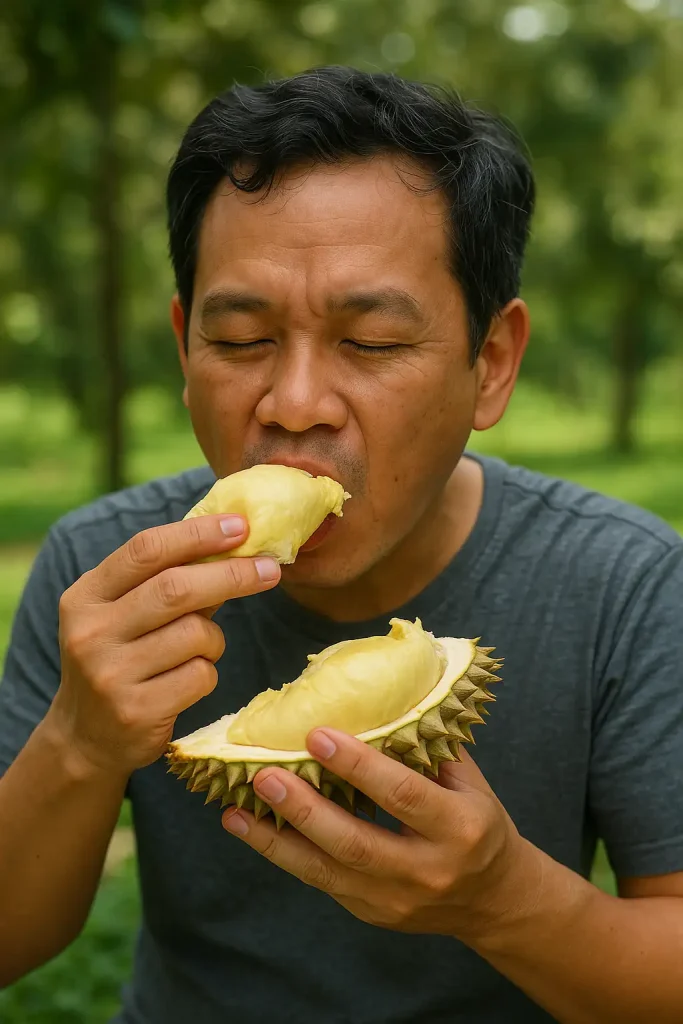
Durian’s bioactive compounds spark excitement in health research. Flavonoids and polyphenols, with antioxidant properties, curb oxidative stress. At 600 μg/mL, extracts inhibit MCF-7 breast cancer cells by 40%. For example, these compounds fight inflammation. Durian fruit benefits include anti-proliferative potential. A $500M nutraceutical market awaits, but pesticide overuse threatens ecosystems. These properties draw pharmaceutical focus.
Folates and sulfur compounds expand uses. Folates aid DNA synthesis, while thioacetals offer antimicrobial benefits. Fermented Tempoyak shows probiotic potential, yet human trials lag. Animal studies confirm cholesterol reduction, unlike untested claims for other fruits. The durian bioactive compounds power nutraceutical growth. For instance, 10% annual market expansion since 2010 signals opportunity. Limited scalability, however, curbs progress.
Applications span food and cosmetics. Durian’s esters enhance bakery flavors, and antioxidants enrich skin products. Processing mitigates odor, but short shelf-life hampers scaling. In contrast, mango’s longer shelf-life boosts its $2B cosmetic market. The durian bioactive compounds inspire innovation. Across industries, durian’s potential grows. Research into low-odor processing could unlock markets.
Leave a Reply