Introduction
Nitrogen, with atomic number 7, is a colorless, odorless gas that dominates Earth’s atmosphere, making up 78% of its volume. This element is essential for life, forming the backbone of proteins and DNA. Its versatility extends to industry, where liquid nitrogen plays a pivotal role in cooling and preservation. Found in the periodic table as a non-metal, nitrogen’s chemical stability and reactivity in compounds drive its widespread use. From fertilizers to cryogenics, this element shapes agriculture, medicine, and technology. This article explores nitrogen’s properties, applications, production, and sustainability challenges, emphasizing the significance of liquid nitrogen in modern advancements.
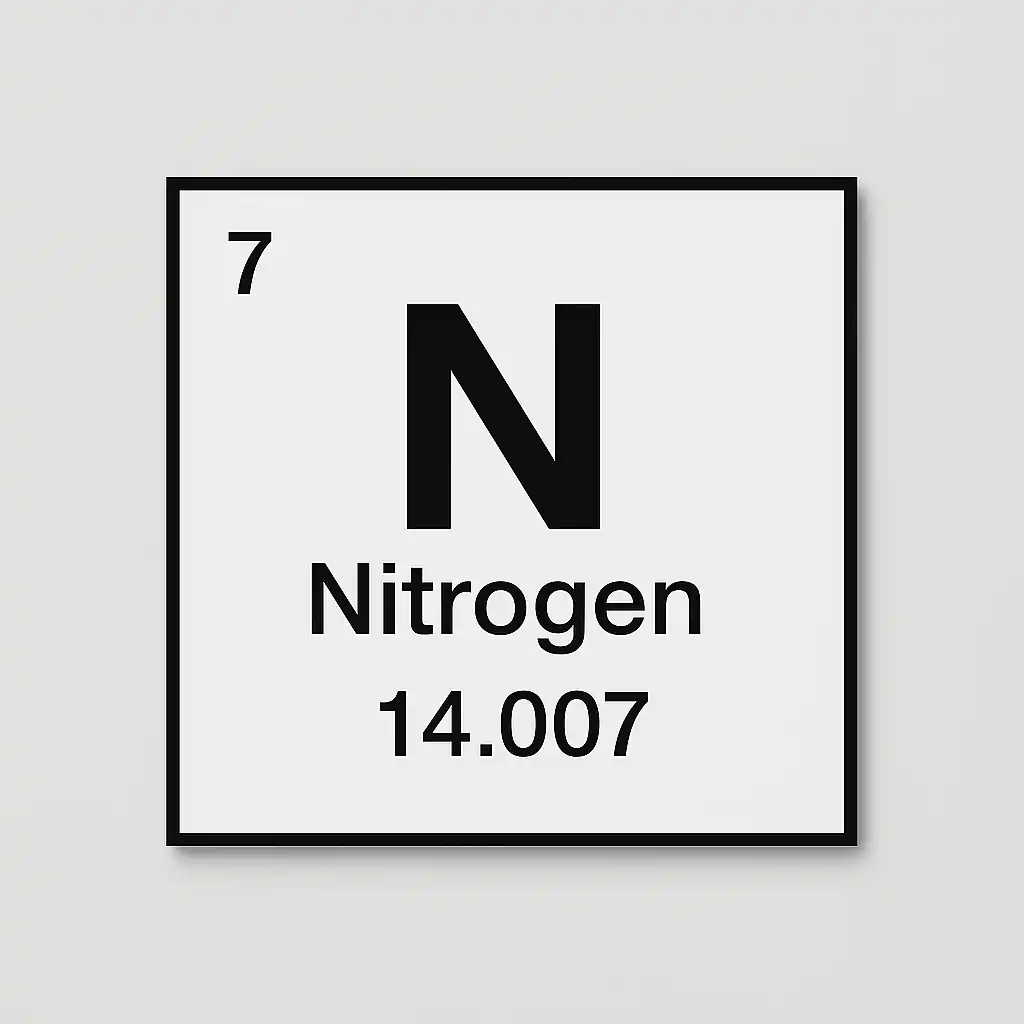
Chemical and Physical Properties
Nitrogen is a diatomic gas, N₂, with a triple bond that makes it highly stable. Its atomic mass is 14.01 u, and its electron configuration (1s² 2s² 2p³) allows it to form three covalent bonds. At standard conditions, nitrogen is gaseous, but liquid nitrogen, formed at -195.8°C, is a cryogenic fluid widely used for cooling. The element’s boiling point is -195.8°C, and its melting point is -210°C. Nitrogen is inert under normal conditions, resisting reactions due to its strong N≡N bond, which requires 945 kJ/mol to break. However, it forms compounds like ammonia (NH₃) and nitrates under specific conditions. Nitrogen’s low density, 1.25 g/L as a gas, and its transparency to light and sound make it ideal for various applications. Its ability to transition to liquid nitrogen at low temperatures enhances its utility in scientific and industrial settings.
Key Applications
Nitrogen’s applications are vast, spanning agriculture, medicine, and manufacturing. In agriculture, nitrogen-based fertilizers, like ammonium nitrate, supply 50% of the nitrogen needed for global crop growth, supporting food production for 7 billion people. Liquid nitrogen is critical in medicine for cryopreservation, storing biological samples like sperm and embryos at -196°C. It also freezes tissues during cryosurgery, removing warts or cancerous cells with precision. In industry, liquid nitrogen cools superconducting magnets in MRI machines, enabling high-resolution imaging. It is used in food processing to flash-freeze products, preserving flavor and nutrients. Liquid nitrogen also supports metallurgy, preventing oxidation during metal forging. Nitrogen gas fills tires and airbags, leveraging its inertness for safety. Emerging uses include nitrogen-doped graphene for advanced electronics, showcasing the element’s versatility in cutting-edge technology.
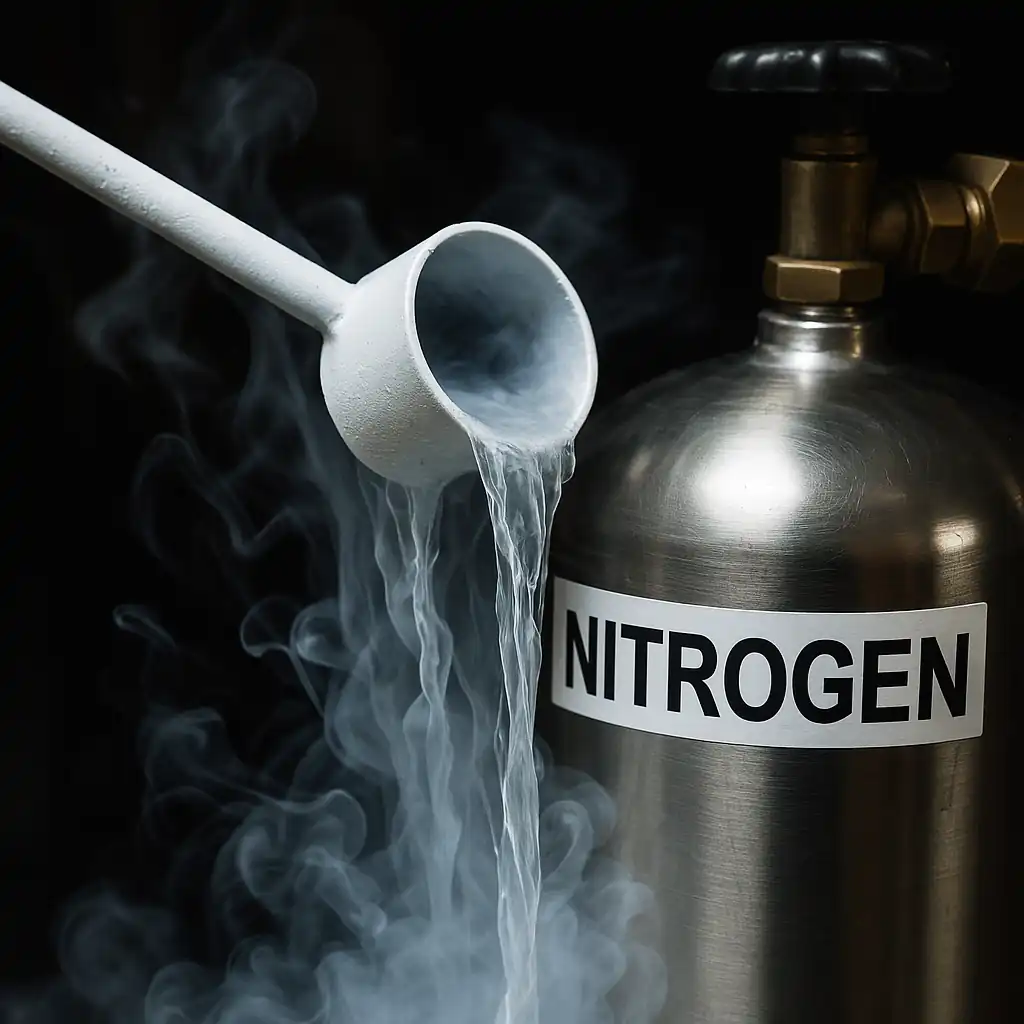
Production and Liquid Nitrogen
Producing nitrogen involves separating it from air, which contains 78% nitrogen by volume. The primary method is fractional distillation of liquid air. Air is cooled to -200°C, liquefied, and distilled to isolate nitrogen gas, achieving 99.999% purity. This process consumes 0.5–1 kWh per cubic meter of gas, making it energy-intensive. Liquid nitrogen is then produced by further cooling nitrogen gas to -195.8°C under pressure. Global production exceeds 150 million tons annually, with major producers in the US, China, and Germany. Liquid nitrogen is stored in insulated dewars to minimize evaporation, as it boils at room temperature. Industrial plants often integrate production with oxygen and argon separation, optimizing costs. Advances in membrane separation and pressure swing adsorption offer energy-efficient alternatives, though they are less common. The widespread use of liquid nitrogen in cryogenics drives demand, particularly in medical and food sectors.
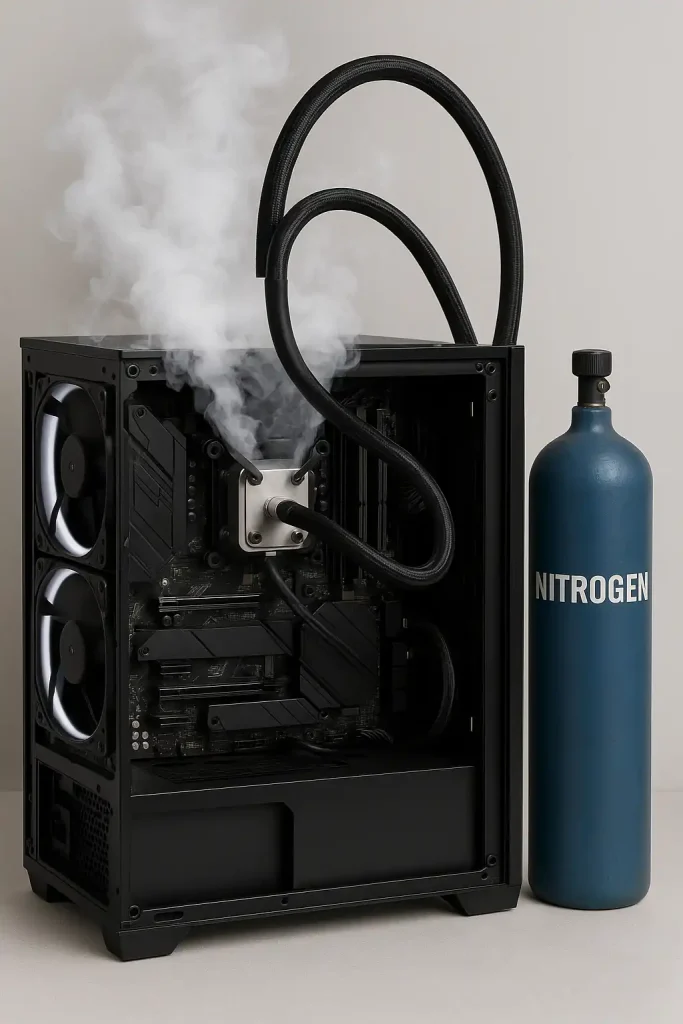
Challenges and Sustainability
Nitrogen’s production and use pose environmental and economic challenges. Fertilizer runoff, containing nitrates, causes eutrophication, leading to algal blooms that deplete oxygen in 400 coastal dead zones worldwide. Producing ammonia via the Haber-Bosch process emits 1% of global carbon dioxide, equivalent to 500 million tons yearly. Liquid nitrogen production is energy-intensive, contributing to emissions if powered by fossil fuels. Overuse of nitrogen fertilizers degrades soil, reducing fertility by 20% in some regions. Supply chain risks arise from reliance on energy-intensive production, vulnerable to price spikes in natural gas, a key input for ammonia synthesis. Recycling nitrogen from wastewater is limited, recovering less than 10% of applied fertilizers. Innovations like green ammonia, produced with renewable energy, could cut emissions by 80%. Precision agriculture, using sensors to optimize fertilizer use, reduces runoff. Scaling these solutions requires investment and policy support to ensure sustainable nitrogen use.

Leave a Reply