Introduction
Mercury, the closest planet to the sun, captivates us with its extremes. It’s a small, rocky world that zips around the sun faster than any other planet. Specifically, it completes an orbit in just 88 Earth days. Named after the Roman messenger god, Mercury is a planet of surprises. For example, it has a massive core and a thin exosphere instead of an atmosphere. Additionally, its surface is scarred with craters. Despite its proximity to the sun, Mercury isn’t the hottest planet. Venus claims that title due to its thick atmosphere. However, Mercury’s temperatures still swing wildly. Daytime can reach 800°F (430°C), while nights drop to -290°F (-180°C). In 2012, scientists found water ice in its shaded polar craters. This discovery amazed researchers. How could ice exist so close to the sun? Consequently, Mercury has become a focus of study. In 2025, new missions are shedding light on its mysteries. Moreover, its unique orbit and rotation make it a fascinating subject. This article explores Mercury in depth. It covers its traits, recent discoveries, and exploration efforts. Furthermore, it examines a theoretical idea: Mercury and time travel. Let’s dive into this swift planet’s secrets.
Physical Characteristics of Mercury
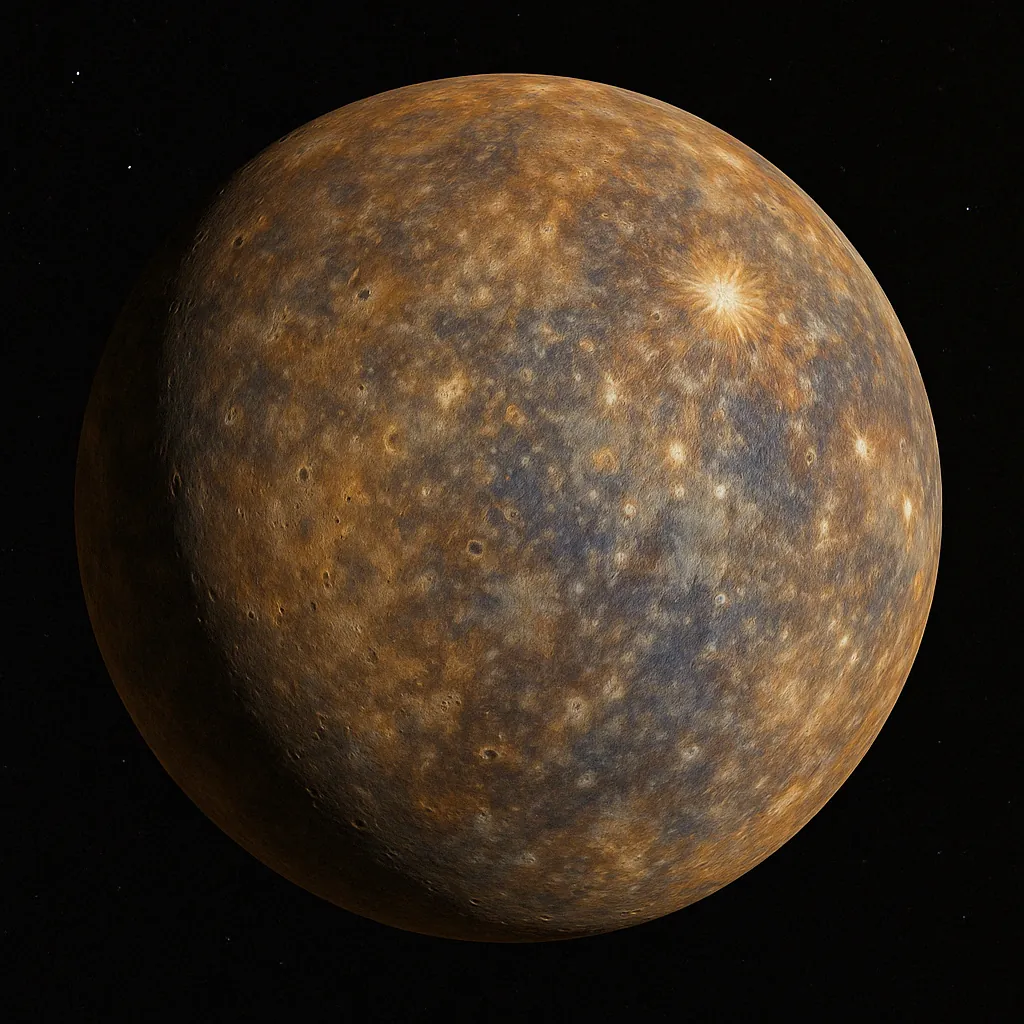
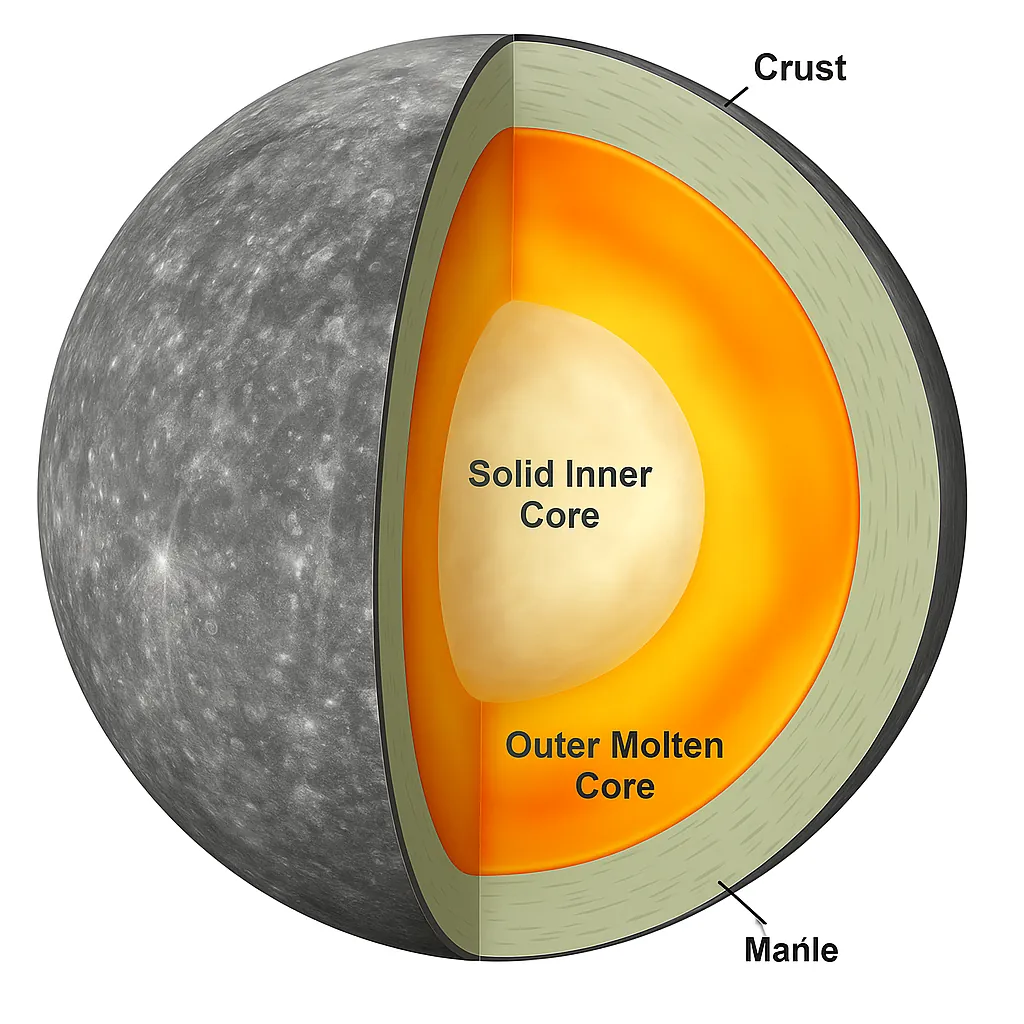
Mercury is the smallest planet in our solar system. It’s only slightly larger than Earth’s moon. Specifically, its diameter is about 3,032 miles (4,879 km). The planet is dense, second only to Earth. This density comes from its massive core. For instance, the core spans roughly 2,200 to 2,400 miles (3,600 to 3,800 km). That’s about 75% of Mercury’s diameter. In contrast, its outer shell is thin, only 300 to 400 miles (500 to 600 km) thick. Mercury’s surface looks like the moon’s. It’s covered in craters from ancient impacts. Additionally, it has large fault scarps. These formed as the planet’s interior cooled and shrank. The largest crater, Caloris Planitia, stretches 960 miles (1,550 km) across. Meanwhile, Mercury’s exosphere is very thin. It’s made of atoms like oxygen, sodium, and helium. These are blasted off the surface by solar winds. Therefore, there’s no real atmosphere to trap heat. This causes extreme temperature swings. During the day, the sun scorches the surface. At night, the cold is intense. However, the poles have permanently shadowed craters. These areas might hold water ice. In 2025, scientists still study this odd makeup. Mercury’s structure continues to puzzle them.
Recent Discoveries About Mercury
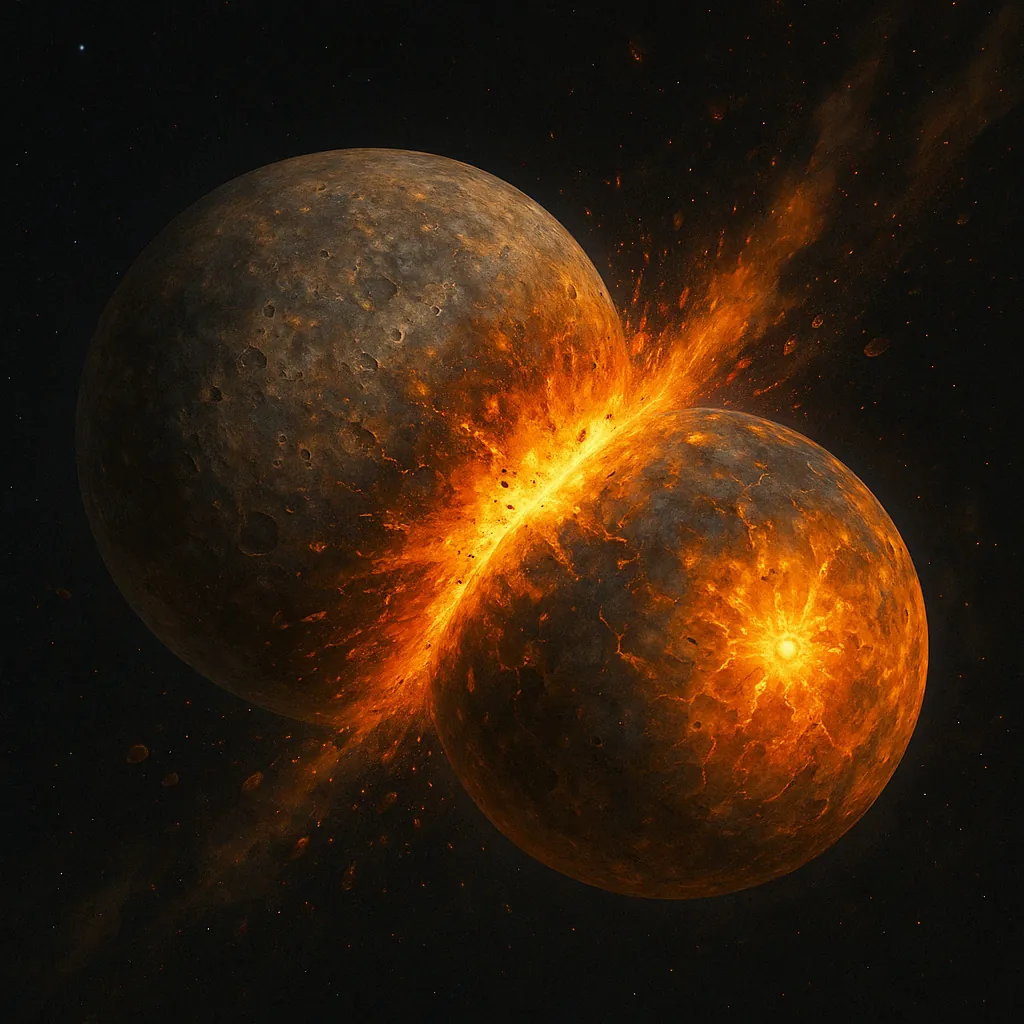
Recent years have brought fresh insights into Mercury. For example, in 2023, researchers analyzed data from the MESSENGER mission. They found evidence of a deeper liquid core layer. This layer lies between a solid outer core and a solid inner core. Additionally, the planet’s magnetic field is offset from its equator. This creates unique magnetic tornadoes with solar winds. In 2024, scientists studied Mercury’s surface composition. They discovered high levels of thorium, a chemical that shouldn’t survive the sun’s heat. This finding suggests Mercury may have formed farther from the sun. Perhaps it was once as large as Earth. A massive collision might have stripped away its outer layers. Consequently, it could have migrated closer to the sun. In 2025, the BepiColombo mission began orbiting Mercury. Early data shows volcanic plains that resemble the moon’s mare. Moreover, the mission detected faint traces of sulfur on the surface. These findings challenge existing models. For instance, sulfur indicates past volcanic activity. Alternatively, it might point to a different formation history. So far, these discoveries raise more questions. However, they deepen our understanding of this tiny planet.
Exploration of Mercury
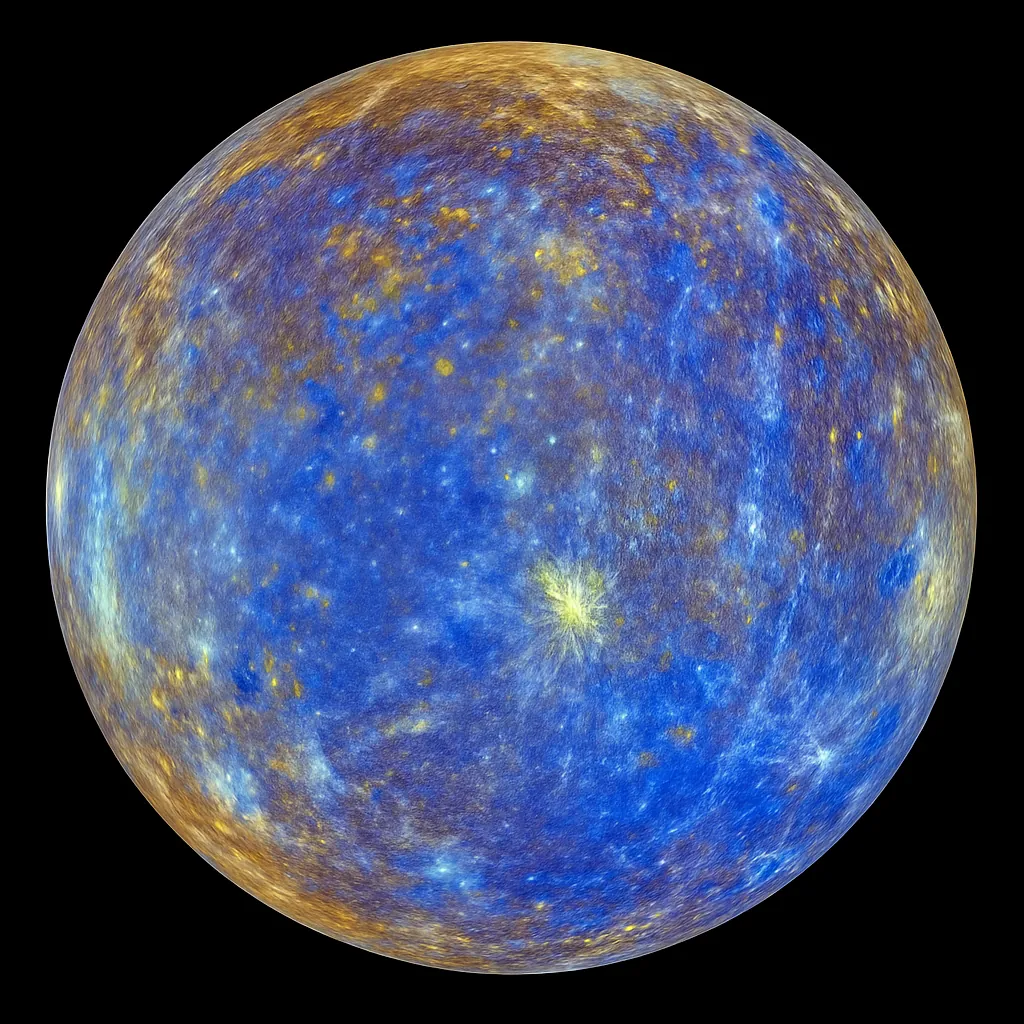
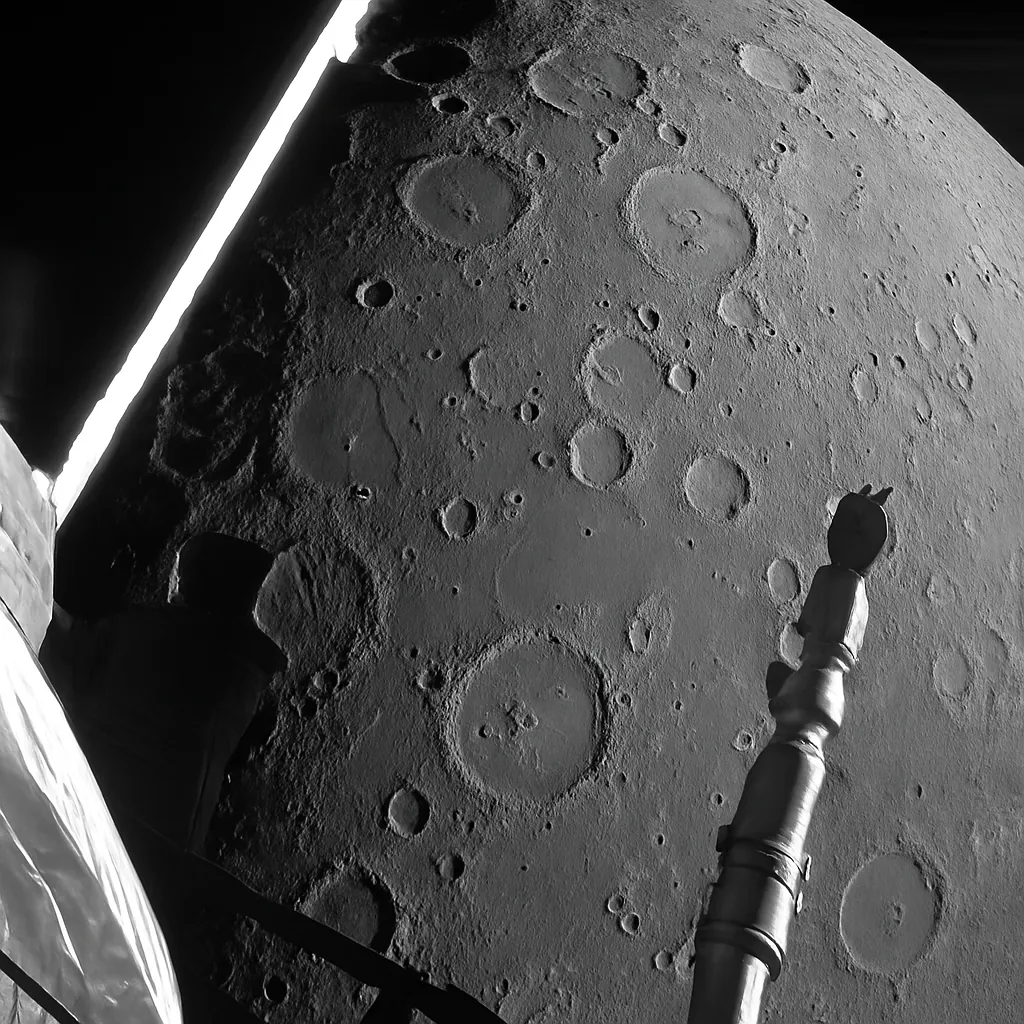
Exploring Mercury is challenging due to its proximity to the sun. The intense heat and gravity make spacecraft missions difficult. For example, only three missions have reached Mercury so far. The first was Mariner 10 in the 1970s. It mapped nearly half of the surface. Later, NASA’s MESSENGER orbited Mercury from 2011 to 2015. It revealed water ice at the poles. Additionally, it mapped the entire surface. In 2025, the BepiColombo mission, a joint effort by ESA and JAXA, began its science phase. This mission uses two orbiters to study the planet. One focuses on the surface, the other on the magnetic field. Consequently, scientists hope to learn more about Mercury’s core. Another method involves observing from Earth. Telescopes can see Mercury during dawn or twilight. However, the sun’s glare makes this tricky. Space-based telescopes like Hubble can’t look at Mercury. The sun’s brightness would damage them. Therefore, spacecraft remain the best option. So far, BepiColombo has sent back stunning images. These show detailed craters and volcanic plains. As a result, our knowledge of Mercury is growing. Future missions might reveal even more.
Mercury and Time Travel
Could Mercury play a role in time travel? This idea is purely theoretical. Mercury’s orbit and rotation create strange effects. For instance, its day lasts 59 Earth days, but its year is only 88 Earth days. This means the sun’s motion in Mercury’s sky is odd. At certain points, the sun appears to stop, move backward, and then move forward again. This is due to Mercury’s elliptical orbit and slow rotation. Additionally, time dilation occurs near the sun. Einstein’s theory of relativity tells us this. Time moves slower in stronger gravitational fields. Since Mercury is so close to the sun, time there runs slightly slower than on Earth. For example, a clock on Mercury would tick a tiny bit slower. A traveler spending a year on Mercury would age less than someone on Earth. However, the difference is very small. It’s not enough for practical time travel. Moreover, Mercury’s harsh conditions make it an unlikely spot for such experiments. The extreme heat and radiation are dangerous. In 2025, scientists still explore these ideas. They use Mercury to test relativity. Nevertheless, time travel remains a distant dream.
Conclusion
Mercury is a world of extremes and mysteries. It’s the closest planet to the sun, yet it holds water ice. Its massive core and thin exosphere puzzle scientists. Additionally, its surface tells a story of ancient impacts and volcanic activity. In 2025, missions like BepiColombo are uncovering new details. For example, they’ve found clues about Mercury’s origins. The planet may have once been much larger. Exploration efforts continue to grow. Telescopes and spacecraft are key tools. As a result, we’re learning more about this tiny world. Mercury also inspires theoretical ideas. Its orbit and proximity to the sun make it a natural lab for relativity. Furthermore, it challenges our understanding of planetary formation. Mercury shows us how diverse our solar system is. Therefore, as we study it, we gain insights into our own planet. Mercury might not support life. However, it teaches us about the cosmos. Its secrets continue to unfold.
Trusted external articles about Mercury, the closest planet to the Sun:
Leave a Reply