Introduction
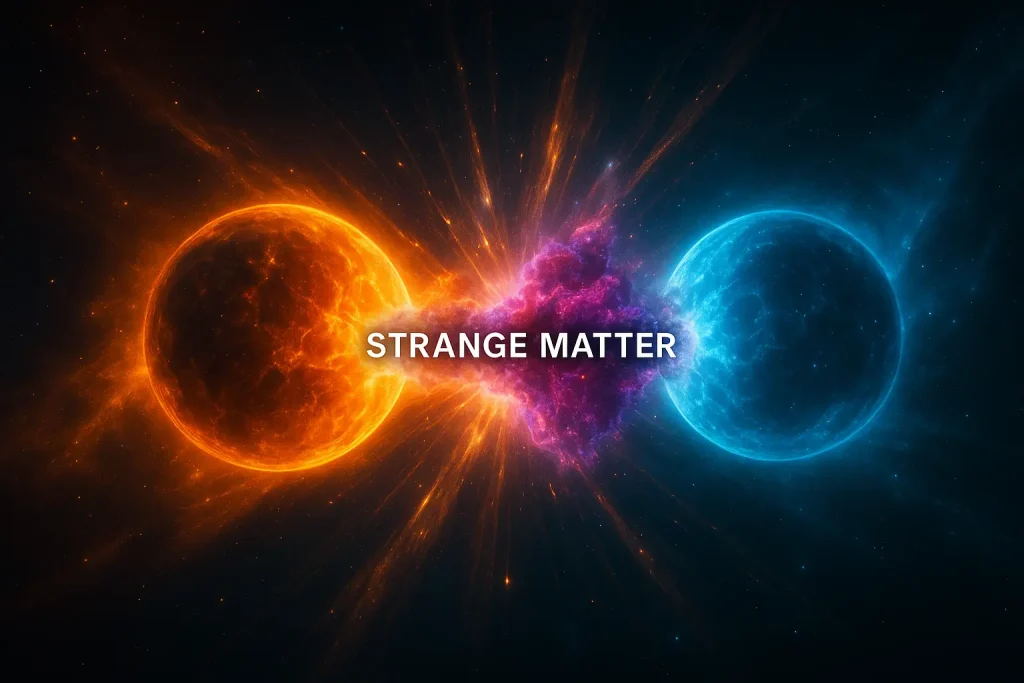
Ever heard of strange matter properties? They’re out of this world! Strange matter mixes strange quarks with up and down quarks. Scientists think it might hide in neutron star cores or quark stars. As of May 2025, this topic’s buzzing in astrophysics. So, this article digs into strange matter properties. We’ll cover the basics, how it forms, its history, and what makes it unique. Ready to explore a cosmic riddle? Let’s dive in!
Strange matter properties could reshape our view of the universe. They might lurk in dying stars’ hearts. Some say it’s the most stable matter possible. That’s a bold idea, right? Strange matter properties might even hint at new tech. They challenge physics and spark curiosity. For instance, its density could inspire future materials. Also, its stability draws scientists’ attention. Why’s this so cool? It pushes the limits of what we know. Stick around to uncover its secrets!

What Are the Basics of Strange Matter?
Strange matter basics start with quarks—the tiniest bits. Up and down quarks build protons and neutrons. Add strange quarks, and you get strange matter. This mix might stay stable under crazy pressure. Unlike normal matter, it could balance quark types. That quirk makes its properties stand out. Also, it might act as a color superconductor at high densities. This means unique quantum behavior kicks in.
Strange matter properties get weirder still. They suggest insane density—billions of tons in a teaspoon! That’s because quarks pack tight. For example, it could top neutron star density. Some think it might turn normal matter strange. This “strangelet contamination” sounds wild, huh? Strange matter properties also tie to cosmic events. They might affect how stars evolve over time. Scientists are eager to test these ideas. Let’s see how it forms next.

How Is Strange Matter Formed?
Strange matter formation needs extreme conditions. Imagine a neutron star core—pressure’s off the charts! Neutrons might split into quarks there. If strange quarks join up and down ones, strange matter forms. This needs densities over 100 times nuclear levels. That’s a squeeze we can’t mimic on Earth. Neutron stars are nature’s test labs for this.
Another path is neutron star collisions. These crashes are the universe’s wildest parties! They might spit out strange matter droplets—strangelets. Strange matter formation could also link to the Big Bang. Right after that blast, quark soups might have turned strange. However, the exact pressure is a mystery. Cold temps near absolute zero might help. Also, magnetic fields in stars could play a role. Strange matter properties depend on these factors. Thus, it’s a theory awaiting proof. Let’s explore its past next.
What’s the History of Strange Matter?
Strange matter history began in the 1980s. Edward Witten first proposed its idea. He thought strange matter properties made it the universe’s ground state. That means it could outlast normal matter. In 1984, Robert Jaffe and Edward Farhi named small chunks “strangelets.” That kicked off big debates. Some feared it could change matter it touched.
The 1990s brought more interest. Peter Shor’s work tied strange matter properties to neutron stars. By 2000, scientists linked it to their cores. In 2015, fast radio bursts caught attention. Some say strange matter properties cause those signals. In 2025, new studies use the James Webb Telescope. It hunts for signs of this stuff. Yet, we still lack hard evidence. Strange matter history keeps growing. How awesome is that? Now, let’s check its unique traits.
What Are Strange Matter Properties and Challenges?
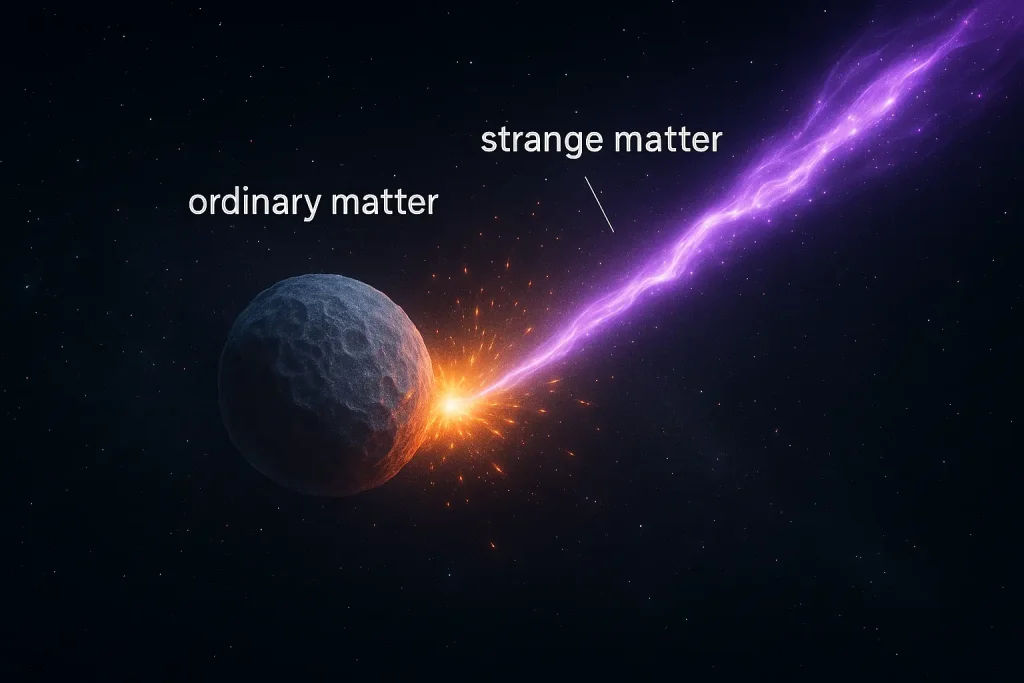
Strange matter properties are truly mind-blowing. First, they include insane density—billions of tons per cubic centimeter! This comes from tightly packed quarks. They might also show color superconductivity at high pressure. That’s a quantum state with zero resistance. Strange matter properties could make it the universe’s most stable form. Some say it converts normal matter into itself. That process, called strangification, is wild!
Beyond stability, strange matter properties suggest unique magnetism. This could affect neutron star behavior. They might also influence fast radio bursts—those cosmic flashes. Scientists think strange matter properties could inspire tech. For example, superconductors based on this might power future grids. However, challenges are huge. Detecting it is nearly impossible now. Creating it in labs needs tech we don’t have. Also, strangification raises safety fears. If it spreads, it could disrupt matter everywhere. So, we need careful research. Strange matter properties are exciting but risky.

Leave a Reply