Introduction
Pickles bring a tangy crunch to meals worldwide, from German-style pickles to American burgers. These preserved cucumbers, soaked in brine or vinegar, thrive in cultures like India and Turkey. Pickle health benefits, such as probiotics, enhance digestion and immunity. In 2023, global pickle production reached 5.2 million tons, reflecting their popularity. Notably, pickles blend tradition with nutrition, delighting palates everywhere. Their story spans medieval European preservation to modern tables.
Pickles unite diverse cuisines, from German-style pickles to Indian pickles. Their versatility makes them a global favorite, appearing in Turkish street food and American fast food. For example, their crisp texture and sharp flavor elevate dishes across generations. Pickles’ global appeal spans centuries, rooted in preservation techniques that continue to captivate diners today.
Ingredients and Compounds
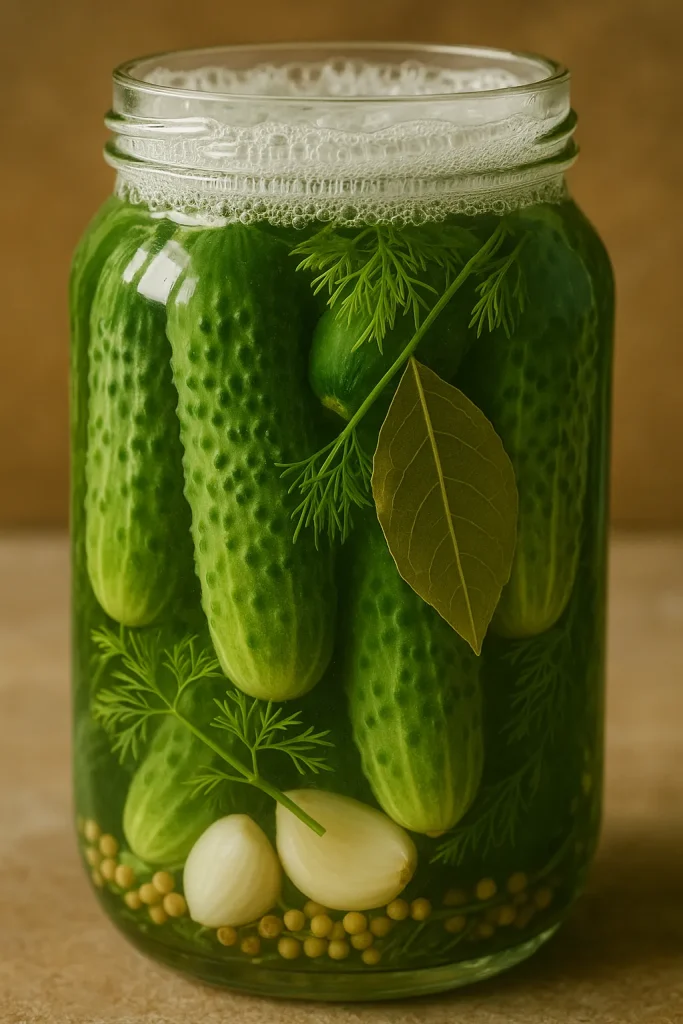
Pickle ingredients begin with the right cucumber. Short, firm varieties like Kirby or gherkin cucumbers, with thin skins, absorb brine best, ensuring crispness. In Europe, small gherkins yield crisp pickles. Salt, at 5–8% concentration, draws out moisture, enhancing texture and shelf life. Specifically, vinegar adds tangy sharpness and prevents spoilage, with acetic acid levels of 4–6%. These pickle ingredients shape the final product’s quality.
Additional compounds elevate flavor. Garlic, used in Turkish pickles, adds pungent depth and antimicrobial properties, extending shelf life. Ancient Middle Eastern cultures, including Iran, pioneered garlic in pickling, influencing global recipes. Dill and fennel, common in Indian pickles, impart aromatic notes, while chili peppers bring heat. Notably, each ingredient affects taste and texture; for instance, dill softens cucumbers slightly, while salt firms them. Pickle health benefits also depend on these compounds, as garlic supports immunity.
High salt and vinegar levels preserve pickles for over a year, but excessive salt may harden textures. In medieval Europe, picklers used herbs to enhance flavors, a practice seen in German-style recipes. Consequently, pickle ingredients not only define flavor but also ensure durability. Balanced compounds create the signature tang that makes pickles a pantry essential across cultures.
Preparation and Fermentation Process
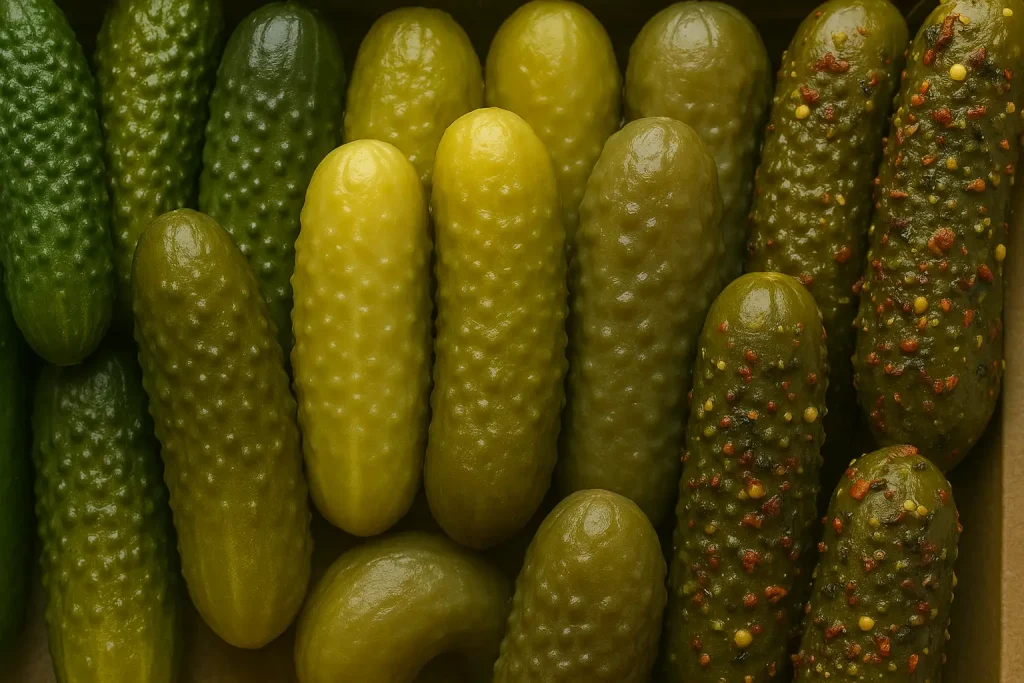
Pickle fermentation transforms cucumbers through a scientific dance of microbes. In domestic methods, cooks soak cucumbers in brine (8% salt) with garlic and dill, fostering natural fermentation. Lactobacillus bacteria convert sugars into lactic acid, lowering pH to 3.5, which preserves and sours pickles. For instance, American-style dill pickles rely on this process, taking 2–4 weeks at 20–25°C. Pickle fermentation creates probiotics, boosting pickle health benefits for gut health.
Industrial methods use vinegar for faster preservation. Factories heat-pasteurize jars, halting fermentation but ensuring shelf stability for up to 18 months. Domestic fermentation, as in European homes, retains more probiotics (10^8 CFU/g) but requires careful monitoring to avoid spoilage. Optimal fermentation occurs at 22°C, with 14–21 days for peak flavor. Hence, preparation methods balance tradition, speed, and health perks.
Lactobacillus plantarum, abundant in fermented pickles, thrives in low-oxygen brine, outcompeting harmful microbes. In Turkish pickles, makers add grape leaves to enhance crispness, a traditional technique. Industrial processes, however, may reduce microbial benefits. For example, over-pasteurization kills beneficial bacteria. Pickle fermentation blends art and science, delivering tangy results worldwide.
Nutritional Properties and Health Effects
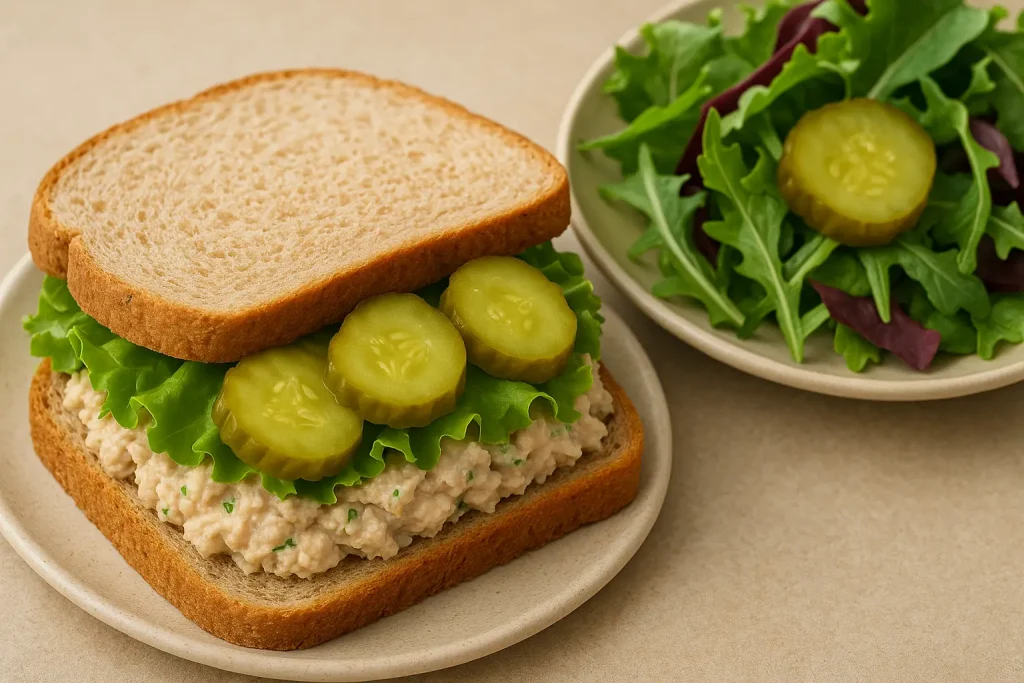
Pickle health benefits arise from their nutrient profile. Fermented pickles, rich in Lactobacillus, provide probiotics (10^8 CFU/g), aiding digestion and gut health. They contain vitamin K (20% of daily needs per 100g) for blood clotting and small amounts of vitamin C. Notably, Indian pickles include turmeric, adding anti-inflammatory properties. These nutrients make pickles a functional food in many diets, from European to American.
Probiotics strengthen the gut barrier, reducing inflammation, with studies showing a 15% improvement in digestive regularity after 4 weeks of consumption. Pickles’ low calories (12 kcal/100g) suit weight-conscious diets, but their high sodium (900 mg/100g) raises concerns. Specifically, excessive intake may increase blood pressure in sensitive individuals. Thus, moderation maximizes pickle health benefits for immunity and metabolism.
High sodium can strain kidneys, especially for those with hypertension, as 100g exceeds 40% of daily sodium limits. Non-fermented pickles, common in industrial brands, lack probiotics, reducing health value. In Turkey, Turkish pickles pair with yogurt to balance sodium. For instance, mindful consumption enhances pickles’ role in supporting wellness without risks.
Market and Economic Aspects
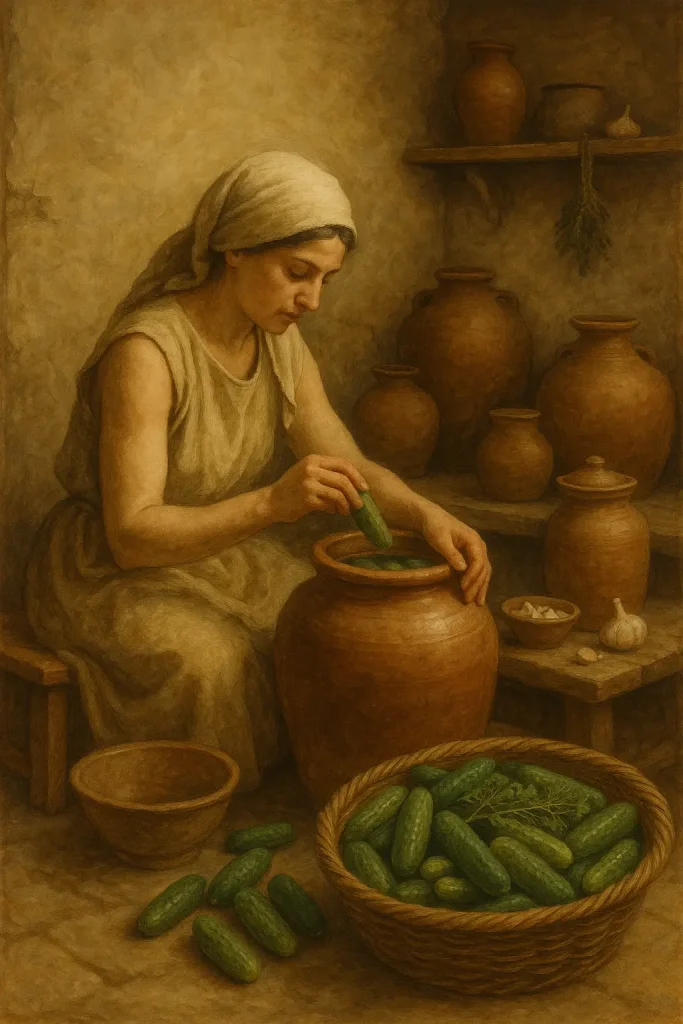
Pickle market trends reflect robust global demand, with 5.2 million tons produced in 2023. The U.S., India, and Turkey lead consumption, with the global pickle market valued at $12 billion. Exports, particularly from India, reached $2.5 billion, driven by Indian pickles’ popularity in European markets. For example, Indian brands like Patak’s dominate international shelves. Pickles’ versatility fuels their economic significance in food industries.
Small Turkish pickle makers supply local markets, while global brands like Vlasic produce 200,000 tons annually. Restaurants, especially American fast-food chains, use pickles in 70% of burgers, boosting demand. Pickle health benefits, like probiotics, attract health-conscious consumers, driving sales. Consequently, pickle market trends blend tradition and mass production, with growth projected at 5% annually through 2030.
Turkey exports Turkish pickles to Europe, while Britain’s pickled onions gain traction in North America. New products, like low-sodium pickles, cater to health-conscious consumers. In European cuisine, German-style pickles elevate dining experiences. Specifically, pickles’ economic role spans local markets to global trade, making them a culinary and commercial powerhouse.
Leave a Reply