Introduction
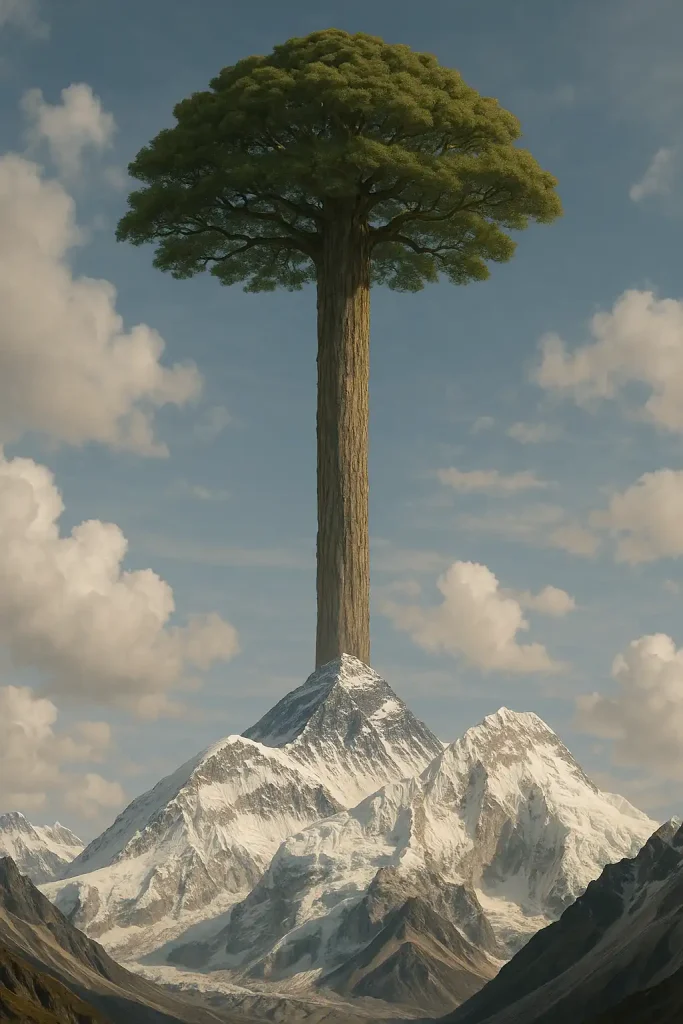
Imagine a tree as tall as Everest, piercing the sky at 8,848 meters. This fantastical concept sparks curiosity and wonder. Such a colossal organism would defy nature as we know it. It would reshape ecosystems, climates, and cultures. This article explores the implications of this scenario. It examines physical, environmental, ecological, and cultural dimensions. The idea blends science with imagination.
A tree of this scale raises countless questions. How would it grow to such a height? What ecosystems would it support? How would humanity perceive it? Exploring a tree as tall as Everest unveils nature’s limits. Let’s begin by analyzing its physical characteristics.
This thought experiment stretches our understanding. It challenges physics, biology, and human imagination. The impacts would be profound. Let’s dive into this hypothetical world now.
Physical Characteristics of a Tree as Tall as Everest
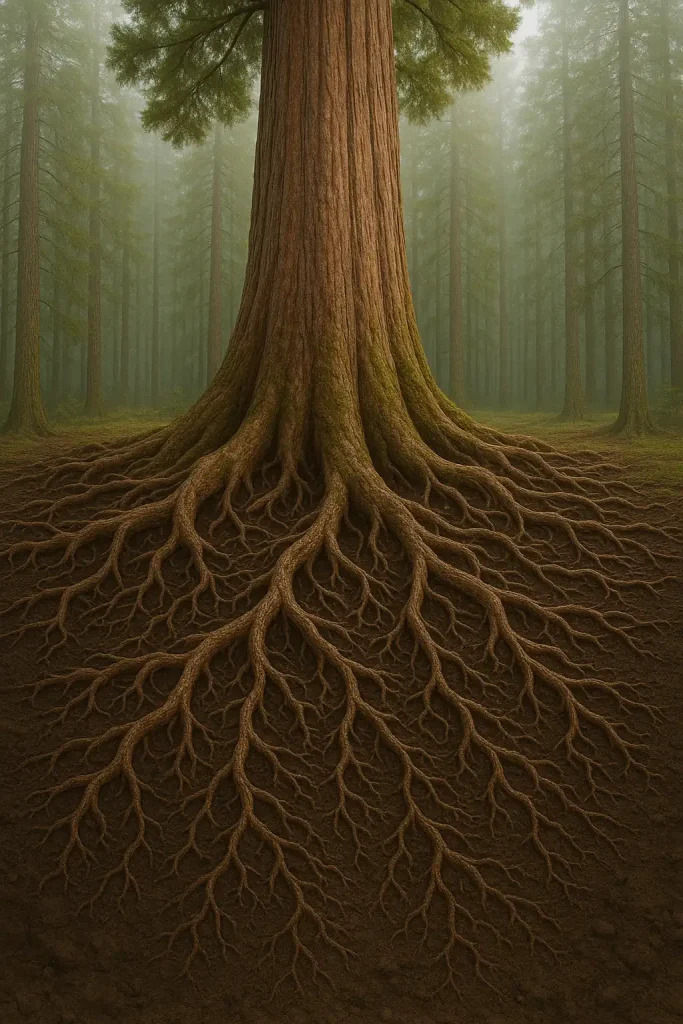
A tree as tall as Everest would be an engineering marvel of nature. Standing at 8,848 meters, it would dwarf even the tallest sequoias, which reach about 100 meters. Its trunk diameter might span 200-300 meters to support such height. The weight could exceed billions of tons. Its roots would stretch hundreds of kilometers to anchor it. Oxygen production would be immense—potentially millions of liters daily.
Physical challenges, however, would be significant. Wood’s structural integrity struggles at extreme heights. The compressive strength of wood, even in the strongest species, weakens under such gravity. Winds at high altitudes, often exceeding 200 km/h, would exert tremendous force. Capillary action, which transports water in trees, fails beyond 100-150 meters due to gravity. A tree as tall as Everest would need an unimaginable vascular system.
Energy requirements for growth would be astronomical. Photosynthesis alone couldn’t sustain it without advanced adaptations. Perhaps it would rely on a symbiotic energy source, like bioluminescent fungi. These physical hurdles highlight nature’s limits. Let’s now explore how long it might take for such a tree to grow.
Estimating growth time requires assumptions. The fastest-growing trees, like eucalyptus, grow 1-2 meters per year. At this rate, reaching 8,848 meters would take 4,424 to 8,848 years. If we imagine a sci-fi growth rate of 10 meters per year, it would still take 885 years. Environmental factors, like climate and soil, would extend this timeline further. This speculative timeline sets the stage for its environmental effects.
Environmental and Climatic Effects
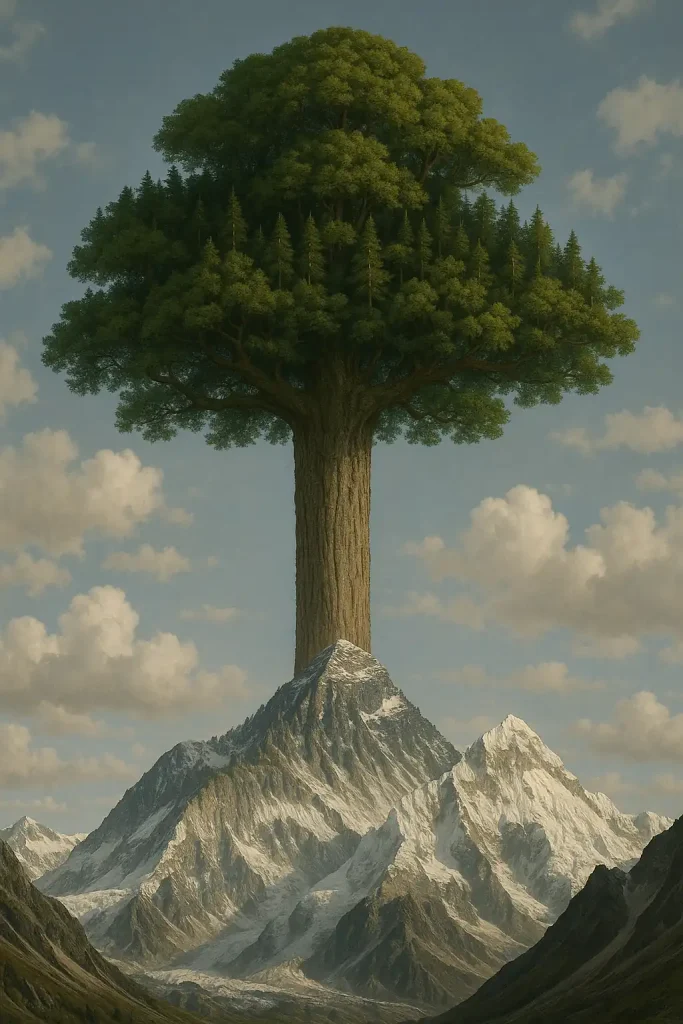
A tree as tall as Everest would transform its surroundings. Its canopy, spanning hundreds of square kilometers, would create a massive shadow. This would cool the ground below, altering local temperatures. Transpiration on this scale would release billions of liters of water vapor. Rainfall patterns would shift, creating a wetter regional climate. A microclimate, with unique humidity and temperature, would likely form.
The tree’s impact on the atmosphere would be notable. It could sequester millions of tons of carbon dioxide annually. Oxygen levels in the region might rise significantly. Local ecosystems would adapt to these changes. Giant tree environmental effects would extend globally, influencing wind patterns. Climate models would need to account for this anomaly.
Wildlife would face new challenges and opportunities. Smaller plants beneath the canopy might struggle due to reduced sunlight. The tree’s roots could deplete groundwater over a vast area. These changes would ripple through the biosphere. Let’s now consider the ecological communities it might support.
Such a tree would act as a climate regulator. Its presence could stabilize temperatures in the region. Global effects, however, might introduce unforeseen consequences. These environmental shifts lead us to the ecosystems living within the tree itself.
Ecology and Lifeforms on the Massive Tree
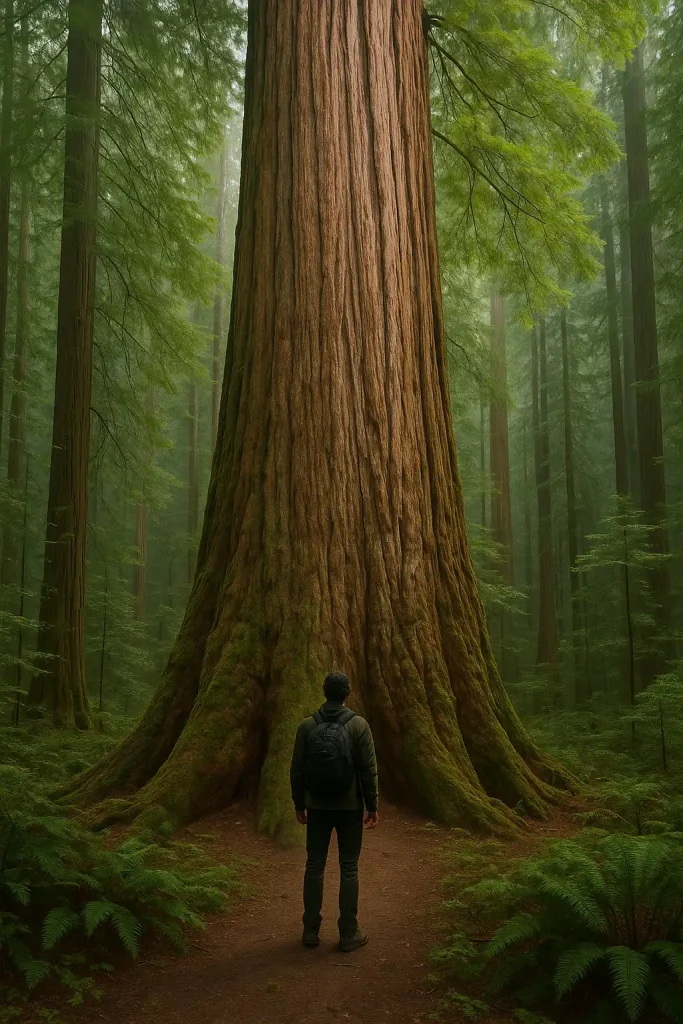
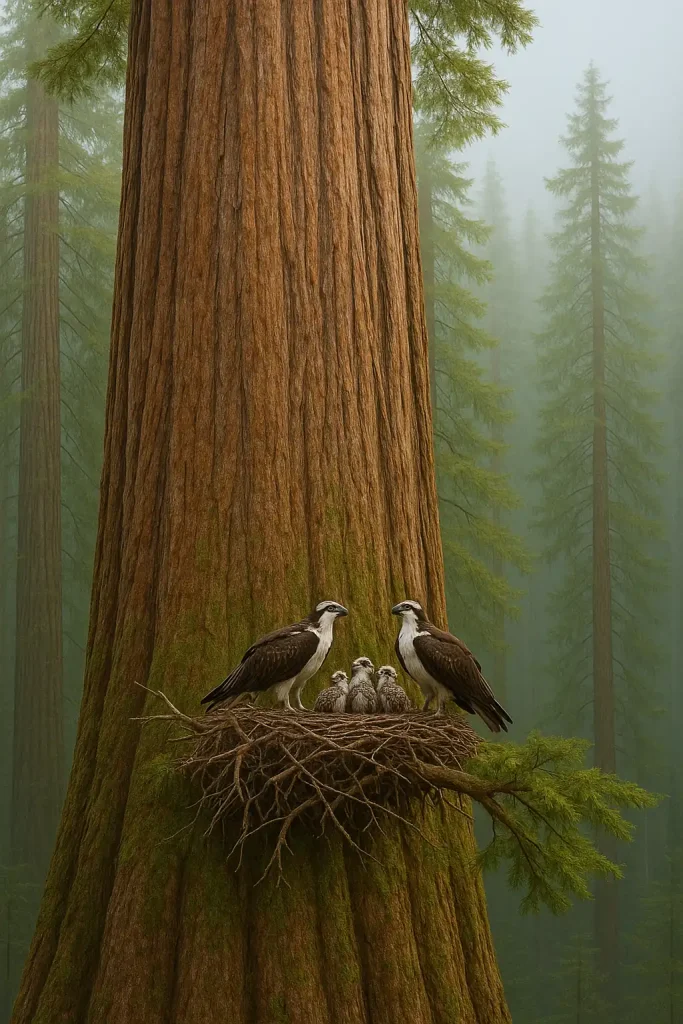
A tree as tall as Everest would be a living skyscraper of ecosystems. Its base might host mammals, like bears or deer, thriving in the shaded undergrowth. Mid-level branches, at 2,000-4,000 meters, could harbor birds like eagles. Higher altitudes, nearing the troposphere, might support unique, cold-adapted species. Perhaps bioluminescent insects would glow in the upper canopy.
Different altitudes would create distinct ecological zones. Lower levels might support ferns and mosses on the bark. Higher up, epiphytes—plants growing on the tree—could form hanging gardens. Oxygen would thin at the top, favoring species adapted to low pressure. Ecology of a massive tree would resemble a vertical continent.
Microbial life would thrive in the bark’s crevices. Symbiotic fungi might help the tree absorb nutrients at such heights. Predators, like large climbing felines, could evolve to hunt across the tree’s levels. This biodiversity would be unparalleled. Let’s now explore how humanity might perceive this natural wonder.
The tree’s ecosystem would be a testament to nature’s adaptability. It would host millions of species, each adapted to its niche. This ecological diversity would inspire awe. Let’s shift focus to its cultural significance.
Cultural, Mythological, and Imaginative Dimensions
A tree as tall as Everest would captivate human imagination. Ancient cultures might have worshipped it as a deity. In myth, it could rival Yggdrasil, the Norse world tree connecting realms. Indigenous stories might describe it as the “Pillar of the Sky.” Its branches, touching the heavens, would symbolize a bridge to the divine.
In modern times, it would become a global landmark. Artists might paint its silhouette against the sunset. Writers could craft tales of heroes scaling its heights. Tourists would flock to its base, boosting local economies. Cultural impact of giant tree would span art, literature, and spirituality.
Scientific curiosity would surge as well. Researchers might establish stations on its branches to study high-altitude life. Sci-fi films could depict it as a last bastion of nature. Its presence would redefine humanity’s relationship with the natural world. Let’s now reflect on the broader implications in our conclusion.
This tree would inspire generations. It would embody the intersection of nature and human creativity. Its legacy would endure in culture and imagination. These cultural impacts bring us to our final thoughts.
Leave a Reply