Introduction
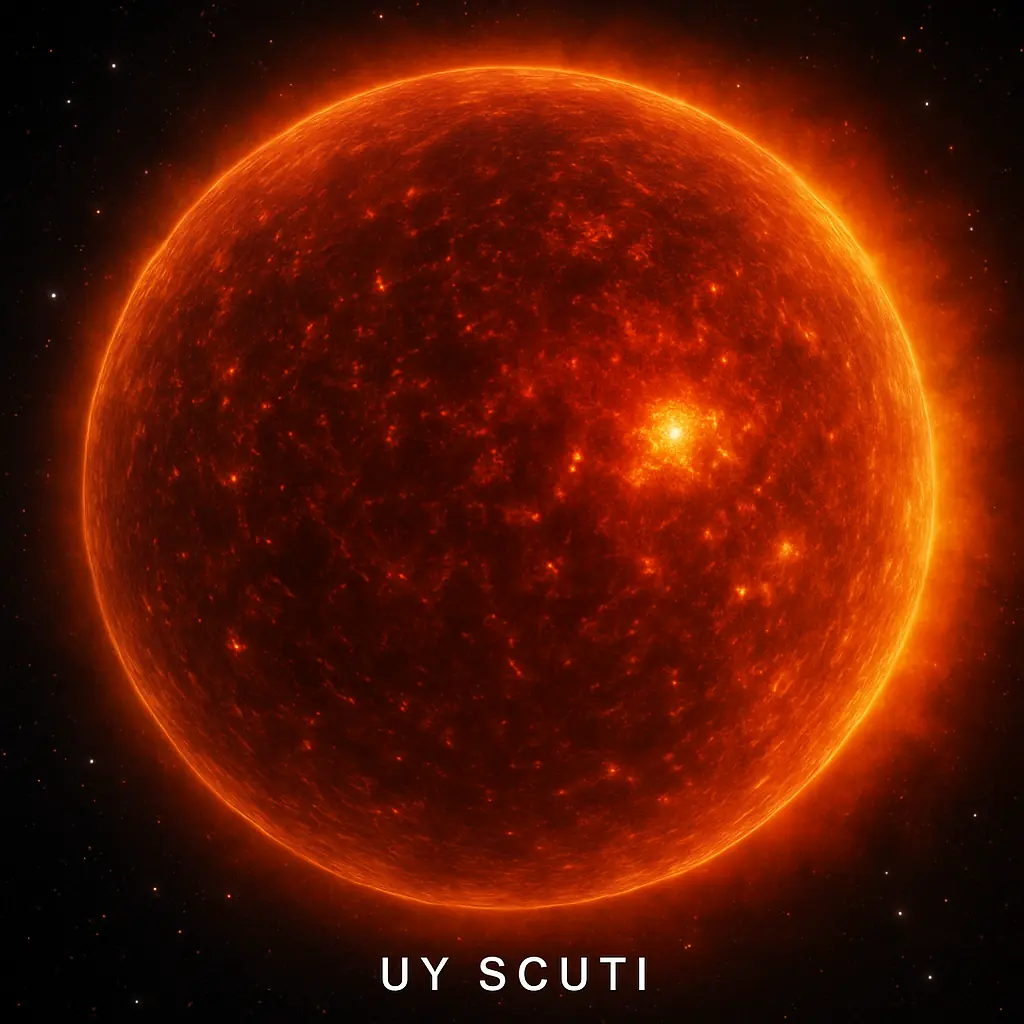
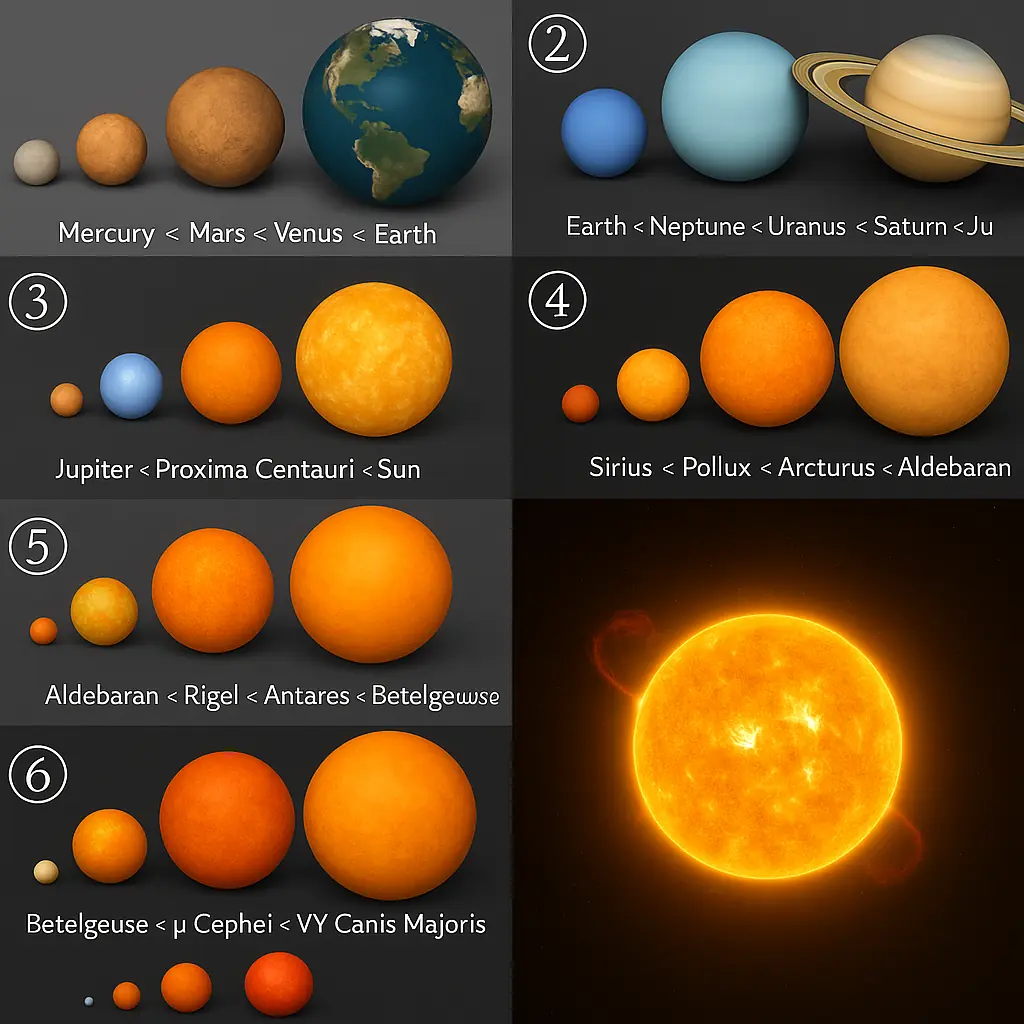
UY Scuti, a red supergiant in the constellation Scutum, is renowned as the biggest star in the universe, boasting a radius approximately 1,700 times that of the Sun. Located 9,500 light-years from Earth, this stellar colossus was first cataloged in 1860 by German astronomers at the Bonn Observatory. If placed at the center of our solar system, its surface would extend beyond Jupiter’s orbit, swallowing the inner planets. Despite its vast size, its mass is relatively modest, making it a critical case study for stellar evolution. This article delves into the physical properties, astronomical significance, observational methods, and challenges of studying this star, shedding light on its monumental place in the cosmos.
Physical Characteristics
This celestial giant is defined by its unparalleled dimensions, cementing its status as the biggest star in the universe. UY Scuti’s radius, estimated at 1,708 ± 192 solar radii, means its diameter is so vast that light takes about 8 hours to traverse it. Its surface temperature, around 3,365 K, is cooler than the Sun’s 5,770 K, resulting in a reddish hue typical of red supergiants. The star’s mass, only 7–10 times that of the Sun, reflects its low density and diffuse, bloated structure. It shines with a luminosity 340,000 times greater than the Sun, though much of its light is infrared due to its cool temperature. As a pulsating variable star, it expands and contracts over roughly 740 days, adding complexity to size measurements.

Astronomical Significance
The importance of this star lies in its embodiment of the extreme phases of massive stellar evolution, underscoring why it is the biggest star in the universe. As a red supergiant, UY Scuti has depleted its core hydrogen and is now fusing helium into heavier elements, driving its dramatic expansion. Its size tests the theoretical limits of stellar stability, offering insights into how massive stars evolve before collapsing into supernovae or hypernovae. The star’s intense stellar winds expel material, enriching the interstellar medium with elements like carbon and oxygen, essential for forming new stars and planets. Observations of UY Scuti refine models of stellar atmospheres, as its turbulent, extended outer layers challenge existing theories, enhancing our understanding of supergiant dynamics and galactic chemistry.
Observational Methods
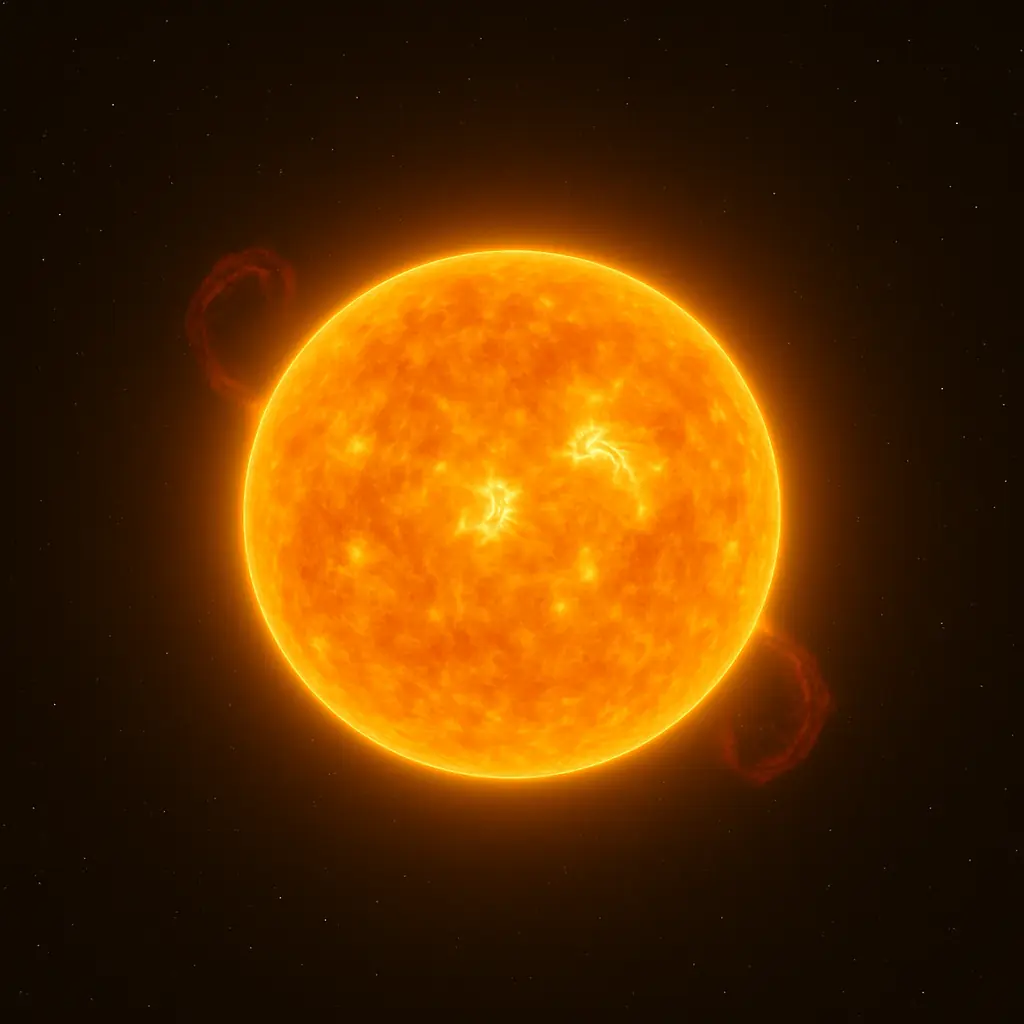
Studying this star demands advanced astronomical tools due to its distance and intricate nature. UY Scuti’s size was measured using data from the Gaia mission, which provided precise parallax to calculate its 9,500-light-year distance and radius. High-resolution spectroscopy, conducted with the Very Large Telescope, analyzes the star’s light to determine its temperature, composition, and variability. Infrared observations, enabled by the Hubble Space Telescope and the Atacama Large Millimeter Array, penetrate surrounding dust clouds to capture its faint emissions. Photometric studies track its pulsations, aiding in modeling its dynamic behavior. These techniques collectively allow astronomers to study this star despite its remote location in the crowded Scutum region.
Challenges in Study
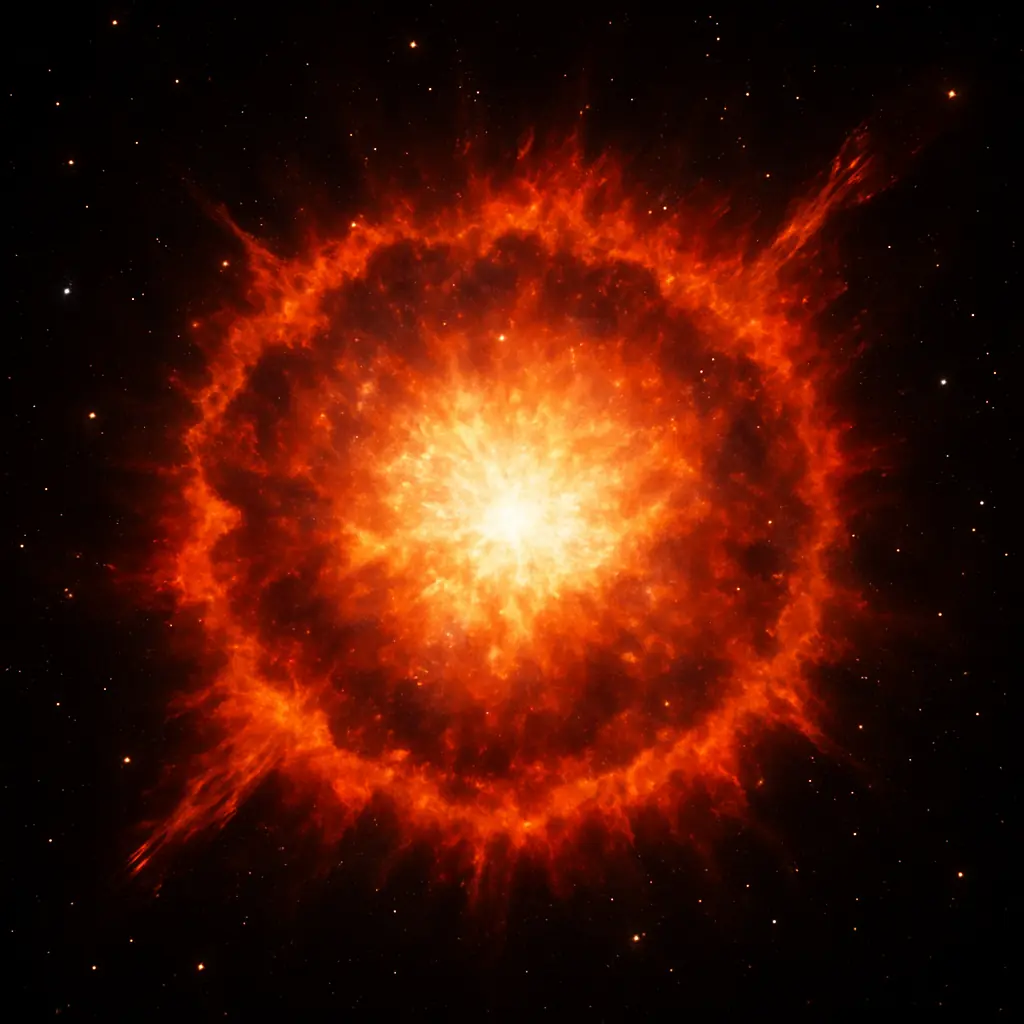
Investigating this star presents formidable hurdles. Its immense size and low density make precise radius measurements difficult, as its outer layers are diffuse and irregularly shaped. The star’s pulsations cause fluctuations in brightness and size, introducing uncertainty into data. Its location in the dust-rich Scutum region obscures direct imaging, necessitating infrared techniques to isolate its signal. UY Scuti’s rapid mass loss through stellar winds complicates evolutionary models, as it may shrink before its supernova phase. Its faint visible light, dominated by infrared emissions, limits optical telescope effectiveness, requiring specialized instruments. These challenges demand continuous advancements in technology to fully grasp the nature of this star and its place in the cosmos.
Leave a Reply